
Your split system usually tells you when it’s been neglected. Airflow drops off, the room takes longer to cool, power bills creep up, or you catch that stale smell when it starts. If you’re wondering how to maintain split system air con properly, the good news is that a few basic habits make a real difference. The better news is you don’t need to pull the unit apart or guess your way through it.
A split system does not need constant attention, but it does need regular care. Most problems we see start small – blocked filters, clogged drains, dirty coils, or a unit pushed too hard for too long. Left alone, those small issues turn into poor performance, breakdowns and avoidable repair costs.
How to maintain split system air con at home
The part most people can and should stay on top of is the indoor filter. If the filter is loaded with dust, the whole system has to work harder to move air. That affects comfort, efficiency and wear on the components.
For most homes, checking the filters every month during heavy use is sensible. In milder periods, every couple of months may be enough. If you have pets, live near a busy road, renovate often, or run the unit most days, the filters will usually need more frequent cleaning.
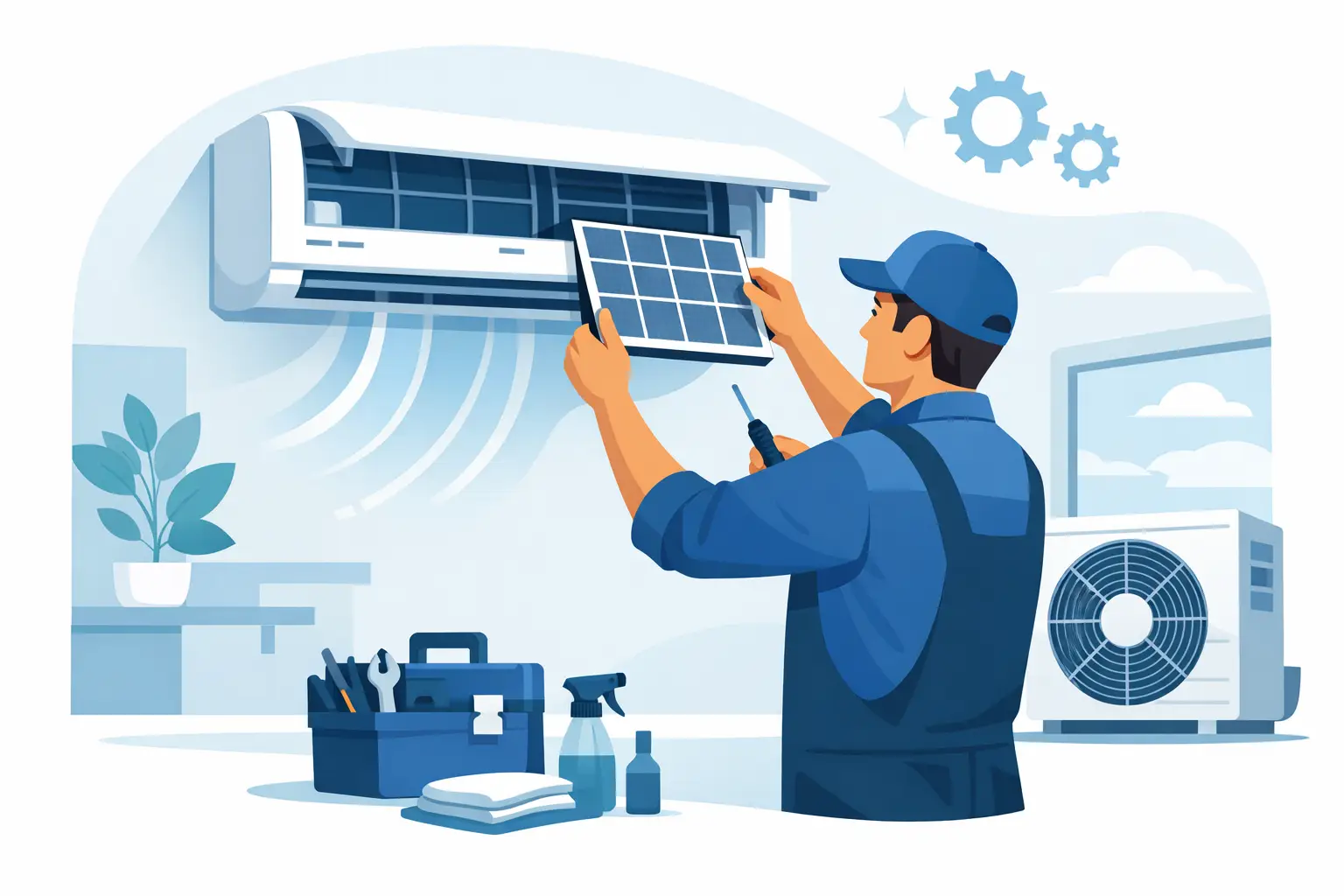
To clean them, turn the unit off first. Open the front panel, remove the filters carefully and inspect them. Light dust can often be vacuumed off. If they are grimy, wash them gently with warm water and let them dry completely before refitting. Do not put wet filters back in. That can create odours and lead to mould growth inside the unit.
This is simple work, but it matters. Clean filters improve airflow straight away and help the unit hold its temperature without running flat out.
Keep the indoor unit clean, but don’t overdo it
The casing and visible vents of the indoor head unit can be wiped down with a soft dry or slightly damp cloth. That keeps dust from building up around the air discharge area. What you want to avoid is spraying cleaners into the unit or poking around behind the covers. The evaporator coil, fan barrel and internal electrics are not DIY cleaning jobs if you want the system kept in good condition.
If you notice black spots, persistent odours, or visible grime deeper inside the unit, that is usually the point to book a proper service. Surface cleaning helps, but once mould or built-up dirt gets into the internal components, it needs to be handled properly.
Don’t ignore the outdoor unit
The condenser outside does the heat transfer work, so it needs breathing space. If it is boxed in by garden growth, stacked storage, leaves or dirt, efficiency drops and system strain goes up.
Keep the area around the outdoor unit clear. As a practical rule, allow open space around it so air can move freely in and out. Remove leaves, grass clippings and rubbish from around the base. If there is obvious dirt on the external fins, a gentle clean of the outside surface can help, but avoid high-pressure washing. Those fins bend easily, and once airflow is restricted, performance suffers.
Also keep an eye on the mounting and condition around the unit. If you hear rattling, notice excessive vibration, or see the base shifting, it is worth getting checked. Noise changes are often early warning signs.
Watch the drain before it becomes a leak
One of the more common signs of a maintenance issue is water where it should not be – on the wall, dripping from the indoor unit, or staining around the casing. In cooling mode, condensation needs to drain away properly. If the drain line is blocked, water backs up.
Sometimes the issue is as simple as dirt or sludge in the drain. Sometimes it points to a deeper service issue. Either way, if the unit is leaking indoors, don’t ignore it and hope it stops. Water damage around plaster, paint and flooring gets expensive quickly.
What a sensible maintenance routine looks like
For most households, the routine is straightforward. Clean the filters regularly, keep both indoor and outdoor units clear, pay attention to smells, sounds and performance changes, and book professional servicing before peak season rather than after the first hot week.
Commercial operators should be stricter. If a split system is running daily in an office, shop, kitchen or reception area, wear and contamination build up faster. The cost of lost comfort, downtime or customer complaints usually outweighs the cost of planned servicing.
There is no one-size-fits-all schedule because usage varies. A bedroom unit used a few nights a week is different from a retail unit running every day. But if you wait until it stops cooling, you are no longer doing maintenance. You are doing repairs.
Signs your split system needs more than basic cleaning
Not every issue can be fixed with a washed filter. If the unit is short cycling, blowing weak air, tripping the switchboard, making unusual noise, or struggling to reach set temperature, there may be a fault that needs proper diagnosis.
Bad smells can also mean different things. Dust smell after a long period of no use is one thing. Sour or musty odours that keep returning usually point to moisture, bacterial growth or internal contamination. A burnt smell is a different matter again and should be treated as urgent.
Ice on the indoor coil or refrigerant lines is another red flag. People sometimes assume more refrigerant is always the answer, but that is not how it works. Low airflow, dirty coils, sensor issues or refrigerant faults can all be involved. Guesswork here wastes time and money.
What a professional service actually covers
A proper split system service is not just someone rinsing a filter and heading off. It should include checking operating performance, inspecting electrical connections, assessing coil condition, cleaning components that affect airflow and hygiene, checking the condensate drain, and looking for signs of refrigerant or control issues.
That matters because maintenance is about more than keeping the unit tidy. It is about catching wear before it turns into failure. A qualified technician can usually spot the difference between a unit that just needs a clean and one that is starting to develop a fault.
For households in Adelaide, that can be especially useful before summer. The first proper heatwave is when neglected systems tend to show their age.
Common mistakes when maintaining a split system
The biggest mistake is doing nothing until performance drops off. After that, trying to overcorrect is the next one. We see indoor units damaged by aggressive chemical sprays, outdoor coils flattened by pressure cleaners, and filters put back wet. None of that helps.
Another common error is setting the unit unrealistically low and running it non-stop because the room still does not feel right. If airflow is poor or the unit is undersized, driving the thermostat down will not fix the problem. It just puts more load on the system.
People also overlook the room itself. Open doors, direct sun, poor insulation and heat-generating equipment all affect how hard the split system has to work. Maintenance keeps the system efficient, but the surrounding conditions still matter.
A few practical habits that help the system last
Use the unit steadily rather than constantly switching it on and off every few minutes. Keep doors and windows closed when it is operating. Clean filters before the hottest and coldest parts of the year, not after. If the remote has a timer function, use it. If the room is empty for long stretches, there is no point cooling it all day.
If you are away for a while, a quick clean before restarting the system is worthwhile. Dust and moisture sitting idle can create that stale first-run smell. It is a small job that often prevents a nuisance issue.
And if your unit is older, maintenance becomes even more valuable. An ageing system can still perform well if it is serviced properly, but older equipment has less room for neglect.
When to call in a technician
If the job involves electrical parts, refrigerant, internal coil cleaning, drainage faults, persistent odours, noise changes or performance issues, stop there and get it checked. Split systems are not complicated to use, but they are not casual DIY equipment either.
A good maintenance approach is simple: handle the basic cleaning you can do safely, and get qualified servicing done before small issues become expensive ones. That is how you keep a split system running properly – no shortcuts, no surprises, just steady care at the right time.
Related LJ services: air conditioning installation, air conditioning in Gawler, our service area.
Need a hand? Call LJ Refrigeration & Air-Conditioning on 1300 553 744. We’re based in Angle Vale and service Adelaide, Gawler, the northern suburbs and surrounds.

6 comments on “How to Maintain Split System Air Con”