
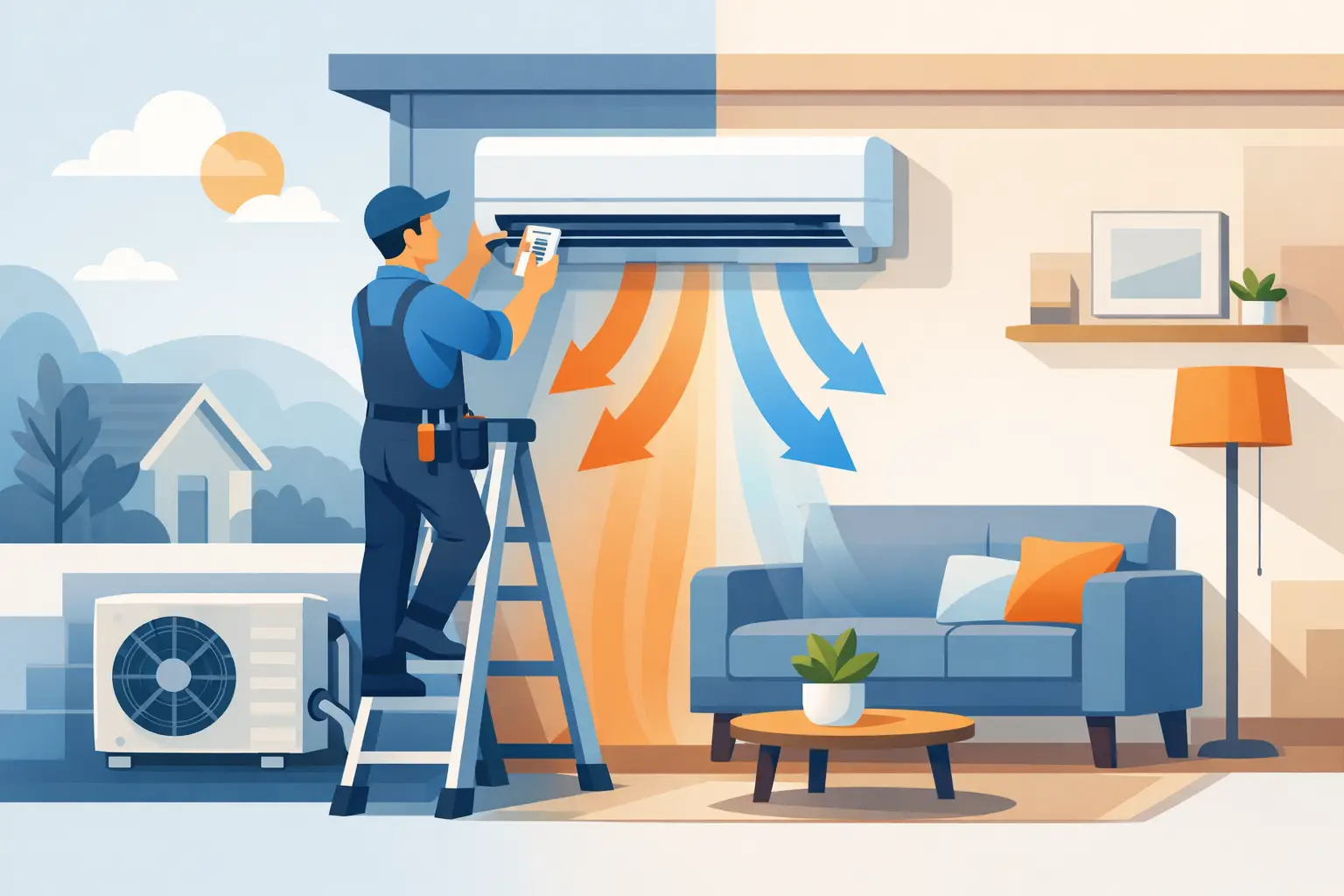
Cold mornings expose bad heating fast. If a system is noisy, uneven, expensive to run or slow to warm the room, the problem often starts well before the first switch-on. Reverse cycle heating installation is not just about mounting a unit and connecting power. It is about correct sizing, proper placement, clean pipework, solid commissioning and making sure the system suits how the space is actually used.
For homeowners and business operators, that matters because a poor install keeps costing you. You feel it in higher power bills, patchy comfort, unnecessary call-outs and equipment that never seems to perform the way it should. A good install is quieter, neater and more reliable from day one.
What reverse cycle heating installation actually involves
Reverse cycle systems heat and cool using the same equipment. In heating mode, the system draws heat energy from outside air and transfers it indoors. That makes it a practical option for South Australian conditions, where you want winter heating without giving up efficient summer cooling.
The installation itself is more than a basic fit-off. It starts with assessing the room or building, then matching the system capacity to the space. From there, the indoor and outdoor units need to be positioned properly, refrigerant lines run neatly, drainage sorted, electrical work completed to standard and the whole system tested under operation.
That sounds straightforward, but this is where shortcuts show up. If the unit is oversized, it can cycle poorly and waste energy. If it is undersized, it can run flat out and still struggle. If the indoor head is in the wrong spot, one part of the room feels fine while another never gets warm.
Why sizing matters more than most people expect
A lot of heating complaints come back to sizing. People often assume bigger is better, but that is not always true. The right capacity depends on the room size, ceiling height, insulation, window area, sun exposure and how the space is used.
A bedroom, open-plan living area, office and retail shopfront all behave differently. So do older homes with draughts and newer builds with better thermal performance. Commercial spaces can be more complicated again because foot traffic, equipment heat load and trading hours all affect what the system needs to do.
This is why proper reverse cycle heating installation should begin with a site-based assessment, not a guess over the phone. The aim is steady comfort and efficient operation, not simply the biggest unit that fits the wall.
Split system or ducted – which suits the job?
For many properties, the first decision is whether a split system or ducted setup makes more sense. Both can work well, but they solve different problems.
Split systems for targeted heating
A split system is often the practical choice when you want to heat a specific room or zone. Living rooms, bedrooms, offices and small tenancies are common examples. They are generally quicker to install, cost less upfront than full ducted systems and give you good control over individual spaces.
They also make sense when only part of a house or building needs regular heating. There is no point conditioning rooms that sit empty most of the week.
Ducted systems for whole-property coverage
Ducted reverse cycle heating suits larger homes and commercial spaces where consistent heating across multiple rooms matters. It gives a cleaner look indoors and can offer zoning, which helps control running costs by directing airflow where it is actually needed.
The trade-off is a higher upfront investment and a more involved installation. Roof space, access, duct layout and return air design all matter. Done properly, ducted heating feels even and unobtrusive. Done poorly, it can be noisy, inefficient and difficult to balance.
Placement can make or break performance
Even the right unit will disappoint if it is installed in the wrong spot. Indoor unit placement affects airflow, room coverage, service access and noise. Outdoor unit placement affects efficiency, drainage, weather exposure and neighbour impact.
Inside, the goal is to deliver heat where people actually feel it while keeping the unit accessible for cleaning and servicing. Outside, the condenser needs adequate clearance and stable mounting. It also needs to be located where noise and airflow discharge will not create problems later.
This is where experienced installers earn their keep. Good placement is rarely accidental. It comes from knowing how systems behave in real buildings, not just on paper.
The details that separate a proper install from a rushed one
Customers usually notice the finished unit on the wall. They do not always see the details behind it, but those details affect reliability.
Neat, well-supported pipework matters. Correct refrigerant handling matters. Drainage falls matter. Electrical isolation and protection matter. So does pressure testing, vacuuming the system properly and commissioning it before handover.
If any of that is skipped or rushed, you may not know immediately. The system might still turn on. The problems often show up later as poor efficiency, water leaks, reduced lifespan or faults that should never have happened.
No shortcuts. No surprises. That is the standard a heating install should meet.
What to expect on installation day
A professional installation should feel organised, not chaotic. Before work starts, you should know what system is being installed, where the units are going, what the quote includes and whether any access or electrical limitations need to be discussed.
On the day, the job should be carried out cleanly and with respect for the property. Once installed, the system should be tested properly, not just powered on for thirty seconds. You should also be shown the basics – how to switch between modes, how to set temperature sensibly, what the filters need and when to book servicing.
For commercial sites, planning matters even more. Installation may need to work around trading hours, staff access, customers or other equipment on site. A contractor who turns up prepared can save a lot of disruption.
Running costs and long-term value
People often ask whether reverse cycle heating is expensive to run. The honest answer is that it depends on the system, the building and how it is used. But compared with many electric resistance heating options, reverse cycle systems are generally far more efficient.
That said, efficiency on paper is only part of the story. Installation quality plays a direct role in performance. A well-sized, properly commissioned system in a reasonably sealed space will usually run better and cost less over time than a poorly installed premium unit.
Maintenance also matters. Dirty filters, blocked coils and neglected servicing can drag down heating performance and push running costs up. If you rely on the system through winter, regular servicing is not overkill. It is part of protecting the investment.
Reverse cycle heating installation for homes and businesses
Residential and commercial installs often look similar at a glance, but the priorities can be different. In homes, people usually care most about comfort, noise, appearance and power bills. In commercial settings, reliability and downtime are often the bigger issue.
An office needs stable comfort for staff and clients. A retail space needs heating that performs without making the front of shop unbearable every time the door opens. For hospitality or facilities, system failure can quickly become an operational problem rather than a simple inconvenience.
That is why the install needs to suit the site, not just the catalogue. A dependable contractor will ask the right questions before recommending equipment.
How to choose the right installer
If you are comparing quotes, do not focus only on the headline figure. Ask what system capacity has been allowed for, where the units will be placed, what electrical work is included and whether commissioning is part of the job. Cheap quotes can leave out things that become expensive later.
It also pays to ask who is doing the work. Qualified technicians, clear communication and upfront pricing are worth more than a vague promise and a low number. You want the job done properly the first time, with workmanship that lasts.
For property owners in Adelaide, that local knowledge can help as well. Climate, building style and usage patterns all affect what works best, and generic advice does not always hold up on site.
LJ Refrigeration & Air-Conditioning approaches installation the same way it approaches service work – with qualified technicians, clear pricing and no subcontractor guesswork.
When it is worth replacing instead of repairing
If you already have an older heating system, installation may come into the picture because repeated repairs stop making sense. If the unit is struggling, parts are becoming harder to source, or power bills keep climbing, replacement can be the better long-term call.
That does not mean every fault justifies a new system. Sometimes a repair and service will get years more life out of existing equipment. But if performance has been poor from the start, the issue may be the original install or an incorrect system choice rather than simple wear and tear.
A good contractor should be straight about that. Sometimes the best advice saves you from spending money twice.
When reverse cycle heating installation is done properly, the result is simple – reliable warmth, sensible running costs and a system that works the way it should when the temperature drops.
