
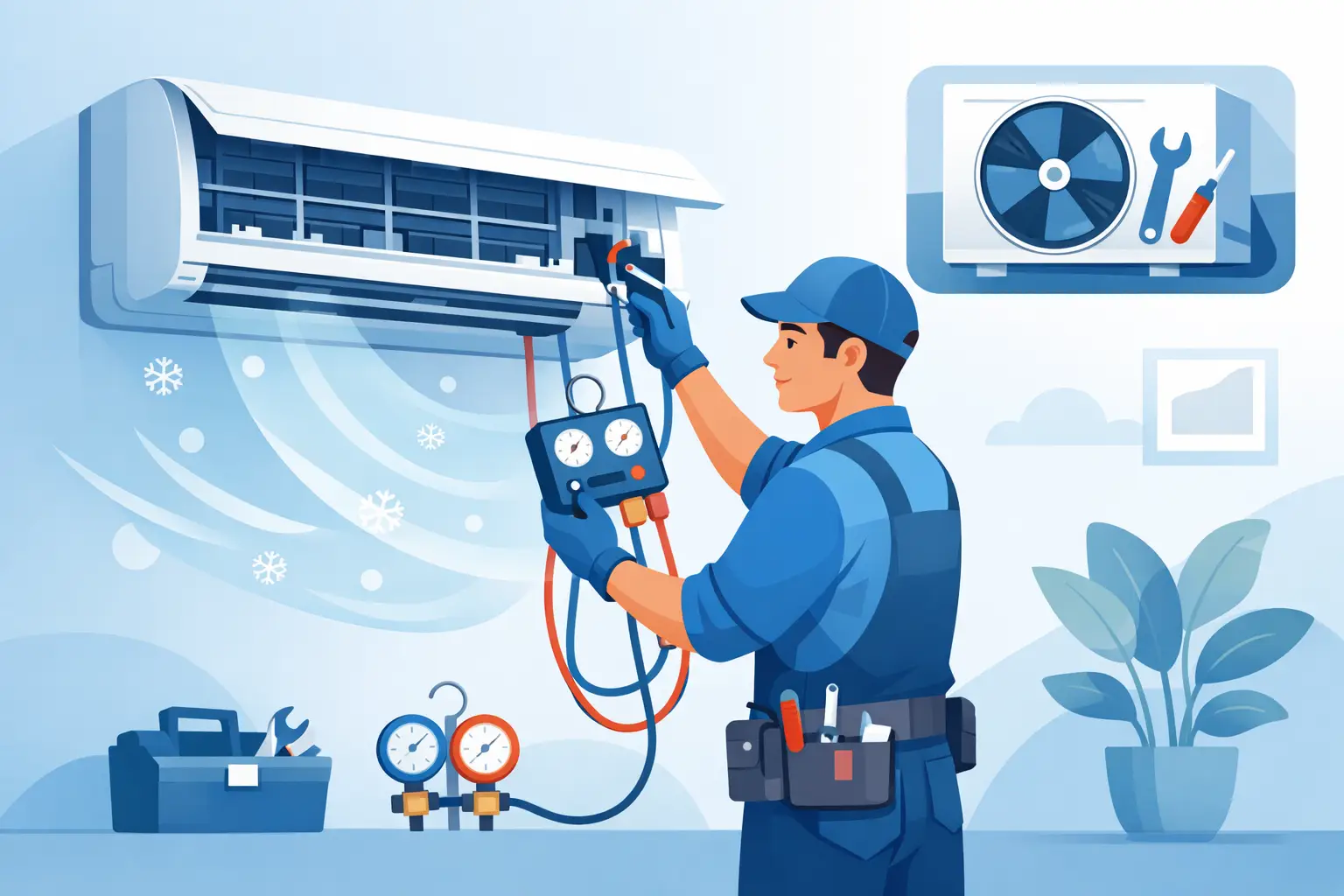
When your air con starts blowing warm air on a 38-degree afternoon, you do not need a sales pitch. You need straight answers, a proper diagnosis and air conditioning repairs that deal with the cause of the fault, not just the symptom. That matters whether it is a split system at home, a ducted system across the house or a commercial unit keeping staff and customers comfortable.
Too many repair jobs go wrong for the same reason. Someone turns up late, swaps a part without checking the full system, and leaves before confirming the unit is actually running as it should. It might work for a week. Then the same problem comes back, often with a bigger bill attached. Good repair work is not about chasing the fastest possible fix. It is about finding out why the system failed and making sure the repair stands up.
What causes most air conditioning repairs?
Most faults start small. A blocked filter restricts airflow. A dirty coil forces the system to work harder. A failing capacitor puts strain on the compressor or fan motor. Refrigerant issues can reduce cooling performance long before the unit stops altogether. Electrical faults, worn components and drainage problems are also common, especially in systems that have missed regular servicing.
The exact cause depends on the type of system and how it is used. A residential split system might struggle because it has not been cleaned properly in years. A ducted unit may develop sensor or zoning faults. In a commercial setting, heavier run times and higher load demands can expose weak components much faster. That is why proper fault finding matters. Two systems can show the same symptom and need completely different repairs.
Age is part of the picture, but it is not the whole story. An older system is more likely to need attention, but plenty of newer units fail early because of poor installation, lack of maintenance or low-quality previous repairs. On the other hand, some older systems still have years left in them if the fault is isolated and repaired properly. Blanket advice to replace everything is not always the honest answer.
Signs you need air conditioning repairs
Some faults are obvious. The unit will not start, it trips the power, it blows warm air or makes a noise that was never there before. Others creep up more slowly. Rooms take longer to cool. Airflow feels weaker. Power bills rise for no clear reason. Water starts leaking from the indoor unit. The system cycles on and off too often or never quite reaches the set temperature.
These are the signs people tend to put off, especially when the system is still half-working. That usually costs more in the long run. A struggling unit keeps running under stress, and one failed part can start affecting others. A fan motor issue can lead to overheating. Poor airflow can ice up coils. Drainage problems can damage surrounding surfaces. What starts as a manageable repair can turn into a larger job if it is ignored through another hot spell.
If the system serves a business, delay becomes even more expensive. Unreliable cooling in an office is disruptive enough. In hospitality, retail or facilities with temperature-sensitive equipment, downtime can affect customers, staff comfort and day-to-day operations. Fast response matters, but so does getting the diagnosis right the first time.
What a proper repair visit should look like
A good repair starts before any tools come out. The technician should ask what the system is doing, when the fault started and whether the issue is constant or intermittent. That basic information can save time and help pinpoint whether the problem is electrical, mechanical, refrigerant-related or linked to controls.
From there, the system needs to be tested properly. That can include checking operating pressures, temperatures, electrical components, airflow, condensate drainage and control settings. If a part has failed, the question is not just what has stopped working. It is why it failed. Replacing a capacitor without checking motor condition, voltage supply or compressor performance is how repeat breakdowns happen.
Clear communication is part of the job too. You should know what the fault is, what needs to be done, what it will cost and whether there are any trade-offs. Sometimes the repair is straightforward and well worth doing. Sometimes the unit can be repaired, but other worn components mean it may not be the most sensible long-term option. Honest advice matters more than a hard sell either way.
Repair or replace? It depends on the unit
Not every breakdown means the system is finished. In many cases, air conditioning repairs are the right call, especially when the fault is isolated and the rest of the unit is in good condition. A quality system with a failed component can often be returned to reliable service without much drama.
Replacement starts to make more sense when faults are recurring, major components are failing, or parts availability is becoming a problem. Repair costs also need to be weighed against the age and efficiency of the system. If a unit is well past its prime and struggling through each summer, spending more money on it may only delay the obvious.
There is no single rule that fits every job. A homeowner may prefer a repair that gets another few years from an existing system. A business might decide downtime risk is too high and replacement is the safer option. The right recommendation comes from the condition of the equipment, the repair history and how critical the system is to the space.
Why maintenance affects repair costs
Most systems do not fail without warning. They lose efficiency, collect dirt, run hotter, drain poorly or show early electrical issues first. Regular servicing helps catch those problems before they turn into breakdowns.
That does not mean maintenance prevents every repair. Parts wear out, weather takes its toll and heavy use adds pressure to any system. But a serviced unit is easier to assess, usually cheaper to repair and less likely to suffer the kind of avoidable failures that come from neglect.
For homeowners, regular servicing is often the difference between a clean, efficient unit and one that struggles every summer. For commercial operators, maintenance is really about protecting uptime. If the system supports staff comfort, customer experience or refrigerated stock, waiting for failure is rarely a good plan.
Residential and commercial repairs are not the same job
The basics of refrigeration and air conditioning stay the same, but the repair approach changes depending on the site. In a home, the focus is usually comfort, energy use, noise and keeping disruption low. The job still needs to be done properly, but access is simpler and the system load is often more predictable.
Commercial work tends to carry more pressure. Systems may serve larger spaces, operate for longer hours or tie into broader ventilation and refrigeration needs. A fault in a small office system is one thing. A failure in a shop, kitchen or facility with multiple conditioned spaces can affect trading, staff conditions and daily operations very quickly.
That is why experience across both residential and commercial systems matters. The repair itself might involve the same kind of component testing, but priorities on site are different. Timing, access, communication and minimising interruption all count.
Choosing the right contractor for air conditioning repairs
This is where a lot of people get caught. Price matters, but the cheapest call-out is not always the cheapest outcome. If the fault is misdiagnosed, if parts are fitted without proper testing, or if the job gets handed around between subcontractors, you can end up paying twice.
A better standard looks fairly simple. Qualified technicians. Clear quoting. Punctual attendance. Clean workmanship. Straight answers about whether the unit is worth repairing. No guesswork and no patch jobs dressed up as permanent fixes.
For local customers in Adelaide, that also means choosing a contractor who understands the conditions systems work under here. Long hot periods, heavy summer demand and a mix of older and newer installations all affect how equipment performs and fails. LJ Refrigeration & Air-Conditioning works with both homeowners and commercial operators on that basis – diagnose properly, repair what is worth repairing, and do the job in a way that lasts.
If your system is showing signs of trouble, the best time to act is before a small fault turns into a full breakdown. A proper repair does not need fanfare. It just needs to be done right, by someone who turns up, tells you the truth and fixes the problem without shortcuts.
