
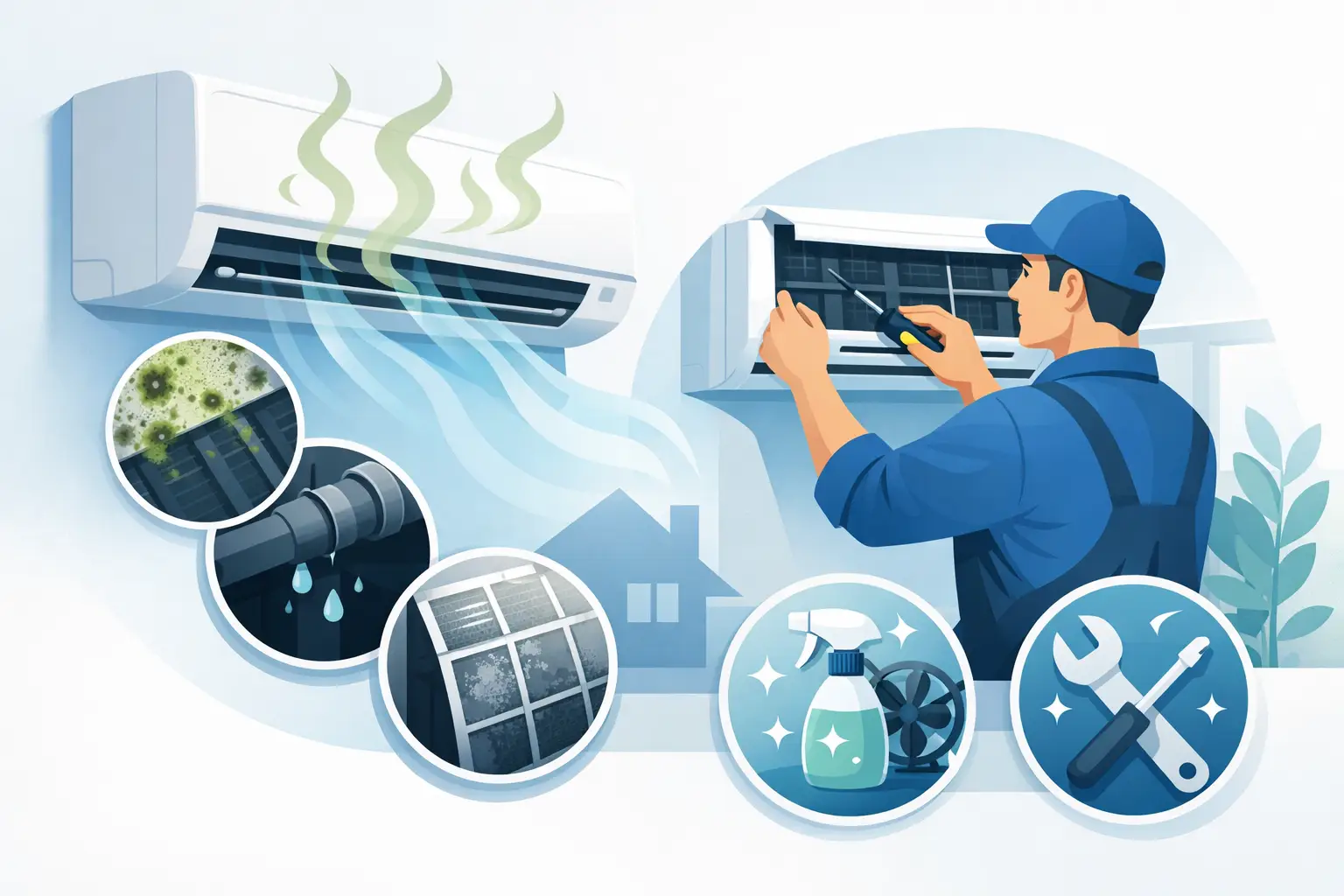
That stale, damp smell when the air conditioner starts is not something to ignore or cover up with air freshener. If you are asking, why does aircon smell, the answer is usually moisture, dirt or a fault somewhere inside the system. The fix depends on the smell and where it is coming from. A proper inspection gets to the cause, rather than masking it for a week.
Why Does Aircon Smell When It Starts?
Your air conditioner removes humidity from indoor air as it cools. That moisture collects on the indoor coil and drains away through a condensate line. When filters are blocked, the drain is dirty, or the unit is left damp between runs, dust and organic material can build up.
In Adelaide homes, this is often most noticeable after an air conditioner has sat unused through the cooler months, then gets switched on for the first hot day. The system is moving air across dust, moisture and any build-up on the coil. A brief dusty smell can be normal after a long break. A smell that stays, returns every time, or gets worse is not.
For businesses, an odour from a ducted system, wall split or ceiling cassette can affect staff, customers and the space you are trying to keep comfortable. It can also point to a maintenance issue that will reduce efficiency if left alone.
The Smell Often Tells You What Is Wrong
Musty, mouldy or damp smell
This is the most common air conditioning odour. It usually means mould, mildew or bacteria are growing around the evaporator coil, filters, fan barrel or drain pan. These areas stay wet during cooling operation, and they collect airborne dust over time.
A dirty filter is often part of the problem, but changing the filter alone may not solve it. If the coil and drain system have not been cleaned, the odour can return quickly. The indoor unit needs to be opened, inspected and cleaned properly, with the condensate drain checked for free flow.
People with asthma, allergies or respiratory sensitivities can find this smell particularly unpleasant. It does not automatically mean the system is dangerous, but it does mean the unit needs attention rather than another season of use.
Dirty socks smell
The name is blunt, but accurate. A ‘dirty sock’ smell is a sharp, stale odour that commonly develops when bacteria build up on an evaporator coil. It tends to hit when the unit starts, especially as the system moves between cooling and fan operation.
The usual remedy is a thorough indoor-unit clean, not a fragrance spray. A technician should clean the coil, fan, drain tray and associated components using products suitable for HVAC equipment. Aggressive household cleaners can damage parts, leave residue or create another smell when the system runs.
Dusty or burning smell
A light dusty smell after a long period without use can come from dust on the indoor coil or, in reverse-cycle systems, dust warming on the heating components. It should clear fairly quickly.
A burning smell that persists, smells like melting plastic, or is accompanied by unusual noise, smoke or a tripped circuit breaker is different. Turn the system off at the controller and isolator if it is safe to do so, and arrange a qualified technician. Electrical faults, overheated wiring, a failing motor or a damaged circuit board are not DIY jobs.
Do not keep restarting the unit to ‘see if it goes away’. That can turn a contained fault into a more expensive repair.
Rotten egg, sewer or decaying smell
A rotten or decaying odour may mean an animal or pest has entered ductwork, the outdoor unit area or a ceiling cavity near return-air ducting. In some properties, a dry or poorly connected plumbing trap can also allow sewer gases to enter the air path.
This needs investigation, particularly in ducted systems. Removing the source without checking the ductwork, ceiling space and drain connections can leave the smell in place. If there is any chance of a gas leak, leave the area and contact the relevant emergency service or gas provider first.
Chemical or sweet smell
Refrigerant itself is not always easy to smell, and a smell alone does not confirm a refrigerant leak. However, a chemical, sweet or solvent-like odour, particularly with weak cooling, hissing sounds or ice forming on the unit, warrants a service call.
Refrigerant work must be completed by an appropriately licensed technician. A leak should be located and repaired before the system is recharged. Simply adding more refrigerant without fixing the leak is a temporary measure at best and poor practice at worst.
Common Causes Beyond a Dirty Filter
Filters deserve regular attention because they restrict airflow when clogged. Restricted airflow can leave the coil colder and wetter than it should be, which encourages build-up. But filters are only one part of the system.
A blocked condensate drain is another frequent cause. Water may sit in the drain pan or back up inside the unit rather than draining outside. You may notice dripping, water marks on the wall, reduced airflow or an intermittent musty smell. Left untreated, a drainage issue can damage plaster, paint and internal components.
Ducted systems add a few more possibilities. Dust can settle in return-air grilles and ducts, insulation can be affected by moisture, and pests can find their way into ceiling spaces. The source is not always directly behind the grille you can see. That is why diagnosis matters before paying for cleaning work that may not address the problem.
In commercial spaces, odours can also be drawn into return-air paths from kitchens, storerooms, loading areas or nearby plant rooms. System design, ventilation balance and operating hours all matter. A smell in one part of a building does not necessarily mean the air conditioner itself is contaminated.
What You Can Safely Do First
Before booking a repair, there are a few sensible checks a homeowner or site manager can make. Switch the unit off, allow it to stop, then remove and inspect accessible filters. If they are washable, clean them according to the manufacturer’s instructions, let them dry completely and refit them. Never operate the system without filters unless the manufacturer specifically allows it.
Check for obvious water leaks beneath a wall-mounted indoor unit or around a ceiling vent. Look outside for a blocked or overflowing condensate drain point. Also clear leaves, grass clippings and rubbish from around the outdoor unit, while keeping hands well clear of electrical components and coil fins.
Avoid spraying disinfectant, bleach or perfumed products into the unit. These products can corrode components, affect indoor air quality and hide the real issue. Do not open electrical covers, poke wire into a drain line or attempt to clean a coil with high-pressure water.
If the smell remains after a basic filter clean, arrange a service. A technician can assess the coil condition, fan, drain, ductwork and electrical components without guessing.
When an Aircon Smell Needs Urgent Attention
Book prompt professional help if you notice a persistent burning smell, smoke, repeated tripping, visible water leaking indoors, a strong chemical odour, or a rotten smell that may involve a dead animal or gas issue. These are not problems to put off until the next scheduled service.
For a musty smell with no urgent warning signs, it is still worth dealing with before summer demand ramps up. A clean system generally moves air better, drains correctly and is less likely to develop a bigger fault when you need it most.
Preventing Air Conditioner Odours
Regular servicing is the practical answer. For most households, cleaning filters every few months during heavy use and arranging professional maintenance at suitable intervals helps keep the indoor unit clean and drainage working. Homes with pets, smokers, high dust levels or frequent use may need more attention.
Commercial systems should follow a planned maintenance schedule based on operating hours, the type of premises and the equipment involved. A café kitchen, office, retail store and medical practice do not place the same demands on their air conditioning. The right schedule is the one that prevents disruption, not one that looks good on paper.
A quality service should involve more than a quick filter rinse. The technician should assess airflow, clean relevant components, inspect drainage, test operation and identify faults before they become breakdowns. No shortcuts. No surprises.
If your air conditioner smells every time it runs, treat it as a maintenance or repair issue, not a nuisance you have to live with. LJ Refrigeration & Air-Conditioning can inspect the cause and carry out the work properly, so the air moving through your home or workplace is clean, cool and free of unwanted odours.

1 comment on “Why Does Aircon Smell? Causes and Proper Fixes”