
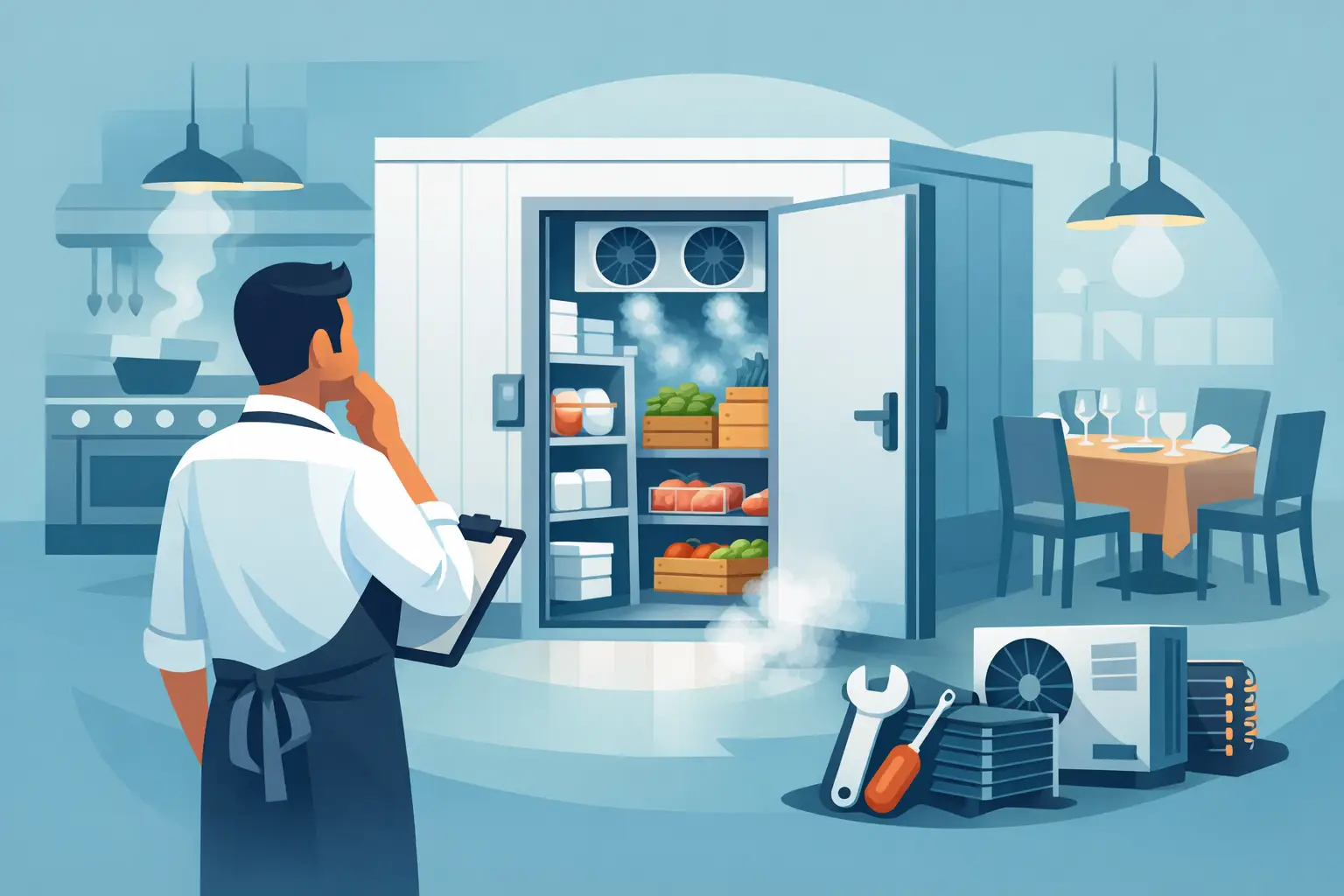
A cool room rarely fails at a convenient time. It is usually during a busy service, a warm Adelaide week, or just after stock has been delivered. A restaurant cool room retrofit can be the sensible answer when the room itself is still worth keeping but the refrigeration, insulation, doors or controls are no longer doing their job properly.
Retrofitting is not simply fitting a new unit and hoping for the best. The right outcome comes from finding the source of the problem, working around your trading hours where possible, and installing equipment that suits the room, the stock load and the way your kitchen operates. No shortcuts. No surprises.
What a restaurant cool room retrofit can involve
A retrofit upgrades part or all of an existing cool room rather than building a completely new room. The scope depends on the condition of the panels, floor, door seals, refrigeration equipment and electrical controls.
For some restaurants, the main issue is an ageing condensing unit that cannot hold temperature through a lunch and dinner rush. In other cases, the evaporator is icing up, the door is leaking cold air, or damaged insulated panels are allowing heat and moisture into the room. Replacing one failed component without addressing these underlying issues can lead to more call-outs and ongoing product risk.
A properly assessed retrofit may include a new condensing unit and evaporator, upgraded pipework, replacement door hardware and seals, improved insulation, new temperature controls, or a more practical room layout. The aim is simple: stable temperatures, sensible running costs and refrigeration you can rely on during service.
Signs repair is no longer the right answer
Not every breakdown means you need a retrofit. A worn fan motor, failed controller or refrigerant leak may be repaired effectively if the rest of the system is sound. But repeated faults are a warning that the equipment is reaching the point where spending more on repairs stops making commercial sense.
Watch for temperatures that drift during busy periods, long compressor run times, regular icing, water on the floor, noisy equipment, damaged seals and stock that spoils sooner than it should. A sudden increase in power use can also point to a system working too hard to overcome poor insulation, airflow restrictions or inefficient equipment.
The age of the plant matters, but it is not the only factor. A well-maintained older system can sometimes continue to perform well. Conversely, a newer unit that was undersized, poorly installed or never properly serviced can create ongoing trouble. The question is not just, “Can it be repaired?” It is, “Will this repair give the business reliable operation?”
Start with the room, not just the refrigeration unit
The refrigeration equipment is only one part of a cool room. If the room leaks air or cannot shed moisture properly, even a quality new unit will struggle.
Door seals deserve close attention. A door that does not close firmly lets warm, humid air enter every time staff move in and out. That creates ice, makes the compressor run longer and puts more strain on the system. Damaged hinges, bent door frames, failed closers and missing strip curtains can all have the same effect.
Panels and flooring also need inspection. Cracked panel joins, damaged insulation and worn floor areas can reduce thermal performance. In a busy kitchen, trolleys, deliveries and constant foot traffic can take a real toll. If the room structure has deteriorated, a refrigeration-only upgrade may not deliver the result you expect.
Airflow is another common issue. Overpacked shelving, boxes stacked against the evaporator or poor product placement can restrict circulation. A retrofit assessment should account for how stock is received, stored and accessed, not just the room’s external dimensions.
Capacity needs to match real kitchen demand
A cool room may have been sized for the restaurant’s original menu and trading pattern. If covers have increased, more prep is done on site, or the kitchen now holds more chilled beverages and produce, the old system may simply be too small.
Capacity calculations should consider the room size, insulation condition, ambient heat, door openings, product temperature on arrival and the amount of stock brought in each day. Loading a room with warm product after a delivery is very different from maintaining already chilled stock. Getting this wrong can leave a new system under pressure from day one.
Planning the work around service
Downtime is one of the biggest concerns for restaurant operators. A good retrofit plan starts with clear communication about what needs to be isolated, how long the work will take and whether temporary cold storage is required.
Some works can be completed outside normal trade or staged to reduce disruption. Others, particularly major plant replacement or panel repairs, may need a planned shutdown. The right approach depends on the room condition, access to equipment, stock levels and the complexity of the installation.
Before work begins, arrange stock management. Reduce inventory where practical, move high-risk items to suitable temporary refrigeration and make sure staff know which areas will be unavailable. This protects food safety and prevents a rushed decision on the day.
A qualified technician should also check electrical supply, drainage and ventilation around the condensing unit. These details are often overlooked, yet they have a direct effect on reliability. Poor drainage causes water issues. Restricted airflow around outdoor equipment causes overheating. An inadequate electrical setup can create nuisance trips and component damage.
What affects restaurant cool room retrofit cost?
There is no honest one-price answer because every room is different. A straightforward equipment replacement is not the same as a retrofit involving insulation repairs, a new door, electrical upgrades and altered pipework.
The main cost factors are the room size, required temperature range, refrigeration capacity, equipment location, access, condition of the existing panels and whether work must be completed outside standard hours. The complexity of removing old equipment and bringing new plant into a tight rear access area can also affect the job.
It can be tempting to choose the lowest-priced replacement option. But cheap equipment, incorrect sizing or rushed installation often costs more over time through power use, food loss and repeat repairs. A clear quote should explain what is being replaced, what is being retained and any issues that could affect the final scope. That gives you a proper basis for comparing options.
The value of controls and scheduled maintenance
Modern temperature controls can make daily operation easier. Clear displays, alarms and accurate settings help staff identify a problem before it becomes a stock-loss event. They do not replace regular checks, but they provide useful early warning when temperatures begin to rise.
Once the retrofit is complete, maintenance is what protects the investment. Condenser coils need cleaning, drains need checking, door seals need inspection and refrigeration performance needs to be measured. Small faults are cheaper to correct before they become a Saturday-night emergency.
For restaurants, scheduled servicing also gives management a clearer record of the room’s condition. That makes it easier to budget for future work rather than being caught out by an avoidable failure.
Choose workmanship that holds up
A cool room is part of your food safety operation, not just another appliance in the building. The work needs to be carried out by qualified refrigeration technicians who can diagnose the full system, explain the options plainly and stand behind the installation.
LJ Refrigeration & Air-Conditioning provides cool room installation, repairs and planned maintenance for Adelaide businesses that need dependable refrigeration without the run-around. The focus is on identifying the cause, supplying suitable equipment and doing the job properly the first time.
If your cool room is becoming unreliable, do not wait for a full failure to force the decision. A timely inspection gives you room to plan the work, protect your stock and keep the kitchen operating on your terms.
