
Most HVAC failures do not come out of nowhere. They build slowly – a clogged filter, a dirty coil, a loose connection, a drain starting to back up. Then the unit gives up on the hottest day of summer or right when your business is flat out. That is why a preventive HVAC maintenance plan matters. It gives you a way to catch wear early, keep performance steady and avoid paying for problems that could have been prevented.
For homeowners, that usually means fewer surprise breakdowns, more reliable heating and cooling, and better value from the system you have already paid for. For commercial operators, the stakes are often higher. Comfort complaints, stock loss, downtime and emergency call-outs all cost money. In both cases, maintenance is not about over-servicing equipment. It is about doing the right work at the right time.
What a preventive HVAC maintenance plan actually does
A good preventive HVAC maintenance plan is not just a reminder to clean a filter once in a while. It is a scheduled service program based on how the system works, how hard it runs and what happens when small faults are left alone.
The main goal is simple – keep the equipment safe, efficient and dependable. That means checking electrical components, refrigerant performance, airflow, drainage, controls and general condition before a fault turns into a failure. It also means spotting signs of poor installation, age-related wear or operating issues that can shorten the life of the system.
There is a practical difference between maintenance and repair. Maintenance is planned. Repair is reactive. One protects your system and budget. The other usually arrives at the worst possible time.
Why planned maintenance saves money
A lot of people hear the word maintenance and think extra cost. Fair enough. But letting a system run unchecked is rarely the cheaper option over time.
Dirty filters and coils force units to work harder. That pushes up power use and puts strain on motors, fans and compressors. Loose electrical connections can lead to intermittent faults that are hard to trace later. Blocked drains can cause water damage inside the home or workplace. In commercial settings, poor HVAC or refrigeration performance can affect staff comfort, food safety, product quality or customer experience.
The savings do not always show up as one big number. More often, they come through fewer emergency jobs, lower energy waste, longer equipment life and less disruption. A maintenance plan will not guarantee that nothing ever breaks. No honest contractor should promise that. What it does is reduce the odds of avoidable breakdowns and give you a clearer picture of the system’s condition.
What should be included in a preventive HVAC maintenance plan
The exact scope depends on the equipment. A split system in a home does not need the same attention as a ducted setup serving a larger property, and neither is the same as a cool room or commercial refrigeration plant. Still, a proper plan should cover the fundamentals.
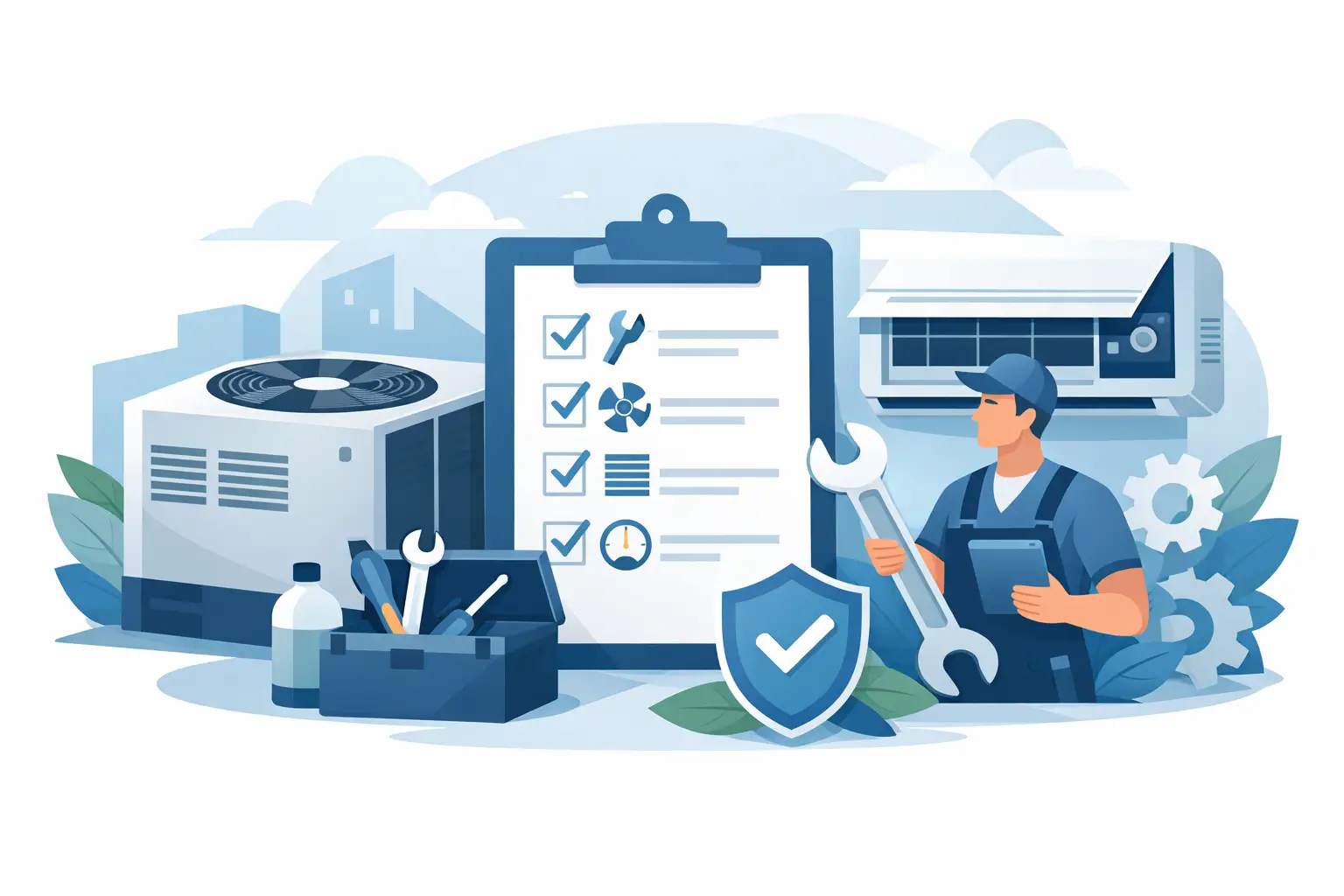
That usually includes inspecting and cleaning filters, checking indoor and outdoor coils, testing electrical components, verifying thermostat or control operation, checking refrigerant pressures and temperatures where required, inspecting condensate drains, assessing fan motors and airflow, and looking for signs of corrosion, vibration or component wear.
For ducted systems, zoning, duct condition and return air issues may also need attention. For heating equipment, combustion safety and heat exchanger condition can be critical. For commercial sites, the schedule often needs to reflect operating hours, site demands and compliance requirements.
The point is not to tick boxes for the sake of it. The point is to find what is changing before it becomes expensive.
How often should HVAC maintenance be done?
This is where the answer is usually it depends. A home split system used seasonally may only need servicing at sensible intervals, while a heavily used ducted system or a commercial unit running long hours will need more frequent checks. If you have pets, renovation dust, coastal air, a greasy kitchen environment or high occupancy, maintenance may need to happen more often.
As a general rule, annual servicing suits many residential systems, especially when timed before peak heating or cooling season. Commercial systems often need a more structured schedule, sometimes quarterly or tailored around the site. Refrigeration equipment that supports business operations should never be left to guesswork.
A decent contractor will not push a one-size-fits-all plan. They should assess the equipment, usage and risk, then recommend a schedule that makes sense.
Signs your current maintenance approach is not enough
Some systems are technically still running, but that does not mean they are running well. If rooms are uneven in temperature, the unit is noisier than it used to be, power bills have climbed without a clear reason, or you keep needing repairs to different parts, the system may be overdue for proper attention.
Poor maintenance also shows up in slower pull-down times, short cycling, musty smells, water leaks and inconsistent airflow. In commercial premises, staff may start noticing hot and cold spots long before the business owner sees a problem on paper. In refrigeration, even a minor performance drop can become a serious issue if stock is involved.
If the same fault keeps coming back, that is another red flag. Repeated patch-up work often means the underlying cause was never dealt with.
Choosing the right preventive HVAC maintenance plan
Not all plans are equal. Some are little more than a quick once-over. Others are designed properly and backed by technicians who know the systems they are working on.
The first thing to look for is clear scope. You should know what is included, how often visits happen and what is not covered. Vague promises are no use when equipment starts playing up. Next is technician quality. Qualified tradespeople who do the work themselves are worth more than a cheap plan built around rushed visits and guesswork.
Good communication matters too. If a part is wearing out, you should be told plainly. If a system is undersized, poorly installed or nearing the end of its life, that should not be softened or hidden. Honest advice helps you plan ahead instead of getting cornered into an urgent decision.
For commercial operators, reporting can be just as important as the service itself. You need records, site history and practical recommendations you can act on. For homeowners, the priority is usually reliability, clean workmanship and knowing someone will show up when booked.
Homeowners and businesses need different plans
Residential and commercial maintenance often get talked about as if they are the same job. They are not.
At home, the focus is usually comfort, energy use, air quality and extending system life. Most households want straightforward servicing, early fault detection and no mess left behind. A good maintenance plan should support that without overcomplicating it.
In a business, the conversation changes. System failure can interrupt trade, affect customers, put stock at risk or create complaints from staff. Offices, retail spaces, hospitality venues and facilities all have different load patterns and operating pressures. That means maintenance has to match the site, not just the brand of unit on the wall.
That is where working with a contractor who understands both HVAC and refrigeration can make a real difference. If your site relies on more than one type of equipment, it makes sense to have a service partner who can see the bigger picture rather than treating each asset in isolation.
What maintenance cannot fix
A preventive HVAC maintenance plan is valuable, but it is not magic. It cannot turn an old, failing unit into a new one. It cannot fully offset poor design, undersized equipment or years of neglected repairs. And it will not prevent every breakdown, especially where components simply reach the end of their service life.
What it can do is help you make better decisions earlier. Sometimes that means repairing a worn part before it damages something more expensive. Other times it means being told, honestly, that replacement is the smarter long-term move.
That kind of advice matters. No shortcuts. No surprises. Just a clear view of what condition the system is in and what makes financial sense from here.
For property owners and operators in Adelaide, that practical approach is usually the one that pays off. A maintenance plan should not feel like paperwork. It should feel like control – over costs, downtime and the condition of the equipment you rely on every day.
If your system only gets attention after it stops, you are not really managing it. You are waiting for it to choose the timing.

1 comment on “Preventive HVAC Maintenance Plan Basics”