
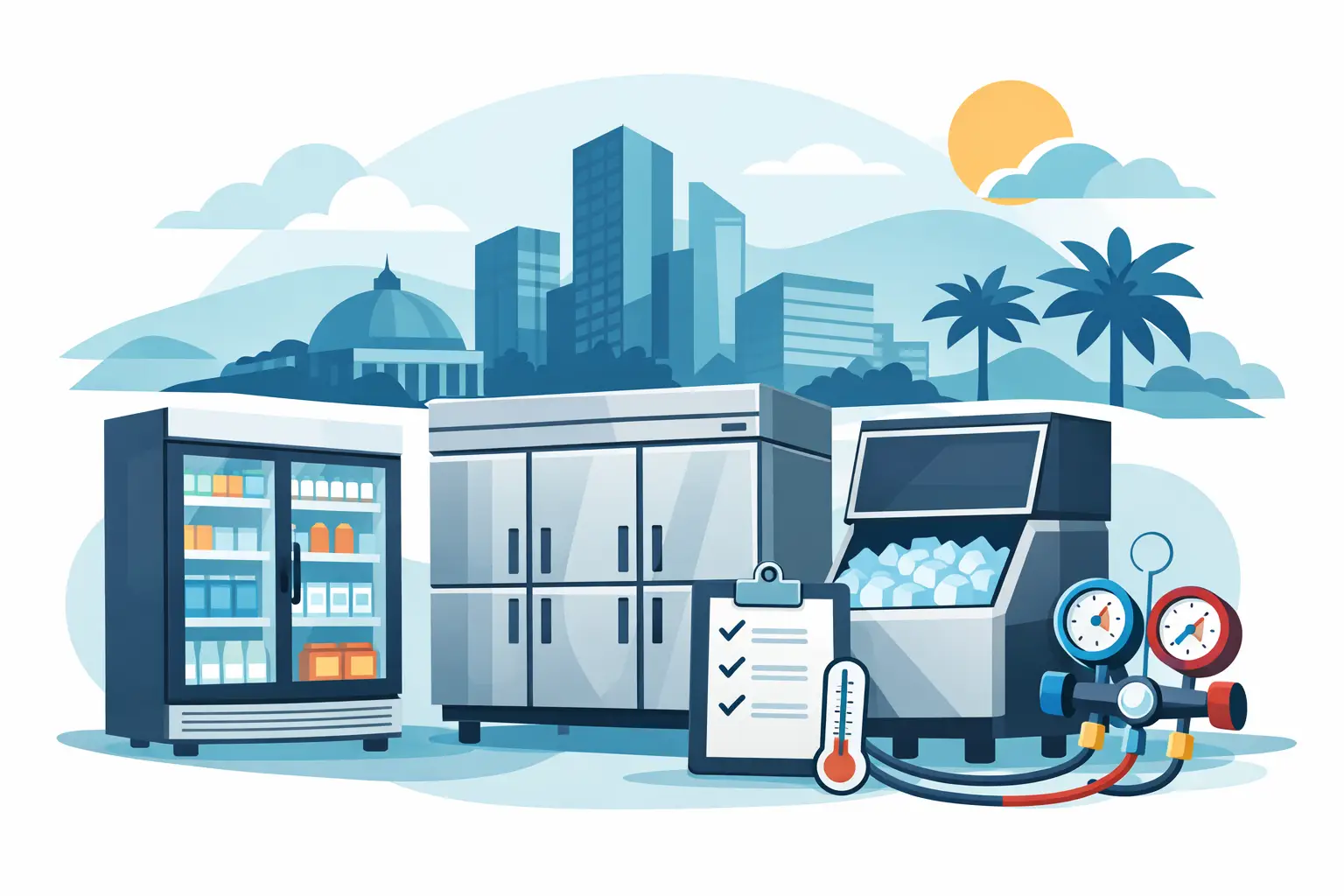
A failed fridge is not just an inconvenient repair job. For a café, butcher, grocer, pub or commercial kitchen, it can mean lost stock, interrupted service and a long day spent managing a problem that should not have happened. This commercial refrigeration buyers guide is built around the decisions that prevent that outcome: choosing equipment that suits the work, the site and the people using it.
The cheapest cabinet on the quote is rarely the cheapest option over its working life. A better buying decision accounts for capacity, access, heat load, energy use, installation quality and the support available when something goes wrong. No shortcuts. No surprises.
Commercial Refrigeration Buyers Guide: Start With the Job
Before comparing brands or cabinet finishes, define what the unit needs to do during your busiest hour. Refrigeration that performs well in a quiet showroom can struggle badly beside a hot grill, in a packed kitchen or under constant door opening during lunch service.
Think about the product being stored, how often staff access it and how quickly stock turns over. A back-bar fridge holding bottled drinks has a different workload from a preparation bench storing ingredients, while a freezer for long-term stock needs different recovery performance again. If products arrive warm, are loaded in bulk or must be pulled down quickly, the system needs capacity beyond simple storage.
This is where many purchases go wrong. Operators buy to fit the available floor space, then ask the unit to handle more product and more traffic than it was designed for. Start with the workload, then work back to the footprint.
Choose the right equipment type
Underbench refrigerators and freezers suit compact prep areas where staff need ingredients within reach. Upright cabinets offer more vertical storage without taking over the floor, but they need room for doors to open and airflow around the unit. Display fridges help sell product, although glass doors and frequent customer access can increase the refrigeration load.
Cool rooms are usually the better choice where stock volumes are high, deliveries are frequent or several staff need access at once. They can be configured around the available space and workflow, but the room, insulated panels, door hardware and refrigeration plant must all be specified properly. A poorly designed cool room can waste energy and cause ongoing temperature problems from day one.
For hospitality venues, a purpose-built combination may be the sensible answer: refrigerated preparation benches in the kitchen, display equipment at the front counter and a cool room for bulk stock. It depends on your menu, delivery schedule and the room you have to work with.
Size for Peak Service, Not a Quiet Tuesday
Capacity is more than litre figures on a brochure. You need usable space after allowing for shelves, containers, air circulation and the fact that refrigeration works best when air can move freely around the product. Packing a cabinet wall to wall may look efficient, but it makes the equipment work harder and can create warm spots.
Measure stock requirements over your busiest trading periods. Include delivery volumes, weekend trade, seasonal peaks and any growth you expect over the next few years. If a cabinet is already full on a standard day, it does not have the reserve to cope when business picks up.
Do not automatically oversize, either. A huge unit carrying a small load can take up valuable space and consume more power than necessary. The right balance is enough capacity for a busy shift, with a practical allowance for growth and safe airflow.
Check dimensions and access before ordering
A unit that fits on the plan may not fit through the door, around a tight corridor or into a lift. Measure entry points, ceiling heights, service clearances and the final location. Consider whether the doors can open fully without blocking a walkway, fire exit or workstation.
The condenser also needs ventilation. Tucking a self-contained cabinet into a tight joinery cavity without adequate clearance is a common way to shorten its life. Heat builds up, running costs rise and components are placed under unnecessary strain. The equipment manual will specify required clearances, but a site inspection should confirm the real-world conditions.
In Adelaide, summer heat is another practical consideration. Equipment placed near west-facing glass, cooking lines or poorly ventilated plant areas needs to be selected and installed with those conditions in mind. Refrigeration does not operate in a showroom. It operates in your actual premises.
Temperature Control Is a Food Safety Issue
For food businesses, stable temperature control is not optional. Your equipment needs to maintain the required storage temperature for the products you hold, even during busy service and regular door opening. A digital display is useful, but it is not proof that every part of a loaded cabinet is performing correctly.
Ask how the unit handles recovery after the door has been opened, how temperature is monitored and where the evaporator and airflow are positioned. For critical stock, consider alarms or remote monitoring that alert you before a temperature issue becomes a stock-loss event.
The same applies to defrost. Freezers need an effective defrost cycle to avoid ice build-up and poor airflow. Inappropriate settings, failed heaters or blocked drains can lead to performance issues that grow slowly until the cabinet cannot hold temperature. Buying quality equipment helps, but regular maintenance is what keeps it performing as intended.
Compare Running Costs, Not Just Purchase Price
Commercial refrigeration is a long-term operating cost. The upfront price matters, but so do electricity use, likely servicing needs, spare-parts availability and the cost of downtime. An inexpensive unit that runs hot, needs frequent repairs or has hard-to-source parts can become the expensive option quickly.
Look for practical efficiency features such as quality insulation, well-sealed doors, efficient fan motors and controls suited to the application. Glass door cabinets can reduce product handling and improve visibility, but they may use more energy than a solid-door equivalent depending on the design and setting. There is no single best option. The best choice is the one that suits the job without creating avoidable running costs.
Also consider cleaning. Removable shelves, accessible filters, cleanable condensers and durable door seals make routine upkeep easier. If staff cannot clean a unit properly, dust, grease and food debris will eventually affect its performance.
Installation Quality Matters as Much as the Cabinet
Good equipment can still perform poorly if it is installed badly. Refrigerant pipework, drainage, electrical supply, ventilation and placement all affect reliability. Cool room systems require particular care, from panel sealing and vapour barriers through to correctly sized refrigeration plant and drainage.
A proper installation starts with a site assessment, not a guess based on a photo. The technician should understand where heat is coming from, whether the electrical supply is suitable, how condensate will drain and how the unit can be serviced later. Saving a small amount on installation can create years of preventable faults.
For remote condensing units and larger systems, access for future maintenance deserves attention. If a technician cannot safely reach the plant, simple servicing becomes difficult and expensive. Plan for the whole life of the equipment, not just opening day.
Ask These Questions Before You Approve the Quote
A clear quote should tell you what is being supplied, what installation work is included and what is excluded. If details are vague, ask before the job starts. You should know the equipment model, expected lead time, electrical requirements, drainage requirements, warranty terms and whether removal of old equipment is included.
Ask who will install and commission the system, how faults will be handled after handover and whether scheduled maintenance is available. For businesses dependent on refrigeration, response capability matters. A warranty is useful, but it does not replace a qualified technician who can diagnose the actual fault and get the equipment back into service.
LJ Refrigeration & Air-Conditioning approaches commercial work as an end-to-end job: equipment supply, correct installation and ongoing servicing where required. That gives operators one accountable point of contact rather than a chain of suppliers passing responsibility around.
Build Maintenance Into the Purchase Decision
Commercial refrigeration needs attention before it breaks down. Condenser cleaning, door-seal checks, drain clearing, fan inspection and temperature testing can identify small problems while they are still manageable. A maintenance plan is particularly worthwhile for cool rooms, kitchens, bottle shops and any business where stock loss would hurt.
Staff also play a part. Keep vents clear, avoid overloading, close doors properly and report unusual noise, ice build-up or inconsistent temperatures early. Those signs are often the first warning that the system needs attention.
Buy refrigeration for the conditions your business actually creates, then have it installed and maintained by people prepared to stand behind the work. That is how you protect stock, keep service moving and avoid turning a preventable fault into an emergency.

1 comment on “Commercial Refrigeration Buyers Guide for Adelaide”