
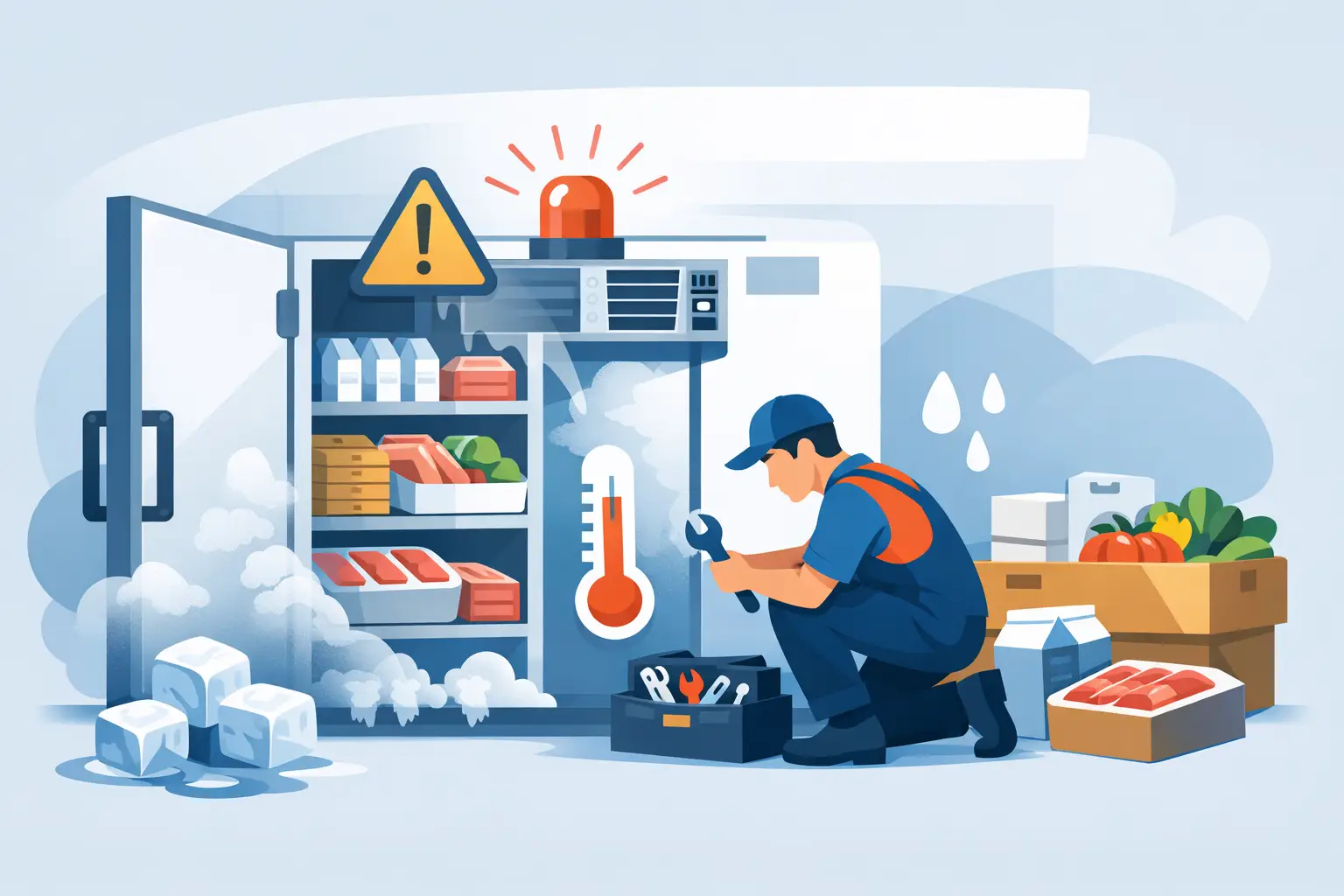
A cool room failure can turn into a stock-loss problem before the next delivery arrives. Emergency cool room repairs are about more than getting cold air back quickly. The real job is finding the fault, protecting what can still be saved and making a repair that holds under normal trading conditions.
For Adelaide kitchens, cafés, butchers, bottle shops, florists, retailers and facilities managers, a cool room is part of daily operations. When temperatures climb, doors will not seal, alarms sound or the system runs without pulling down, the pressure is immediate. No shortcuts. No guesswork. A qualified refrigeration technician needs to assess the system properly and explain what has failed, what is required and what can wait.
When a Cool Room Problem Needs Urgent Attention
Not every refrigeration issue calls for an emergency visit, but some signs should not be left until the next scheduled service. A room that is unable to hold its set temperature, particularly where food or temperature-sensitive stock is stored, needs attention straight away. The same applies if the condensing unit is noisy, the evaporator is frozen solid, water is pooling on the floor or the compressor is repeatedly cutting in and out.
A sudden rise in temperature may be caused by a simple issue such as a door left ajar or a damaged door seal. It can also point to a failed fan, blocked condenser, refrigerant leak, electrical fault, controller problem or compressor issue. The symptoms can look similar, which is why a proper diagnosis matters. Replacing parts without testing the system can waste time and money while the actual fault continues.
If the cool room stores food, follow your business food safety procedures and record temperatures. Do not assume stock is safe because it still feels cold to the touch. Your requirements will depend on the product, how long the temperature has been out of range and the advice in your food safety plan. A refrigeration technician can repair the equipment, but stock decisions must be made using your business’s food safety controls.
What to Do Before Emergency Cool Room Repairs Arrive
The first priority is reducing heat load. Keep the cool room door shut as much as possible and stop unnecessary traffic in and out. If there is an obvious obstruction preventing the door from closing, remove it carefully. Check whether the power supply or isolation switch has been turned off accidentally, but do not remove electrical covers or attempt electrical repairs yourself.
Move high-risk stock to another suitable refrigerated space if you have capacity. Avoid loading warm deliveries into a room that is already struggling. If a display fridge, freezer or another cool room is available, use it strategically for the most valuable or temperature-sensitive items.
When you call for help, having a few details ready helps the technician arrive prepared. The make and model of the equipment, the temperature reading, any alarm code, when the issue started and what you have noticed all matter. Photos of iced-up coils, damaged seals or controller displays can also be useful.
Do not try to force the system back into operation by repeatedly switching it on and off. That can place extra stress on the compressor and complicate fault finding. Likewise, do not chip ice from evaporator coils with sharp tools or add refrigerant without licensed refrigeration equipment and testing. A temporary workaround can easily become a larger repair.
Common Cool Room Faults and What They Mean
Door and seal failures
A split or loose door seal lets warm, humid air into the room. The refrigeration system then works harder, ice can build up and temperatures become unstable. A door that will not close squarely may have worn hinges, a damaged closer or an alignment issue. These repairs are often straightforward, but they should not be ignored. Air leaks increase running costs and put unnecessary load on major components.
Frozen evaporator coils
Ice on the evaporator is a common reason for weak airflow and poor cooling. It may be linked to a failed defrost heater, defrost timer, sensor, fan motor or a door being left open for extended periods. Simply defrosting the coil may restore cooling for a short time, but it does not fix a failed defrost component. The cause needs to be tested before the room returns to normal use.
Condenser and fan issues
The outdoor condensing unit needs clear airflow to reject heat. Grease, dust, leaves and rubbish around the unit can restrict performance, especially through Adelaide’s hotter months. A failed condenser fan or dirty coil can cause high pressures, poor pull-down and compressor stress. Cleaning is valuable maintenance, but a technician should check operating pressures and electrical components at the same time.
Refrigerant leaks
Low refrigerant is not a maintenance item to top up and forget. If refrigerant is low, the system has a leak that needs to be located and repaired. A proper repair involves finding the leak, fixing it, pressure testing, evacuating the system and charging it to the correct specification. Anything less may get the room cold briefly, but it leaves the underlying problem in place.
Electrical controls and compressor faults
Controllers, contactors, capacitors, sensors and safety switches all play a part in keeping the system operating correctly. A failed electrical component can stop cooling altogether or cause erratic cycling. Compressor faults can be more serious, although the compressor is not always the problem when it will not start. Accurate testing prevents expensive components being replaced on assumption.
How a Proper Emergency Repair Should Work
Fast attendance matters, but so does what happens once the technician is on site. A qualified technician should start by checking the room temperature, equipment operation, airflow, electrical supply and any controller alarms. From there, they can test the likely fault rather than treating the first visible symptom.
The repair approach depends on the condition and age of the system. A failed fan motor or controller component may be repaired efficiently if parts are available and the rest of the equipment is sound. If a compressor has failed on an older system with ongoing leak issues, the better long-term option may be a larger repair or equipment replacement. The right answer depends on repair cost, downtime risk, equipment condition and how critical the room is to your operation.
Clear communication is part of the job. You should know what has failed, what work is recommended, what the repair is likely to cost and whether there are any risks in returning the room to service. LJ Refrigeration & Air-Conditioning uses qualified technicians, not subcontractors, so the person diagnosing the problem is accountable for the work carried out.
Avoiding the Next Breakdown
Emergency call-outs are sometimes unavoidable, but many failures develop gradually. A scheduled maintenance plan gives a technician the chance to identify worn door seals, dirty condensers, poor drainage, loose electrical connections and defrost problems before they stop trade.
The best maintenance interval depends on how hard the room works. A cool room in a busy commercial kitchen, with frequent door openings and grease in the air, generally needs more attention than a lightly used storage room. Seasonal demand also matters. Equipment that is coping in mild weather can struggle when ambient temperatures rise.
Between services, staff can make a genuine difference by keeping condenser areas clear, reporting unusual noise early, checking that doors close properly and avoiding overfilling the room in a way that blocks airflow. These are simple habits, but they reduce strain on the refrigeration system.
A cool room is too valuable to manage with patch-up repairs and crossed fingers. At the first sign that it is not holding temperature, protect your stock, limit door openings and arrange a qualified assessment. Acting early gives you the best chance of keeping the disruption contained and the repair straightforward.

3 comments on “Emergency Cool Room Repairs When Stock Is at Risk”