
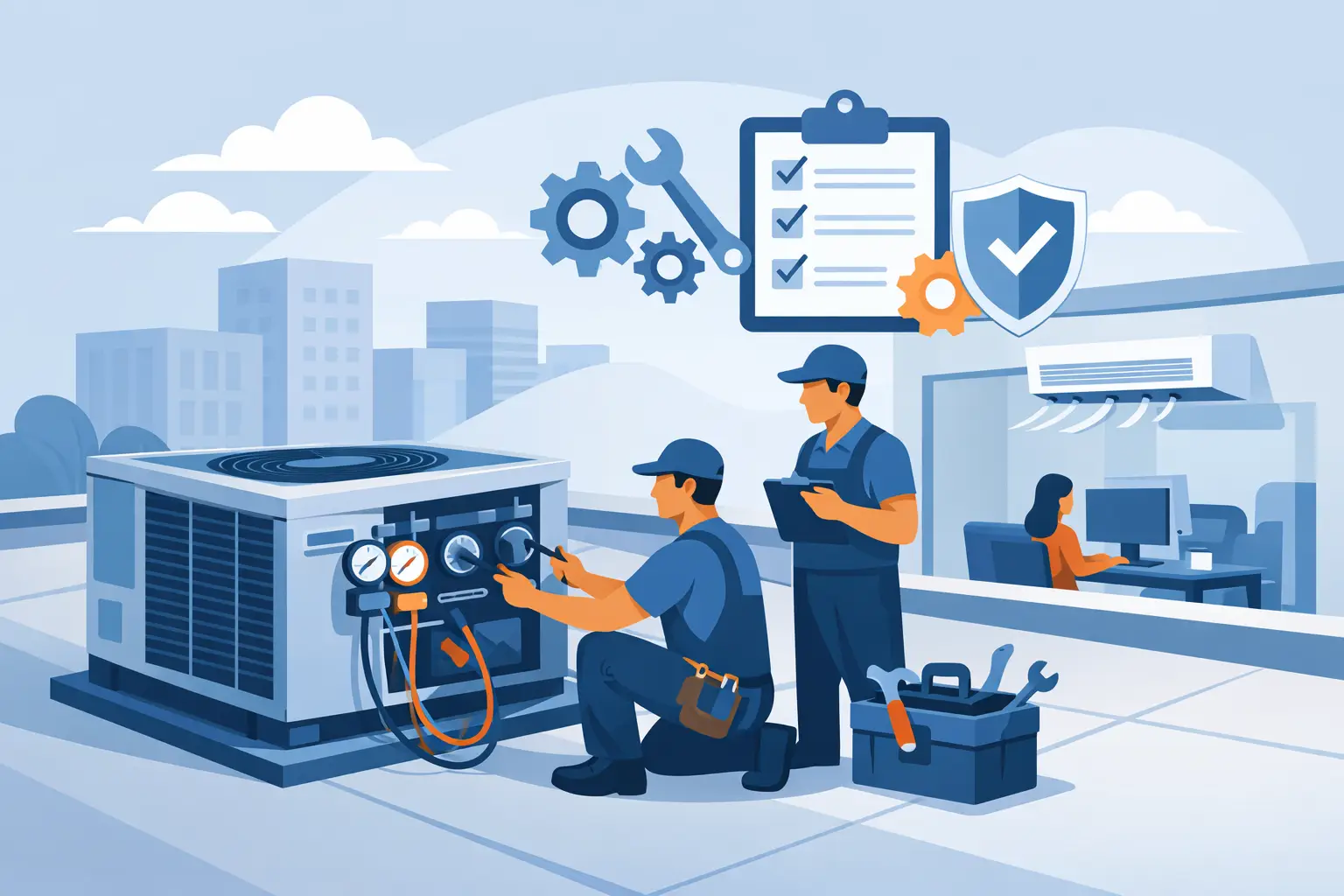
A failed air conditioner rarely waits for a quiet day. It happens when the office is full, the shop is busy, the kitchen is under pressure or customers are already uncomfortable. Commercial air conditioning maintenance is the practical way to reduce those disruptions, protect your equipment and keep your premises operating as they should.
For Adelaide businesses, cooling systems work hard through long hot spells, then often sit underused through cooler periods. Dust builds up, filters block, drains clog and minor electrical or refrigerant issues can become expensive faults if nobody catches them early. A scheduled service plan gives the system proper attention before it lets you down.
Why commercial air conditioning maintenance pays off
Air conditioning is not just a comfort item in a commercial building. It affects staff concentration, customer experience, stock conditions and, in some workplaces, safety and compliance. When a system cannot hold temperature, the impact can spread quickly through the day.
Regular maintenance helps identify wear before it becomes a shutdown. A technician can spot a deteriorating fan motor, loose electrical connection, dirty condenser coil or drainage issue while the repair is still straightforward. Left alone, those faults can force the system to work harder, draw more power and eventually stop altogether.
There is also the running-cost side. A unit with blocked filters or dirty coils has to push harder to move air and reject heat. That means longer run times and higher electricity use, without necessarily delivering better cooling. Servicing cannot make an ageing system new again, but it can help it operate closer to the standard it was designed for.
Planned maintenance also gives business owners a clearer picture of their equipment. Rather than being surprised by a major repair, you can make informed decisions about repairs, upgrades or replacement based on the actual condition of the system.
What a proper commercial air conditioning service involves
A quick look over the unit is not a maintenance programme. Commercial systems need a methodical inspection that considers performance, safety and the condition of components that are easy to overlook.
The exact work depends on the system type, its age, location and how heavily it is used. A small split system in a retail shop has different demands to a ducted system serving multiple offices or a large unit supporting a busy commercial kitchen. Even so, a thorough service commonly includes checking and cleaning filters, inspecting indoor and outdoor coils, testing operating temperatures, inspecting drainage, checking electrical connections and assessing fans, motors and controls.
Technicians should also look for signs of refrigerant loss, unusual vibration, corrosion, damaged insulation and airflow restrictions. These issues do not always cause an immediate breakdown, but they can shorten equipment life and make the system less effective.
Where access permits, ductwork, grilles and return-air paths should be assessed as well. There is little point servicing the main unit if blocked vents, dirty return filters or damaged ducting are preventing conditioned air from reaching the areas that need it.
Filters and coils are not minor details
Filters are often the first line of defence against dust and airborne debris. When they are neglected, airflow drops and internal components become dirtier. In an office, retail space or workshop, this can lead to uneven temperatures and complaints that some rooms are too warm while others are too cold.
Outdoor coils need attention too. They release heat from the system, and they are exposed to dust, leaves, grease and Adelaide’s dry conditions. A dirty coil makes heat transfer harder, placing extra strain on the compressor. Cleaning must be done properly, with care taken not to damage fins or force debris deeper into the unit.
Drainage and electrical checks prevent messy failures
Blocked condensate drains can cause water leaks, ceiling damage and mould concerns. This is particularly common in systems that run for long hours through summer. Clearing and testing the drain during a service is simple compared with repairing water-damaged finishes or dealing with an unexpected leak over a reception area.
Electrical connections also deserve close attention. Heat, vibration and normal operation can loosen terminals over time. A qualified technician can identify overheating components, worn contactors and other early warning signs before they become a more serious electrical fault.
How often should commercial systems be maintained?
There is no single schedule that suits every business. As a general rule, a light-use office system may need professional servicing once or twice a year. High-use sites, hospitality venues, gyms, medical practices, kitchens and businesses with dust, grease or extended operating hours may need more frequent attention.
The right interval comes down to how critical the system is. If a fault means staff cannot work comfortably, customers will leave or stock is affected, waiting for an annual service may not be enough. Seasonal servicing before summer is usually sensible, and a second check before winter can be worthwhile where heating is also used heavily.
A maintenance plan should be based on your equipment and operating conditions, not a generic checklist sold to every site. The aim is to prevent avoidable downtime without paying for unnecessary visits.
Signs your system needs attention before its next service
Do not wait for a complete failure if the system is already showing signs of trouble. Reduced airflow, rooms that take longer to cool, uneven temperatures, water around indoor units, unusual noises and repeated tripping are all worth investigating.
A noticeable increase in power use can be another clue, particularly if your operating hours have not changed. So can staff regularly adjusting thermostats because the temperature never feels right. Those symptoms may be caused by something relatively minor, but guessing is not a maintenance strategy.
If the system is cycling on and off too frequently, producing warm air in cooling mode or showing an error code, book a qualified technician promptly. Continuing to run a struggling unit can turn a manageable repair into compressor damage or a larger control fault.
Maintenance records matter for business owners
Keeping service records is not paperwork for paperwork’s sake. A clear history shows what has been checked, cleaned, repaired and recommended over time. It helps when planning budgets, comparing recurring faults and deciding whether a repair remains worthwhile.
Records can also support warranty requirements and demonstrate that equipment has been maintained responsibly. For property managers and facility operators, they make handovers cleaner and reduce uncertainty when several systems are spread across a site.
A good contractor should communicate plainly after each visit. You should know what was done, what needs monitoring, what requires repair now and what can reasonably wait. No vague language, no pressure to replace equipment that is still serviceable.
Choosing a maintenance contractor
Commercial maintenance depends on consistency. The contractor needs to turn up when booked, understand the equipment on site and carry out work to a standard that stands up over time. The cheapest service is not good value if it misses developing faults or creates repeat call-outs.
Look for licensed, qualified technicians who can handle diagnostics as well as routine servicing. It also helps to work with a provider that can support the full job when needed, from repairs and replacement advice through to installation. That avoids the usual runaround when a maintenance visit finds a larger issue.
LJ Refrigeration & Air-Conditioning works with Adelaide businesses that need straightforward, scheduled support for their HVAC and refrigeration equipment. Qualified technicians, clear pricing and work done properly – that is what a maintenance relationship should look like.
Your air conditioning does not need attention only when it fails. Give it a sensible service schedule, act on early warning signs and keep a record of the work completed. That is how you protect comfort, control costs and keep your business moving when the weather turns hot.
