
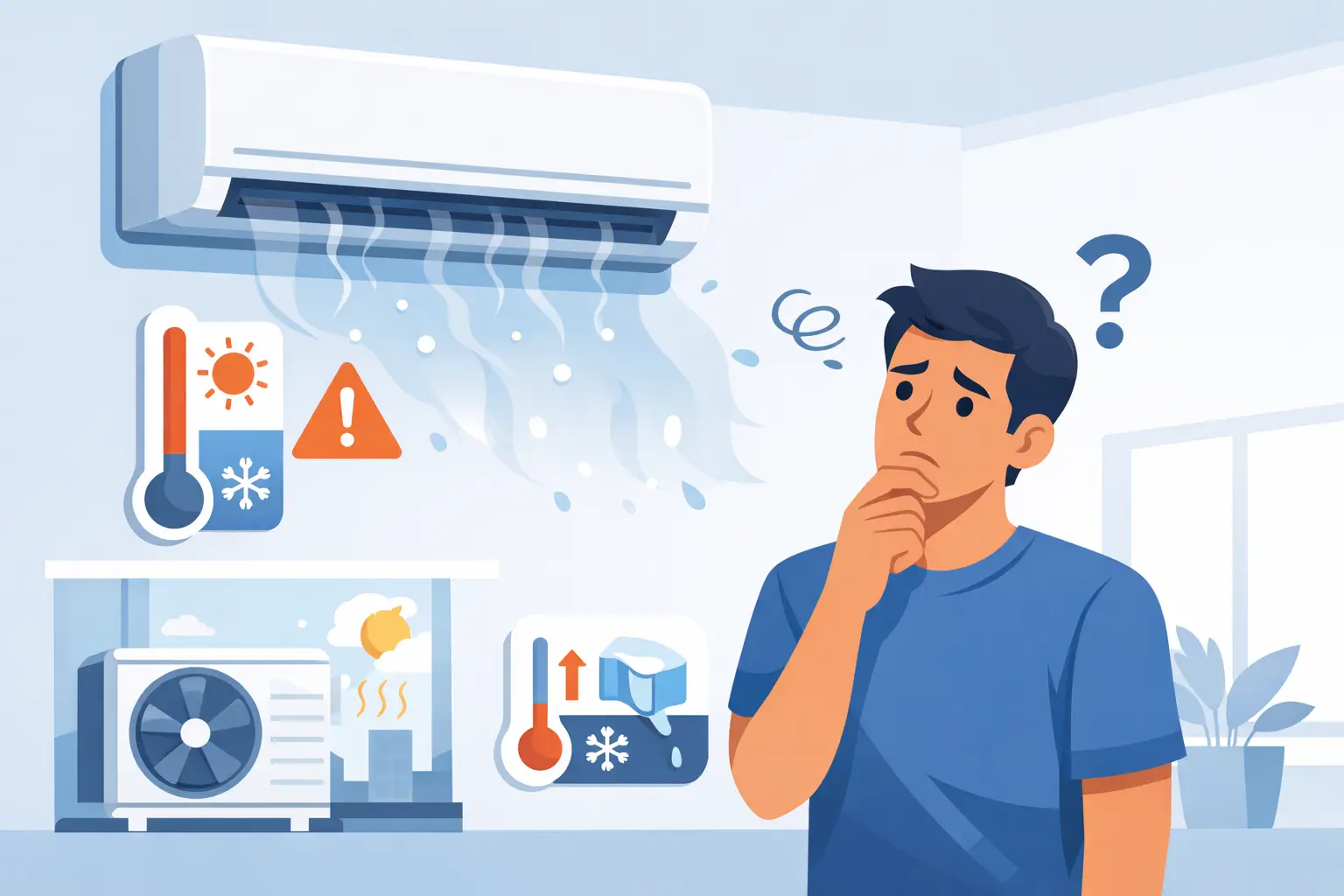
You notice it first in the late afternoon. The unit is running, the fan is on, but the house still feels warm and sticky. If you’re asking, why is my air conditioner not cooling, the answer is usually one of a handful of common faults – and some are simple, while others need a licensed technician.
The main thing is not to ignore it and hope it sorts itself out. Air conditioners rarely fix themselves. A small airflow issue can turn into a frozen coil, a refrigerant fault can strain the compressor, and what starts as poor performance can become a full breakdown on a hot day when you need the system most.
Why is my air conditioner not cooling? Start with the basics
Before assuming the worst, check the obvious items first. It sounds simple, but plenty of cooling call-outs come down to settings, airflow restrictions, or maintenance that’s been put off too long.
Start with the thermostat or controller. Make sure the system is set to cooling mode, not fan or heating, and check the temperature setting is low enough to call for cooling. If someone has changed the settings, or if there’s been a power outage, the unit may be running without actually producing cold air.
Then check the filter. A dirty filter is one of the most common reasons an air conditioner struggles to cool properly. When airflow is restricted, the indoor unit can’t move enough air across the coil. That means less cooling in the room and more strain on the system. In some cases, the coil gets too cold and starts icing up, which makes performance even worse.
If you have a split system, look at the indoor head unit and listen for anything unusual. If you have ducted air conditioning, check whether all zones are set correctly and whether any vents are blocked or shut in a way that upsets airflow.
Poor airflow is a bigger problem than most people think
An air conditioner does not just need refrigerant and power. It needs steady airflow. If air can’t move freely through the system, cooling drops off quickly.
Dirty filters are the first suspect, but they’re not the only one. Return air grilles can get clogged with dust. Ductwork can leak or collapse. Supply vents can be blocked by furniture, boxes, or fit-out changes in a shop or office. In commercial spaces, even a layout change can affect how well conditioned air reaches the occupied area.
This is one of those issues where the symptoms can be misleading. The unit may still sound normal. It may still blow air. But if the volume is too low or the airflow path is restricted, the space never reaches set temperature.
Frozen indoor coils
If airflow has been poor for long enough, the indoor coil can ice over. When that happens, the system often stops cooling properly altogether. You might notice weak airflow, water around the unit once the ice melts, or a unit that seems to run constantly without doing much.
Switching the system off can allow it to thaw, but that does not fix the reason it froze in the first place. If the filter is clean and it keeps happening, there is usually a deeper issue that needs proper fault finding.
Refrigerant problems can’t be ignored
If airflow is fine and the settings are correct, refrigerant issues move higher up the list. Low refrigerant charge, leaks, or other sealed system faults can all lead to weak cooling.
This is not a DIY job. Refrigerant circuits must be handled by licensed technicians. Topping up refrigerant without finding the leak is not a proper repair. If gas is low, it has gone somewhere, and unless the leak is identified and repaired, the problem will come back.
A system low on refrigerant may still run, but it won’t cool as designed. It can also put extra stress on key components. In some cases, you’ll get lukewarm air. In others, the coil may ice up. The exact symptoms depend on the system type and how low the charge is.
The outdoor unit may be the issue
A lot of people focus on the indoor unit because that’s what they see and hear every day. But the outdoor unit does the hard work of rejecting heat. If it can’t do that properly, the whole system underperforms.
Leaves, dirt, grass clippings and general build-up around the condenser can restrict airflow. A badly blocked outdoor coil can make cooling weak and inefficient. The unit may also run hotter and longer than it should.
There are also electrical and mechanical faults to consider. A failed capacitor, faulty fan motor, compressor problem or control board issue can all stop the system from cooling properly. Sometimes the outdoor fan is not spinning. Sometimes the compressor is not starting. Sometimes the system cycles on and off without ever settling into normal operation.
These are the faults where guessing gets expensive. Proper testing matters. Replacing parts based on a hunch is how simple repairs turn into unnecessary bills.
When the weather is extreme, expectations matter
Sometimes the system is working, but conditions are pushing it hard. On very hot Adelaide days, even a properly operating air conditioner can struggle if the home or building has poor insulation, direct western sun, big glass areas, or doors opening constantly.
That does not mean the unit is faulty. It may mean the system is undersized for the space, the building envelope is working against it, or the thermostat setting is unrealistic for the conditions.
There’s a difference between not cooling at all and not cooling enough. If your unit used to keep up and now doesn’t, that points more strongly to a fault or maintenance issue. If it has always struggled in peak heat, system design and sizing may be part of the problem.
Commercial sites have extra variables
In shops, offices, kitchens and other commercial spaces, heat load changes fast. More people, more equipment, longer trading hours and frequent door use all add pressure to the system. A unit that was adequate a few years ago may now be under capacity for the current fit-out.
That’s why commercial cooling issues should be looked at in context. The fault may be mechanical, but it may also be operational.
Electrical faults can look like cooling faults
If the air conditioner has power but is not cooling, the problem may sit in the controls or electrical components rather than the refrigeration side.
Faulty sensors, damaged wiring, tripped safety switches, PCB issues and failing capacitors can all affect performance. Some systems will show an error code. Others will keep running in a limited way, which makes the issue harder to spot without testing.
Intermittent faults are especially frustrating. The unit works in the morning, then loses cooling later in the day. Or it restarts after being switched off, only to fail again. That pattern often points to a component failing under load or temperature.
What you can check safely yourself
There are a few sensible checks you can make before booking a repair. Confirm the controller is set correctly. Clean or replace the filter if needed. Make sure vents and return air paths are clear. Look at the outdoor unit and clear away obvious debris around it, as long as you can do so safely.
Also check whether the circuit breaker has tripped. If it has tripped once, resetting it may get the unit going again. If it trips again, stop there. Repeated trips usually mean a real electrical fault, not bad luck.
What you should not do is open electrical panels, tamper with refrigerant lines, or keep forcing a struggling system to run for hours. That often makes the repair larger than it needed to be.
When to call a technician
If the filter is clean, the settings are right, and the system still is not cooling, it is time for proper diagnosis. The same applies if you notice ice on the unit, unusual noises, water leaks, burnt smells, warm air from the vents, or a system that short cycles.
A licensed technician should check pressures, temperatures, electrical readings, airflow and component operation as a whole. Good fault finding is not about swapping parts until something works. It is about identifying the root cause and fixing it properly.
That matters even more for businesses. If a commercial system is underperforming, comfort complaints, product protection, staff conditions and operating costs can all be affected. Delaying repair to save money usually does the opposite.
Regular servicing prevents most of this
The most common answer to why is my air conditioner not cooling is simple: the system has been overdue for maintenance and the warning signs were missed. Filters clog gradually. Coils get dirty slowly. Electrical parts weaken over time. Refrigerant leaks often start small.
Routine servicing catches those issues before they become breakdowns. It also gives you a clearer idea of whether you’re dealing with a repairable fault, ageing equipment, or a system that no longer suits the space.
At LJ Refrigeration & Air-Conditioning, that’s how we approach cooling faults – no shortcuts, no guesswork, and no temporary patch jobs dressed up as solutions. If your system is running but not doing its job, get it checked properly before a minor problem becomes a bigger one. A good air conditioner should cool the space, hold temperature, and do it without drama.
