
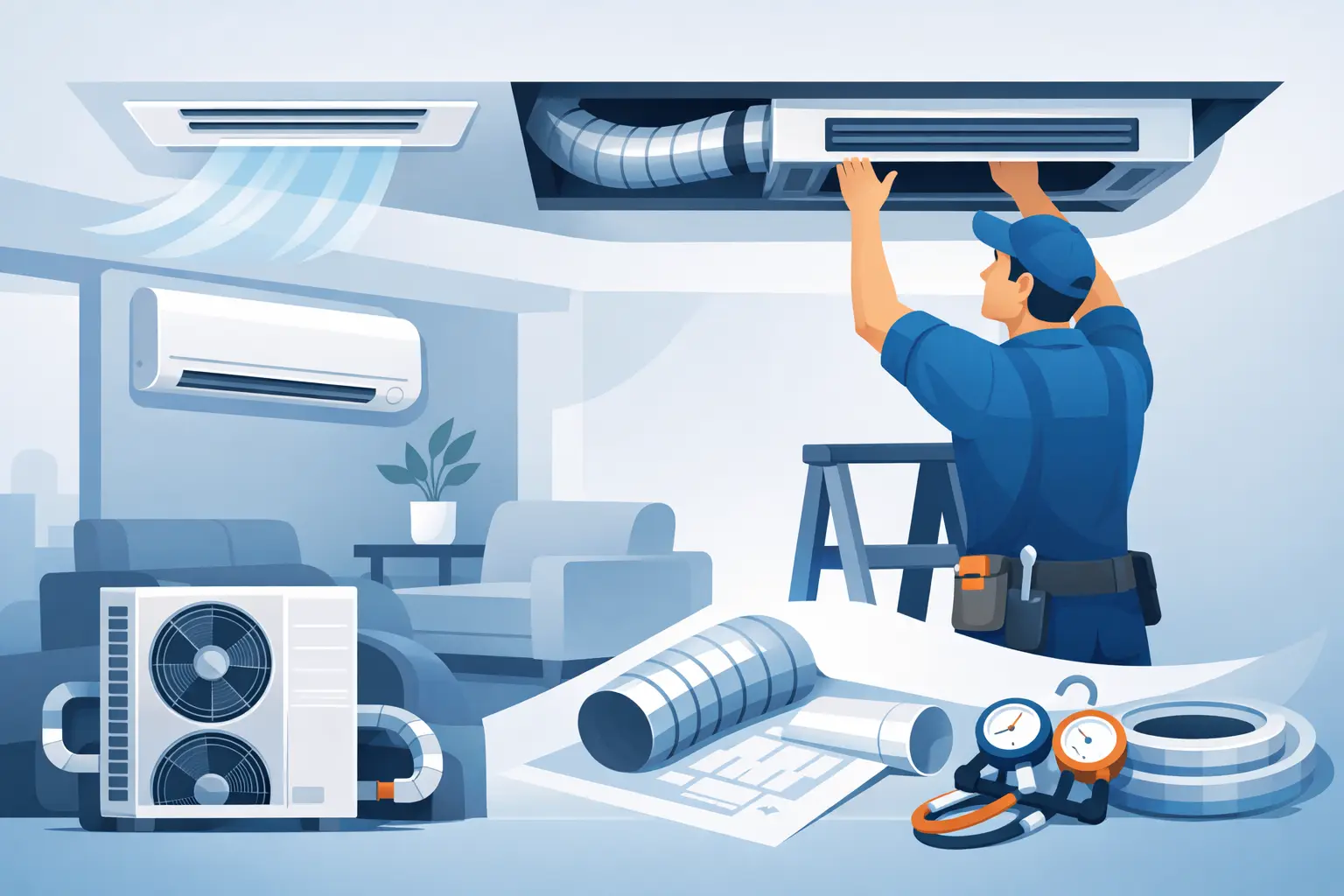
If you’re weighing up ducted air conditioning installation, you’re probably not looking for bells and whistles. You want a system that cools the whole property properly, runs efficiently, and doesn’t turn into a headache six months after it’s fitted. That’s where the quality of the installation matters just as much as the unit itself.
A ducted system is a bigger investment than a wall split. It covers more area, involves more planning, and leaves less room for guesswork. When it’s designed and installed properly, you get even airflow, cleaner ceiling lines, and better control over comfort across the home or workplace. When it’s rushed, undersized, or badly laid out, you feel it every day.
What ducted air conditioning installation actually involves
A proper ducted air conditioning installation is more than placing a unit in the roof and cutting a few ceiling grilles. The system has to be matched to the building, the layout has to suit how the space is used, and the ducting needs to be run in a way that supports airflow rather than choking it.
That starts with sizing. Too small, and the system will struggle on hot Adelaide days and run longer than it should. Too large, and you can end up with short cycling, wasted power, and poor humidity control. Getting the capacity right depends on ceiling height, insulation, window size, orientation, room use, and how the property is laid out.
Then there’s the physical install. Indoor and outdoor unit placement, return air position, supply outlet locations, zoning setup, drainage, electrical connection, and controller placement all affect how the system performs. None of those choices should be treated as an afterthought.
Why installation quality matters more than most people expect
People often compare brands first, and fair enough. Equipment matters. But even a good brand can underperform if the installation is poor.
Badly supported duct runs, crushed flex duct, poorly sealed joins, awkward grille placement, and rushed commissioning can all lead to weak airflow, noisy operation, hot spots, and higher running costs. In commercial spaces, poor installation can also create comfort complaints from staff or customers, which quickly becomes an operational issue rather than just a maintenance one.
A tidy, well-planned job tends to last better too. It makes future servicing easier, reduces strain on the system, and lowers the risk of the kind of faults that come from cutting corners. No shortcuts. No surprises. That’s how this kind of work should be approached.
Ducted air conditioning installation for homes
For residential properties, the main appeal is whole-home comfort without having a unit mounted on every wall. It suits new builds, major renovations, and many established homes where there is enough roof space to accommodate the system.
That said, not every house is a perfect fit. Roof access, ceiling type, insulation, and the available space for duct runs all affect what can be installed and how clean the finished result will be. A single-storey home with a generous roof cavity is usually more straightforward than a double-storey property or a home with tight access.
Zoning is often where the value really shows. Being able to cool the living areas during the day and bedrooms at night makes a big difference to running costs. But zoning only works well when it’s planned around how the household actually uses the home. A standard layout on paper isn’t always the right layout in practice.
Ducted air conditioning installation for commercial sites
Commercial installs bring a different set of pressures. Comfort still matters, but so do trading hours, staff workflow, equipment loads, and the need to keep disruption under control.
An office, retail space, medical practice, or light commercial site may need a ducted setup that delivers even temperatures across multiple zones while working around ceilings, lighting, existing services, and tenancy constraints. In some cases, a ducted system is the cleanest and most practical option. In others, a split or packaged solution may suit the site better.
This is where honest advice matters. The right contractor should tell you if ducted is the best fit, not push it because it’s the bigger quote. For business operators, reliability and service access are just as important as day-one performance.
What affects the cost
There is no useful one-size-fits-all price for ducted work because the cost depends on the property and the scope. Unit size is one part of it, but only one part.
Installation cost is shaped by roof access, number of zones, duct layout, controller type, switchboard capacity, ceiling construction, and whether the job is a new fit-out or a replacement of an existing system. A straightforward replacement can be much simpler than a fresh install in a property that was never designed for ducted air.
The cheapest quote is not always the cheapest job in the long run. If corners are cut on duct design, airflow balancing, or electrical work, you may end up paying for poor performance, callbacks, or premature repairs. Upfront pricing should be clear, but so should the scope of work. If something is excluded, that should be spelled out before the job starts.
Signs the design needs more thought
Some warning signs show up before the system is even installed. If no one has properly assessed the property, measured the space, or asked how different areas are used, that’s a problem. The same goes for quotes that recommend a system size without much explanation.
Another red flag is when outlet and return air locations are treated as cosmetic choices only. They affect airflow, temperature consistency, and noise. The aim is not just to make the ceiling look neat. It’s to make the system work properly every day.
For existing homes, it also pays to be realistic about access. Sometimes a roof cavity is tight, congested, or awkward enough that installation becomes more labour-heavy. That doesn’t always rule the job out, but it should be considered early so there are no surprises later.
What to expect on installation day
A good install should feel organised from the start. You should know when the team is arriving, what areas they’ll need access to, how long the work is expected to take, and whether there will be any interruptions to power or normal use of the property.
For most residential jobs, the process involves setting the indoor unit in the roof space, installing the outdoor unit, running ductwork, cutting and fitting outlets, connecting electrical components, and testing the system once everything is in place. Depending on the property and complexity, it may take a day or more.
Clean-up matters too. Trades should respect the site, protect internal areas where needed, and leave the place in good order. The job isn’t finished when the system turns on. It’s finished when the installation is complete, tested, explained clearly, and handed over properly.
After installation, servicing still matters
Even the best system needs maintenance. Filters need checking, components need inspecting, drains need to stay clear, and performance should be monitored over time. This is especially true for commercial sites where systems work harder and downtime is more costly.
Regular servicing helps catch wear before it becomes a breakdown. It also keeps airflow and efficiency where they should be. If a ducted system starts getting noisy, uneven, or expensive to run, that’s usually a sign that something needs attention rather than something to ignore.
For property owners, it’s worth choosing an installer that can also provide ongoing support. It saves time, avoids finger-pointing, and means the people servicing the system understand how it was set up in the first place.
Choosing the right contractor for ducted air conditioning installation
This isn’t a job to hand over to whoever can fit you in tomorrow. You want licensed technicians, clear communication, and a contractor who does the work with their own team rather than passing it around. Accountability matters.
Ask practical questions. Who is carrying out the installation? Has the property been assessed properly? What brand and capacity are being quoted, and why? How will the zoning work? What does the price include? What happens if additional electrical or access work is needed?
A straight answer is usually a good sign. So is a quote that reflects the real work involved rather than promising the lowest number in the room. LJ Refrigeration & Air-Conditioning approaches installs the same way it approaches repairs and maintenance – do the job properly, be upfront, and turn up when promised.
If you’re considering ducted air for your home or business, the smartest move is to focus less on brochure promises and more on how the system will be designed, installed, and supported after the job is done. That’s what decides whether it feels like money well spent.

2 comments on “Ducted Air Conditioning Installation Done Right”