
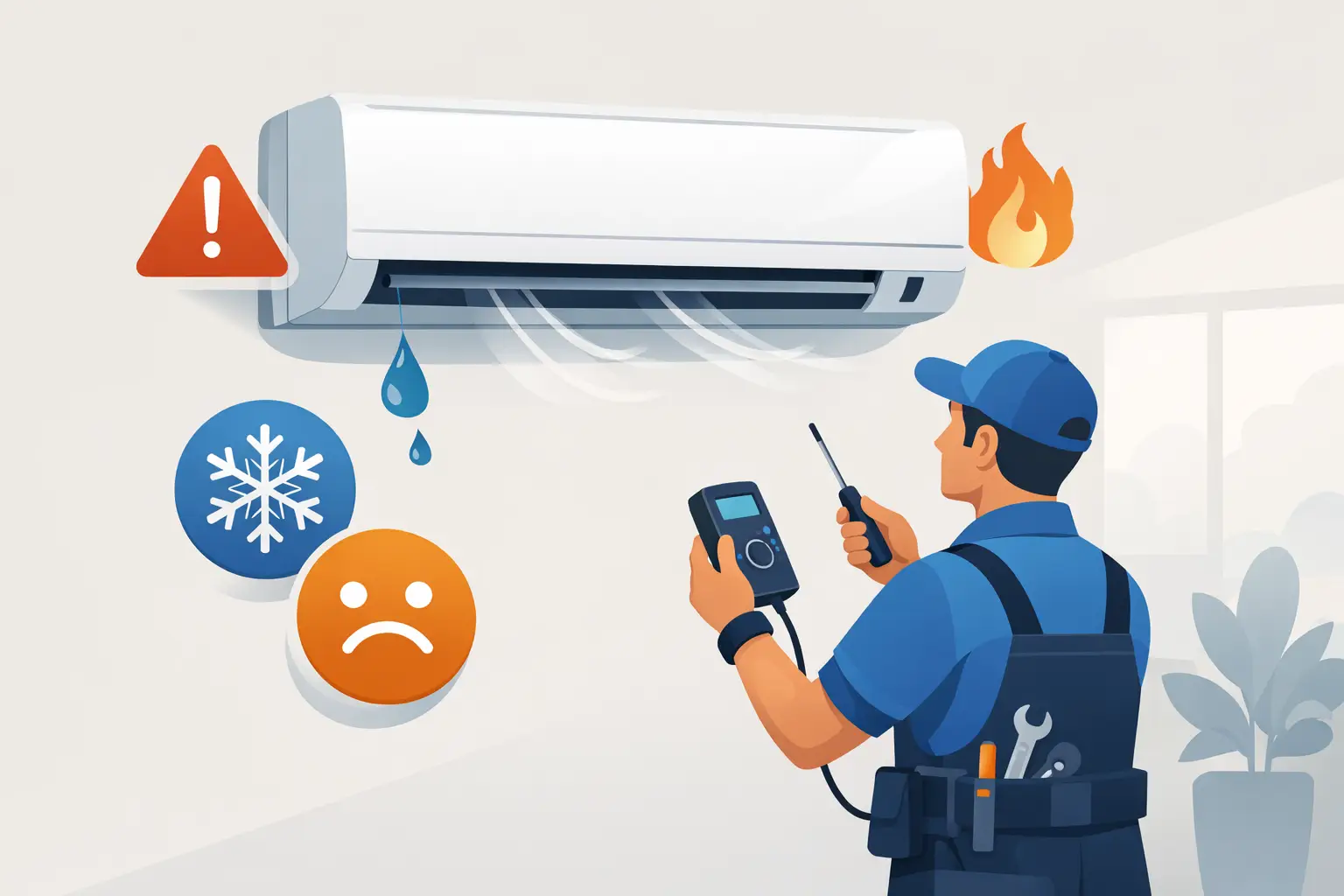
Your aircon has been running for hours, but the lounge is still sticky and warm. Or perhaps the system is making a noise it never made last summer. The top signs your aircon needs repair are often easy to spot, but easy to put off as well. That can turn a straightforward repair into a bigger breakdown, usually when you need cooling most.
A properly working split system or ducted unit should cool evenly, run without fuss and switch off when it reaches the set temperature. It should not need to work flat out just to make one room comfortable. If something has changed, it is worth getting the cause checked rather than hoping it comes good on its own.
Top signs your aircon needs repair
It is blowing warm air or not cooling properly
Warm air from a system set to cooling is the clearest warning sign. The cause could be as simple as an incorrect setting, a dirty filter or a blocked outdoor unit. It could also point to a refrigerant leak, compressor fault, damaged component or electrical issue.
Start by checking that the unit is set to cool, the temperature is lower than the room temperature and the filters are clean. If it is still pushing warm or only mildly cool air, book a technician. Refrigerant systems need qualified diagnosis. Topping up gas without finding and fixing a leak is not a proper repair.
Poor cooling can also be more noticeable during an Adelaide heatwave, when the system is under real load. Even then, your aircon should steadily bring the room temperature down. If it cannot keep up on an ordinary warm day, there is likely a fault or a sizing issue worth investigating.
Airflow has become weak
If air is coming from the vents but barely reaching across the room, the system is working harder than it should. Dirty filters are a common cause, particularly in homes with pets, construction dust or regular use through summer. A blocked indoor coil, failing fan motor or ductwork problem can also restrict airflow.
For ducted systems, weak airflow in one or two rooms may be caused by a closed or damaged grille, a zoning problem or a leak in the ducts. Weak airflow across the whole house points more towards the indoor unit, return-air path or fan.
Cleaning accessible filters is sensible routine maintenance. Beyond that, do not pull covers apart or attempt electrical repairs. The right fix depends on what is restricting the air, not just what is visible from the room.
The system turns on and off too often
Aircons cycle on and off as they maintain the set temperature. What is not normal is rapid, repeated cycling every few minutes, known as short cycling. Apart from being annoying, it puts unnecessary strain on the compressor and can increase energy use.
Short cycling may be caused by a dirty filter, thermostat issue, low refrigerant, electrical fault or an aircon that is too large for the space. It depends on the system and the conditions. A technician should test the unit rather than guess, especially if the problem is new or getting worse.
New noises are coming from the unit
A quiet fan sound is normal. Rattling, grinding, buzzing, squealing, banging or clicking are not sounds to ignore. A loose panel might be a minor fix, but a grinding fan motor or persistent electrical buzzing needs attention before a component fails completely.
Pay attention to where the noise is coming from. A rattle from the indoor head unit is different from a harsh noise at the outdoor condenser. If the system trips the power, smells hot, or makes loud electrical noises, turn it off and arrange an inspection. Continuing to run it is not worth the risk.
There is water dripping indoors
A small amount of condensation at the outdoor unit can be normal. Water dripping from the indoor unit, running down a wall or staining the ceiling is not. Most often, this happens when the condensate drain is blocked or the drain line has come loose.
Left alone, an indoor water leak can damage plaster, flooring, paint and furnishings. It can also create conditions for mould. Switch the system off if water is leaking into the property, protect the area below and arrange a repair.
In some cases, a frozen indoor coil can lead to water problems once the ice melts. That may be linked to dirty filters, restricted airflow or refrigerant issues. The visible drip is only the symptom, so the underlying cause still needs to be checked.
There are unpleasant smells when it runs
A musty smell often means moisture, dust or microbial growth has built up around the indoor coil, drain or filters. A thorough clean may solve it, provided there is no drainage issue causing ongoing moisture.
A burning smell is different. It can indicate overheating wiring, a failing motor or another electrical fault. Turn the aircon off and have it inspected. Chemical or sharp sweet smells can also suggest a refrigerant issue. No smell should be treated as normal simply because the unit still starts.
Your electricity bills have jumped without a clear reason
An aircon will use more power during long hot spells, particularly in a busy household or commercial premises with doors opening all day. But a sharp rise in running costs without a matching increase in use can mean the system is losing efficiency.
Blocked coils, leaking refrigerant, worn capacitors, fan faults and poor airflow can all make a unit run longer to deliver less cooling. For businesses, that wasted power can add up quickly across offices, retail spaces, kitchens and cool rooms. Early fault diagnosis is often cheaper than paying for months of inefficient operation.
Some rooms are comfortable and others are not
Uneven temperatures are common in ducted systems, but they should not be extreme. If one bedroom is freezing while another stays hot, the cause may be a zoning fault, damaged duct, blocked vent, poor return-air balance or an issue with the system’s capacity.
For split systems, uneven comfort may be about where the unit is installed, room layout, insulation or sun exposure. That does not always mean the aircon is broken. A qualified technician can separate a repair issue from an installation or sizing issue, then recommend a practical path forward.
When a service can prevent a repair
Not every warning sign means a major part has failed. Regular servicing helps catch dirty coils, blocked drains, loose electrical connections and worn components before they interrupt cooling. It also gives a technician the chance to check operation under load, not just confirm that the unit turns on.
For a home aircon, an annual service is a sensible baseline, ideally before the heavy summer season. Commercial systems may need more frequent attention depending on their operating hours, environment and how critical they are to the business. A café cool room or kitchen refrigeration system cannot afford the same wait-and-see approach as a rarely used spare-room split system.
Basic owner care still matters. Keep outdoor units clear of leaves and stored items, clean filters as recommended by the manufacturer, and do not block supply or return vents. These small jobs support performance, but they do not replace professional maintenance or fault diagnosis.
Repair or replacement: what makes sense?
A repair is often the right call when the system is otherwise in good condition, the fault is isolated and parts are available. A capacitor, fan motor, drain issue or electrical component can usually be repaired without replacing the whole unit.
Replacement may make better financial sense when an older system has repeated faults, has poor energy performance, uses obsolete refrigerant or needs a costly major component such as a compressor. The decision should be based on the condition of the equipment, repair cost, expected life remaining and the way you use the space. There is no value in replacing a unit that has a sound, economical repair available. Equally, there is no benefit in repeatedly patching up a system near the end of its useful life.
A clear diagnosis should give you the facts before you commit. You should know what has failed, why it matters, what the repair involves and what the realistic alternatives are. No shortcuts. No surprises.
If your aircon is showing any of these signs, arrange an inspection before the next hot spell turns a manageable problem into an urgent one. LJ Refrigeration & Air-Conditioning provides qualified repair work for Adelaide homes and businesses, with straightforward advice and repairs aimed at fixing the cause, not just quietening the symptom.
