
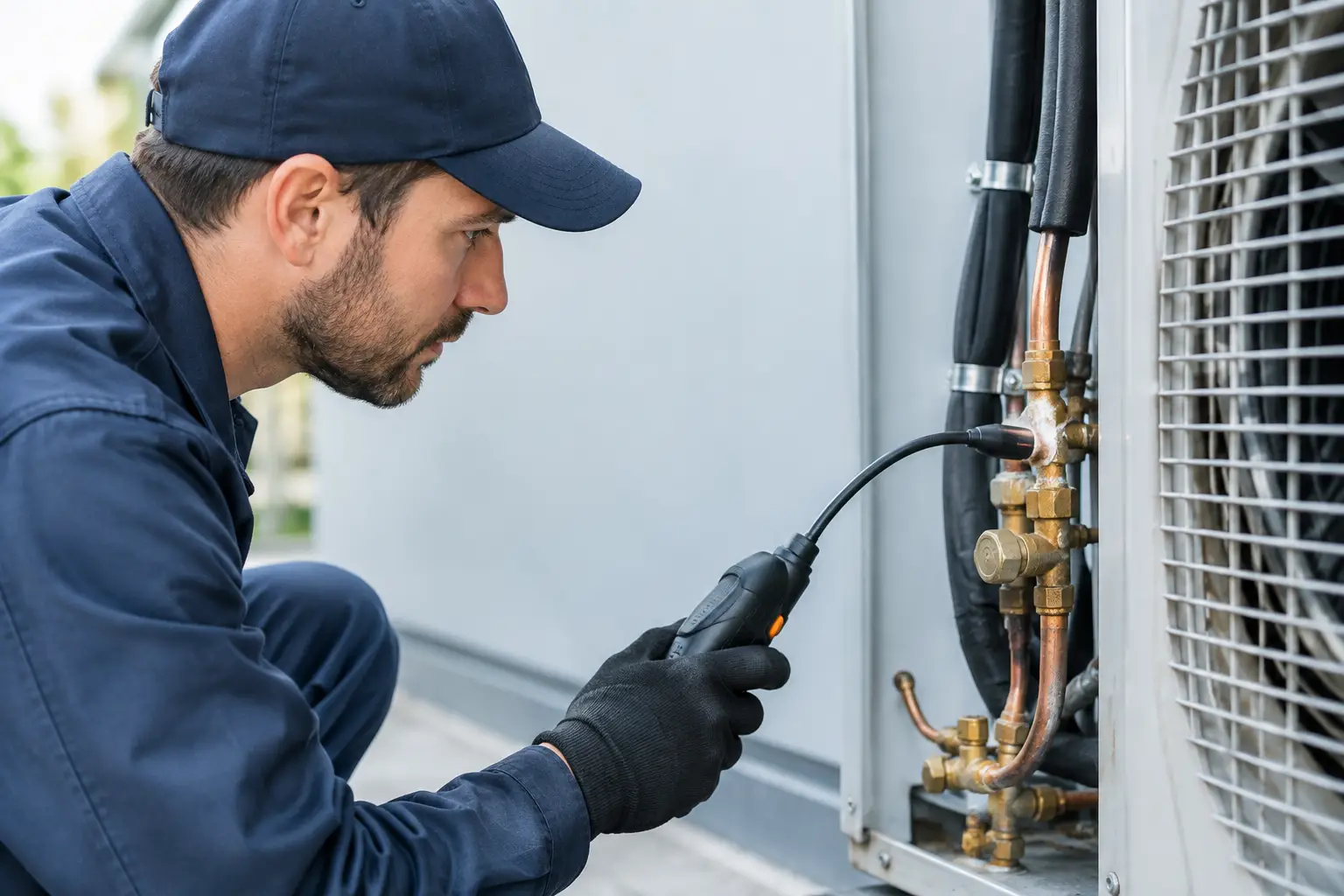
A system that is still blowing some cool air can still have a refrigerant leak. That is what catches many homeowners and business operators out. Knowing how to spot refrigerant leaks early can protect your equipment, avoid rising power bills and stop a minor repair turning into a breakdown on a hot Adelaide day.
Refrigerant is not a consumable that simply runs out. Your air conditioner, cool room or commercial fridge operates on a sealed circuit. If levels are low, there is a leak somewhere and it needs to be found and repaired properly. Topping up the gas without addressing the cause is a short-term patch, not a repair.
What refrigerant does in your system
Refrigerant carries heat through an air conditioning or refrigeration system. In an air conditioner, it absorbs heat from inside and releases it outdoors. In a fridge or cool room, it removes heat from the cabinet or room to hold safe temperatures.
When refrigerant escapes, the system loses capacity. The compressor has to work longer and harder to achieve the same result. Left alone, that added strain can lead to compressor damage, poor temperature control and higher operating costs.
The tricky part is that leaks are not always obvious. A pinhole in pipework, a worn valve core or a failing joint can release refrigerant slowly over months. That is why changes in performance matter.
How to spot refrigerant leaks in air conditioning
No single symptom proves a leak. Several warning signs appearing together are a strong reason to book a professional inspection.
Cooling that has lost its edge
If your split system used to cool a room quickly but now runs for long periods with little improvement, low refrigerant may be part of the problem. You might notice the air from the indoor unit is not as cold as it once was, even though the settings are correct and the filters are clean.
This can also be caused by a dirty indoor coil, blocked filters, a faulty fan or an electrical fault. That is why proper diagnosis matters. A technician should test the system rather than assume it only needs gas.
Ice on the indoor coil or refrigerant pipes
Frost or ice around the indoor unit, evaporator coil or copper pipework is a common warning sign. Low refrigerant can lower coil temperatures enough for moisture in the air to freeze on the surface.
Turn the unit off if you see ice building up. Continuing to run it can cause water damage when the ice melts and may place extra stress on the compressor. Do not chip ice away with tools or try to thaw the unit with heat. Let it defrost naturally, then arrange an inspection.
Hissing or bubbling sounds
A noticeable hiss near the indoor or outdoor unit may point to refrigerant escaping through a small opening. A bubbling or gurgling sound in the pipework can also occur when the refrigerant charge is low.
There are other normal operating noises in HVAC equipment, so sound alone is not a diagnosis. But a new noise paired with poor cooling deserves attention.
Higher power bills without a clear reason
An undercharged system often runs longer to meet the temperature you have set. If your electricity use has increased while your habits have not changed, check the basics first: filters, outdoor airflow, doors and windows, thermostat settings and obvious obstructions around the condenser.
If these are all in order and cooling performance is still down, a leak test may be required. The system cannot work efficiently when the refrigerant charge is incorrect.
Oily marks around fittings or pipework
Refrigerant circulates with compressor oil. When a leak occurs, a small oily residue can sometimes appear around flare connections, valves, coils or accessible pipe joints. It is a useful visual clue, especially around an outdoor unit, but not every leak leaves a visible mark.
Avoid touching damaged pipework or attempting to tighten fittings yourself. Refrigerant work is regulated and needs the right equipment, training and licence.
Warning signs in commercial refrigeration and cool rooms
For a business, refrigerant loss is more than an inconvenience. Inconsistent refrigeration can put stock, food safety and trading hours at risk. A cool room that is still operating but taking longer to pull down temperature should not be ignored.
Watch for cabinet temperatures creeping up, product not holding temperature, longer compressor run times, excessive frost, sweating pipework or an alarm that keeps returning after a reset. In display fridges, you may also see warm spots across shelves or poor recovery after doors have been opened during service.
A commercial system may have several causes for these symptoms, including failed fans, blocked condensers, defrost faults and door seal problems. The practical point is the same: get the fault checked before product is affected. Waiting until a unit stops altogether usually gives you fewer options and more pressure.
What causes refrigerant leaks?
Leaks commonly develop at joints, service valves, flare fittings and corroded sections of coil or pipework. Vibration can work connections loose over time. Outdoor equipment near coastal areas can also be more exposed to corrosion, while physical damage to pipework during building work or gardening can create a sudden leak.
Poor installation can be another factor. Incorrectly prepared flares, unsupported pipework and shortcuts during pressure testing can cause problems that show up later. This is one reason qualified installation and commissioning matter. The job is not finished when the system starts. It needs to be tested, charged correctly and checked under operation.
Age is relevant, but it is not the whole story. An older unit can have a straightforward repairable leak. A newer unit with repeated leaks or damaged coils may need a more careful cost comparison. The right answer depends on the location of the leak, condition of the equipment, refrigerant type and likely remaining service life.
What not to do when you suspect a leak
Do not buy a DIY recharge kit or ask for a gas top-up without leak detection. Adding refrigerant can temporarily improve performance while the underlying problem continues. It can also result in an incorrect charge, which brings its own performance and reliability issues.
Do not rely on smell. Many common refrigerants have little or no distinct odour. If you notice a chemical smell, feel unwell, hear a major release or suspect damaged pipework in an enclosed area, turn the system off where safe, ventilate the area and keep people away until a licensed technician can assess it.
For commercial operators, do not keep moving product into a struggling cool room and hope it recovers overnight. Record temperatures, protect stock according to your food safety process and arrange service promptly.
What a proper refrigerant leak repair looks like
A proper repair starts with diagnosis, not a guess. A licensed technician will inspect the system, check operating pressures and temperatures, and use suitable leak detection methods to locate the fault. Depending on the equipment and suspected leak, this may involve electronic detection, pressure testing with nitrogen, inspection of oil traces and testing accessible joints and coils.
Once the leak is found, the repair might involve replacing a valve core, remaking a flare, repairing or replacing a section of pipework, or replacing a damaged coil. The system then needs to be pressure tested, evacuated to remove moisture and non-condensables, and recharged accurately to the manufacturer’s requirements.
That process takes more care than simply adding gas, but it is how you protect the compressor and get dependable performance back. No shortcuts. No surprises.
When to call for service
Book a technician when cooling has noticeably declined, ice appears on the unit or pipes, your fridge or cool room cannot maintain temperature, or you see oily residue around refrigeration components. For a commercial system protecting perishable stock, treat temperature drift as urgent.
Regular servicing also gives small faults a chance to be found before they become disruptions. Cleaning coils, checking electrical components, confirming drainage and reviewing system operation can reveal issues that are easy to miss during day-to-day use.
A refrigerant leak will not fix itself, and a system should not need repeated gas top-ups. Getting the cause identified early gives you the best chance of a clean repair, stable temperatures and equipment that keeps doing its job when you need it most.
