
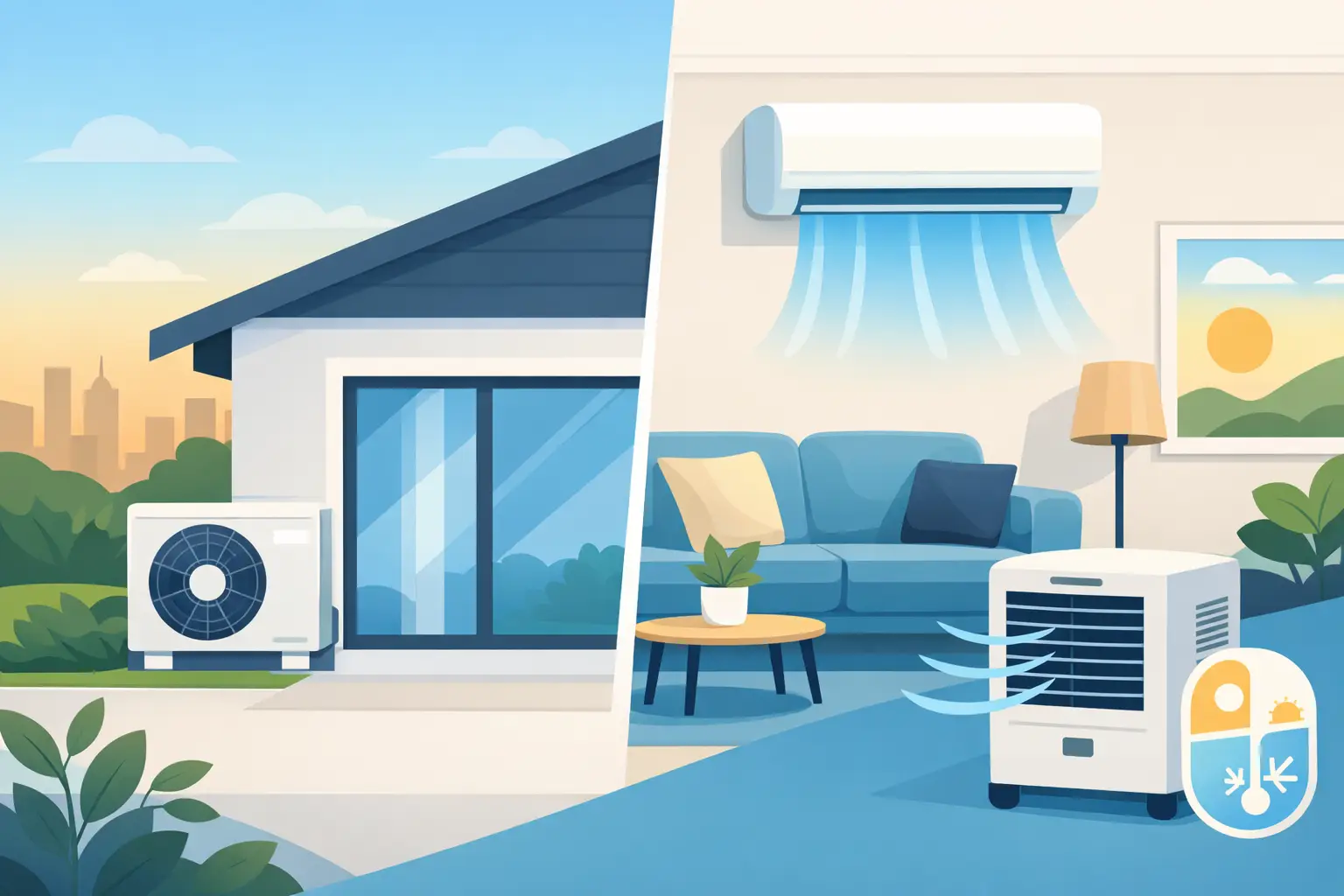
A hot Adelaide afternoon is a poor time to find out your air conditioner is undersized, badly installed or overdue for a service. This home air conditioning guide covers the decisions that make the biggest difference: choosing the right system, sizing it properly, installing it well and looking after it before a small issue turns into an expensive breakdown.
No two homes cool the same way. A system that works well in a compact, insulated unit may struggle in a larger home with west-facing glass, high ceilings and several open living areas. The right answer comes from assessing the home, not picking the biggest unit on sale.
Start with how you use your home
Before comparing brands or capacities, consider which rooms need conditioning and when. If the family spends most of its time in one living area, a quality split system may be the most practical option. It delivers efficient heating and cooling where it is needed, with lower upfront cost than ducted air conditioning.
If you want consistent comfort through bedrooms, living areas and hallways, ducted air conditioning can be a better long-term fit. It gives you central control and a cleaner look, with vents rather than wall-mounted indoor units. Zoning can also reduce running costs by allowing you to condition occupied areas instead of the whole house.
There is a trade-off. Ducted systems cost more to install and need sufficient roof space for ductwork. Split systems are more affordable and straightforward, but several units may be needed to serve a larger home properly. A good installer will explain both options clearly rather than pushing a one-size-fits-all solution.
Split systems for targeted comfort
Reverse-cycle split systems are a strong choice for bedrooms, apartments, studies and open-plan living areas. They cool in summer and provide efficient heating in winter, so one system can handle both seasons. Look for quiet operation, practical controller features and an energy rating that suits how often the unit will run.
Placement matters as much as the model. The indoor unit needs clear airflow across the room, while the outdoor unit needs adequate ventilation and service access. Tucking an outdoor unit into a tight, hot corner may make the property look neater, but it can reduce performance and make future repairs harder.
Ducted air conditioning for whole-home control
Ducted reverse-cycle systems suit households that want a single, integrated system. They are particularly useful for new builds, major renovations and homes where multiple wall units would be impractical. Well-designed zoning means you can cool the living area during the day and bedrooms at night without wasting energy on empty rooms.
The result depends heavily on design and installation quality. Duct sizes, vent locations, return-air placement and zoning all affect comfort. Poorly planned ductwork can lead to noisy airflow, hot rooms and higher power bills, even if the outdoor unit itself is a reputable model.
Sizing is not a guess
Air conditioner capacity is commonly measured in kilowatts. Bigger is not automatically better. An oversized system can cool a room too quickly, cycle on and off more often and struggle to remove enough moisture on humid days. An undersized system may run flat out, fail to reach the set temperature and wear out sooner.
A proper sizing assessment considers more than floor area. It should account for ceiling height, insulation, window size and direction, glass coverage, shading, room layout, the number of occupants and heat from appliances. Adelaide homes with large west-facing windows often need more attention than a simple square-metre calculation suggests.
Ask the technician how they arrived at the recommended capacity. A clear explanation is a good sign that the quote has been built around your home and not copied from the last job.
Installation quality protects your investment
A new air conditioner can only perform as well as its installation allows. Correct pipe sizing, secure mounting, proper drainage, electrical compliance and pressure testing are not optional extras. They are the foundations of reliable operation.
Drainage is often overlooked until water starts dripping through a ceiling or down an internal wall. Condensate drains need the right fall, secure connections and a route that will not create problems later. The same applies to outdoor unit placement. It should be stable, accessible and positioned to avoid recirculating hot discharge air.
For ducted systems, installers should take care around roof access, ceiling penetrations and insulation. The job should be neat, ducts should be supported correctly, and the system should be tested before handover. You should also be shown how to use the controller, zones and basic maintenance features.
Choosing qualified technicians gives you accountability from the first site visit through to commissioning. LJ Refrigeration & Air-Conditioning works without subcontractor uncertainty, so homeowners know who is responsible for the workmanship.
Run your system without driving up the bill
Air conditioning does use power, particularly during heatwaves, but day-to-day habits have a real effect on running costs. Set a sensible temperature rather than forcing the system to chase extreme settings. In cooling mode, around 24 to 26°C is comfortable for many homes. Every household is different, but setting the thermostat very low will not cool the room faster. It only keeps the system working harder for longer.
Close doors and windows while the air conditioner is running, then use curtains, blinds or external shading to reduce heat entering through glass. On very hot days, start cooling before the house has stored hours of heat. A system maintaining a comfortable temperature usually works more efficiently than one trying to recover a baking-hot room at 7 pm.
For ducted systems, use zones properly. There is little value in conditioning spare rooms all day. For split systems, use the timer or scheduling functions so the unit runs around your routine instead of being left on unnecessarily.
Maintenance keeps small faults small
Your system does not need constant attention, but it does need regular care. Dirty filters restrict airflow, reduce efficiency and can cause the indoor coil to ice up. Most household filters can be cleaned every few months, and more often during heavy use, dusty conditions or bushfire smoke events.
Professional servicing is still worthwhile. A technician can inspect electrical connections, refrigerant operation, coils, drains, fan performance and overall system condition. This helps identify worn parts, blocked drains and declining performance before the system stops on the hottest day of the year.
Book service sooner if you notice weak airflow, unusual noise, bad smells, water leaks, inconsistent temperatures or a sudden jump in energy use. These are not issues to ignore. Continuing to run a struggling system can turn a minor repair into damage to more expensive components.
Questions homeowners should ask before approving a quote
A clear quote should identify the proposed system, capacity, installation scope and any site-specific work required. If extra electrical work, wall brackets, condensate pumps or difficult access may affect the price, that should be discussed upfront.
It is also worth asking about warranty support and who will handle faults after installation. Manufacturers provide equipment warranties, but workmanship and the ability to get a technician back on site matter just as much. No shortcuts. No surprises.
How often should home air conditioning be serviced?
For most households, a professional check every 12 months is a sensible baseline, particularly before summer. Systems used heavily for both heating and cooling, or installed in dusty environments, may benefit from more frequent attention.
Should I repair or replace an older system?
It depends on the fault, the age of the unit and its efficiency. A straightforward repair on a well-maintained system can be good value. If repairs are becoming regular, parts are difficult to source or the unit no longer keeps the space comfortable, replacement may be the more reliable financial decision.
The best air conditioning system is the one that suits your home, is installed properly and receives the care it needs. Take the time to get the design right before summer arrives, and you will spend less time worrying about whether it will cope when the heat sets in.
