
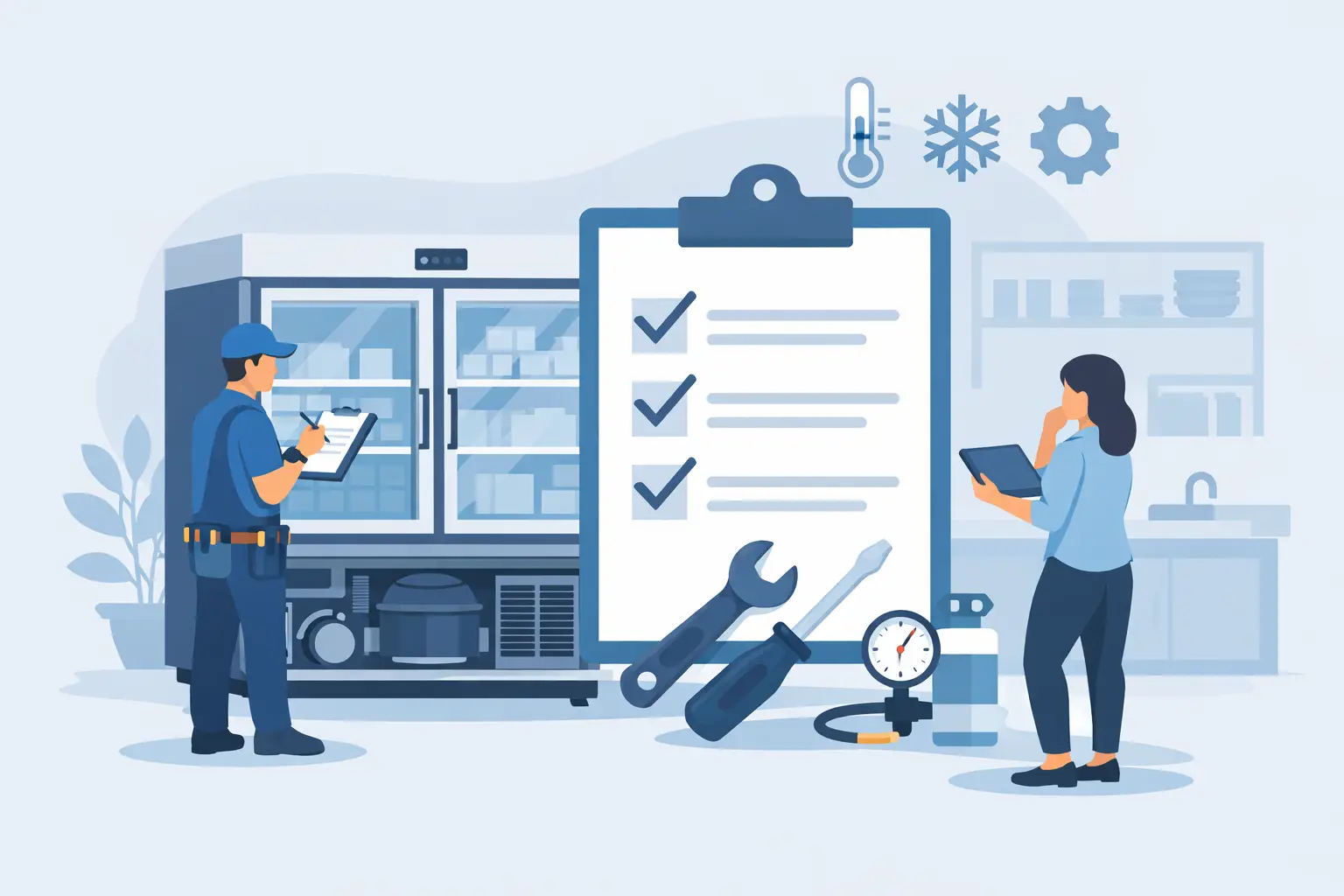
A freezer failure rarely starts with a complete shutdown. More often, it starts with a door that will not seal properly, ice building up around the evaporator, a condenser working harder than it should, or temperatures creeping outside their normal range. A practical commercial freezer service checklist helps you catch those warning signs before stock is at risk and a minor issue becomes an after-hours emergency.
For Adelaide kitchens, retailers, hospitality venues and food businesses, freezer maintenance is not just about keeping equipment tidy. It protects product quality, supports food safety requirements and gives your equipment a better chance of reaching its expected working life. No shortcuts. No surprises.
Commercial Freezer Service Checklist: Daily Checks
Daily checks should be quick enough to complete during opening or closing procedures. They are not a substitute for professional servicing, but they can identify faults early and provide useful information if a technician is needed.
Start with the cabinet temperature. Check the display against your required storage temperature and make sure it is stable, not simply cold at the moment you look at it. If your freezer has a temperature log or monitoring system, review any overnight alerts rather than clearing them without investigation. A repeated temperature alarm needs attention, even if the unit appears to recover.
Look at the door seals while the freezer is operating. Damaged, flattened or dirty gaskets allow warm, moist air into the cabinet. That adds strain to the refrigeration system, creates excess frost and can prevent the freezer from holding temperature during busy periods. Clean spills and food debris from the seals with a suitable mild cleaner, then check that the door closes firmly all the way around.
Take note of unusual noise. A change in fan noise, rattling panels, a compressor that seems to run constantly or a sharp clicking sound can all point to an issue worth checking. Staff do not need to diagnose the cause. They do need to report the change promptly instead of waiting for the unit to stop working.
Finally, inspect the inside of the cabinet. Keep stock clear of internal air vents and avoid packing products so tightly that cold air cannot circulate. Large loads of warm product, frequent door opening and poor stock placement can all make a sound freezer look like it has a mechanical fault.
Weekly Cleaning and Inspection Tasks
A weekly clean is where many avoidable freezer problems are prevented. The goal is to remove debris, maintain airflow and spot wear before it affects performance.
Check for excessive frost on walls, shelves, the evaporator cover or around the door frame. A light amount of frost can occur, depending on the type of unit and how it is used. Heavy or recurring ice buildup is different. It may indicate a sealing issue, a defrost fault, a blocked drain or too much humid air entering the cabinet.
Do not chip ice away with knives, screwdrivers or other sharp tools. It is easy to puncture an evaporator coil or damage a panel, turning a manageable maintenance issue into a costly repair. If a manual defrost is required, follow the manufacturer’s instructions and move stock to suitable temperature-controlled storage first.
Clean accessible surfaces and remove rubbish, cardboard and stored items from around the unit. Commercial freezers need clear space for ventilation, particularly around the condenser area. A freezer pushed hard against a wall or boxed in by supplies may run hotter and longer than it should.
Review the door hinges, handles and latches as well. A sagging door can leave a small gap that is difficult to see but expensive to ignore. If the door needs lifting, slams shut, will not stay closed or has a loose handle, arrange a repair before the seals and hinges suffer further damage.
Monthly Checks That Protect Performance
Monthly checks give operators a clearer picture of how the freezer is tracking over time. Record the date, temperature readings, visible issues and any action taken. That record can help identify recurring faults and gives your refrigeration technician a useful service history.
Where the condenser is safely accessible, inspect it for dust, grease and lint. A blocked condenser cannot reject heat efficiently, so the compressor works harder and energy use rises. In commercial kitchens, grease buildup can happen quickly. Cleaning methods vary between units, and electrical components or delicate fins can be damaged by the wrong approach, so leave deep coil cleaning to a qualified technician where access is limited or conditions are dirty.
Check the area beneath and behind the freezer for water. Water on the floor may come from a blocked drain, a defrost issue, condensation or a plumbing source nearby. It is also a slip hazard. Do not assume it is normal because the freezer is still operating.
Pay attention to power leads, plugs and isolators without handling exposed electrical parts. A damaged lead, scorch marks, intermittent power or a tripping circuit requires professional attention. Freezer repairs can involve electrical and refrigeration work, so this is not a job for an unqualified handyman.
What a Scheduled Professional Service Should Cover
A scheduled service is the part of the checklist that deals with performance you cannot reliably assess from the outside. The right interval depends on the equipment, age, environment and workload. A lightly used retail freezer may need a different schedule to a kitchen freezer operating long hours in a hot, greasy environment. For many commercial operators, six-monthly servicing is a sensible starting point, with more frequent attention for high-demand equipment.
During a proper service, a qualified technician should assess operating temperatures, airflow, fan operation, defrost performance, drainage, door condition and the general state of components. They can clean critical areas safely, identify signs of refrigerant loss, check electrical connections and test controls that affect temperature stability.
This work matters because a freezer can appear to be running while losing capacity. It may hold temperature overnight but struggle during trade, after a delivery or on a hot day. Finding that problem during a planned visit is far better than discovering it after stock has softened or thawed.
At LJ Refrigeration & Air-Conditioning, scheduled maintenance is approached as practical risk control. The aim is not to sell unnecessary work. It is to identify what needs fixing now, what should be monitored and what can be planned before it disrupts your operation.
Signs You Should Book a Repair Now
Do not wait for the next scheduled service if the freezer is unable to maintain its normal temperature, repeatedly alarms, runs continuously, trips power or develops heavy frost. The same applies if you notice water leaks, a burning smell, damaged door seals, noisy fans or a sudden increase in running noise.
If stock has been exposed to temperatures outside your approved range, follow your food safety procedure and keep clear records. Moving product to another freezer may protect it, but it does not resolve the fault. Avoid repeatedly switching the unit off and on in the hope it will reset. That can complicate diagnosis and may put more stock at risk.
When you call for service, have the freezer make and model, displayed temperature, fault code if shown, and a clear description of the problem ready. Let the technician know when the issue started and whether it occurs at a particular time of day. Straight information helps get to the root cause faster.
Make the Checklist Part of the Routine
A checklist only works when someone owns it. Assign daily observations to the opening or closing team, schedule weekly cleaning and make professional servicing a planned operating cost rather than an emergency expense. Keep the record near the equipment or within your normal food safety documentation so it is simple to use.
Your commercial freezer does not need constant attention, but it does need consistent attention. Small checks protect stock, reduce unnecessary power use and give you time to act before a fault dictates the terms.

1 comment on “Commercial Freezer Service Checklist for Operators”