
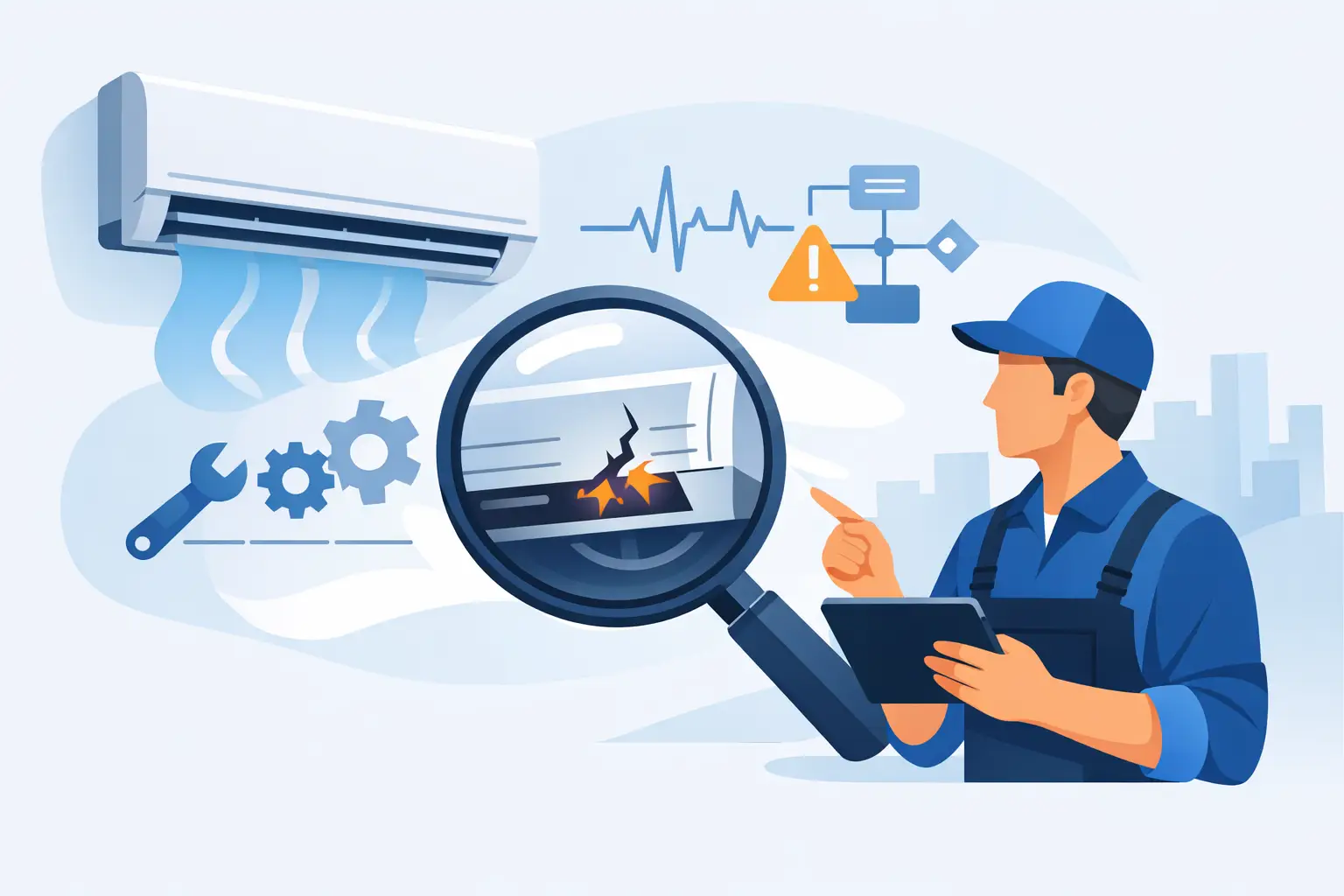
When an air conditioner stops cooling properly, trips the power, leaks water or makes a noise it never made before, the answer is not always a quick part replacement. Proper fault diagnosis aircon work means finding what caused the problem before recommending a repair. That is how you avoid paying for the same issue twice.
For homeowners, a faulty system can make a hot Adelaide afternoon uncomfortable very quickly. For businesses, the stakes can be higher. A failed air conditioner can disrupt staff, customers and tenants, while a refrigeration fault can put stock and daily operations at risk. The priority is a clear diagnosis, a practical repair plan and work carried out properly.
Why aircon faults are often misdiagnosed
Air conditioning systems are made up of electrical controls, motors, fans, refrigerant pipework, drainage, filters and sensors. Several different faults can produce similar symptoms. Poor cooling, for example, may be caused by a dirty filter, low refrigerant from a leak, a failing compressor, a faulty sensor, restricted airflow or an electrical issue.
Replacing a visible or obvious component without testing the full system can get it running for a short time, but it may not fix the underlying cause. A unit that has lost refrigerant needs more than a regas. Refrigerant does not get used up in normal operation. If the charge is low, there is usually a leak that needs to be located and repaired.
The same applies to electrical faults. A tripping breaker might be caused by a worn compressor, damaged wiring, a failed capacitor or moisture affecting a component. The right repair depends on what testing shows, not what looks most likely from the driveway.
No shortcuts. No surprises. A proper diagnosis protects the equipment and gives you a sound basis for deciding whether to repair, service or replace it.
Signs you need fault diagnosis aircon service
Not every problem means the whole system is on its last legs. Some faults are straightforward when picked up early. The key is acting when the system starts behaving differently, rather than waiting for a complete breakdown in the middle of summer.
Poor cooling is one of the clearest warning signs. If the air coming from the vents is not as cool as usual, or certain rooms are warmer than others, airflow, refrigerant performance and thermostat operation all need checking. With ducted systems, the issue may also sit in zoning controls, dampers or ductwork rather than the outdoor unit.
Water dripping from an indoor unit should also be checked. It can be as simple as a blocked drain, but ongoing water leaks can damage plaster, paint, flooring and electrical components. Ice on pipework or the indoor coil is another warning sign. Turning the unit off may allow it to thaw, but it does not resolve the fault that caused it.
Strange sounds deserve attention too. Rattling can indicate loose panels or mounts. Squealing may point to a motor or fan issue. Grinding, buzzing or repeated clicking can signal a more serious electrical or mechanical problem. If a system trips the switchboard, smells burnt or shows an error code, stop using it and arrange qualified service.
What a proper diagnosis involves
A worthwhile diagnostic visit is more than switching the unit on and seeing whether cold air comes out. A qualified technician starts with the symptoms you have noticed, how long they have been occurring and whether the system has been serviced or repaired recently. Those details can narrow the search, but they do not replace testing.
The system should then be inspected and tested across the parts that affect its performance. This includes air filters and airflow, indoor and outdoor fan operation, electrical connections, capacitors, controls, sensors, drainage and refrigerant pressures where appropriate. The technician also checks for signs of oil residue, corrosion, damaged insulation, loose wiring and wear around moving parts.
On a ducted system, diagnosis may include checking the return-air path, zones, controller settings and whether conditioned air is reaching the right areas. On a split system, attention may focus on communication between the indoor and outdoor units, condensate drainage and the condition of the outdoor coil.
Commercial systems require an even broader view. A fault can be tied to operating hours, load changes, door use, ventilation demands or equipment that has been added to the space. In a cool room or commercial refrigeration setup, temperature stability matters as much as whether the equipment is simply running. The goal is to identify the fault and understand why it developed.
Repair, service or replacement: making the call
Once the cause is known, the next decision is whether repair makes commercial and practical sense. There is no one answer for every unit.
A relatively new system with a failed capacitor, blocked drain, faulty sensor or worn fan motor is often well worth repairing. The same is true where the issue is maintenance-related, such as a heavily soiled coil restricting performance. A professional clean and service may return the system to reliable operation.
Replacement may be the smarter choice when an older unit has a major compressor fault, recurring refrigerant leaks, obsolete parts or a history of repeated breakdowns. Energy use matters as well. An inefficient system that struggles through every summer can cost more over time than a correctly sized replacement.
For businesses, downtime needs to be part of the calculation. A cheaper repair is not necessarily the best outcome if it leaves a critical system unreliable during trading hours. Clear advice should cover the likely repair cost, the condition of the equipment, any risks of recurrence and the options available. That lets you make the decision with the facts in front of you.
Why refrigerant faults need licensed handling
Refrigerant work is not a DIY job. Air conditioning and refrigeration systems operate under pressure, and refrigerants must be handled by appropriately licensed technicians. Apart from safety and environmental obligations, incorrect charging can reduce performance, damage equipment and mask a leak that is still active.
If a technician finds low refrigerant, the work should focus on locating the leak, repairing it where feasible and confirming the system is operating correctly afterwards. Simply adding more refrigerant without addressing the source may provide temporary cooling, but it is not a lasting repair.
This is particularly important for commercial operators. A slow leak in refrigeration equipment can become a product-loss problem with little warning. Early diagnosis and planned maintenance are usually less disruptive than an emergency call-out after temperatures have already risen.
Preventing repeat faults
Some failures cannot be predicted, but regular servicing reduces the chance of avoidable issues. Filters need cleaning, coils collect dust, drains block, electrical connections can loosen and outdoor units can become restricted by leaves or debris. These small issues affect efficiency first, then reliability.
Homeowners can help by keeping outdoor units clear, cleaning filters as recommended for their system and paying attention to changes in noise or performance. Do not hose electrical components or pull covers off to investigate a fault. If the unit is not operating normally, note what it is doing and when it happens. That information helps the technician diagnose it faster.
For commercial sites, scheduled maintenance is often the sensible option. It creates a record of system condition, catches wear before it becomes a shutdown and helps plan repairs around your operational needs. This is especially valuable for offices, kitchens, retail spaces, cool rooms and facilities with several systems to maintain.
Choose diagnosis over guesswork
The cheapest-looking repair is rarely good value if it does not solve the actual problem. Qualified fault finding takes a little more care upfront, but it prevents repeat visits, unnecessary parts and avoidable downtime.
LJ Refrigeration & Air-Conditioning approaches aircon faults with that standard in mind: test the system, explain what has failed, set out the practical options and complete the work properly. If your air conditioner is underperforming, leaking, noisy or unreliable, arrange a professional diagnosis before a small fault turns into a larger repair.
