
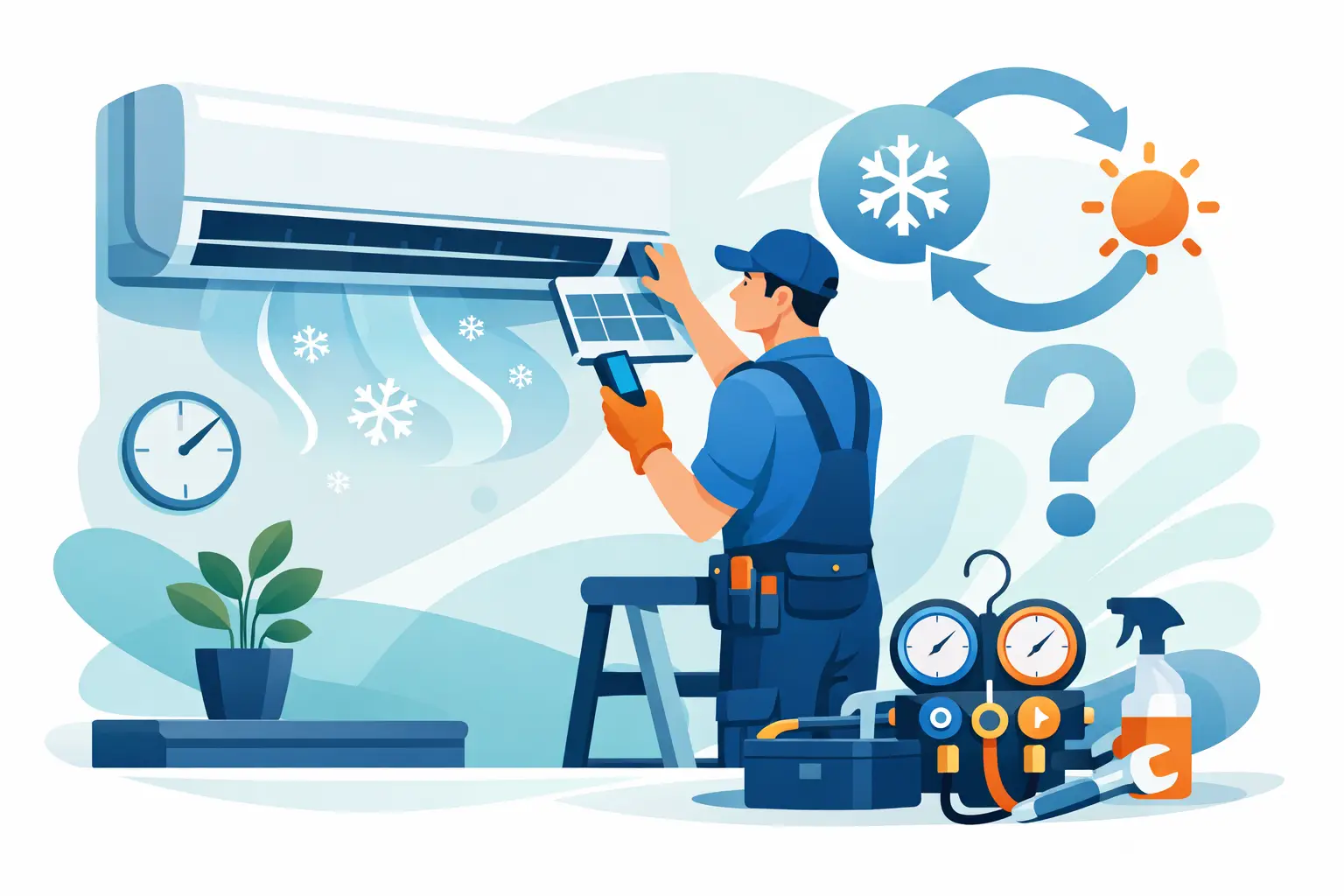
If your air con only gets attention when it stops cooling on a 40-degree day, you’re leaving it too late. A lot of breakdowns, poor airflow and rising power bills come back to one simple issue: the unit has gone too long without proper maintenance. So, how often should air conditioning be serviced? For most homes, once a year is the baseline. For heavier use, commercial sites, or systems under strain, it can be more often.
That answer sounds simple, but the right schedule depends on how the system is used, what type of unit you have, and how much damage a failure would cause if it happened at the wrong time.
How often should air conditioning be serviced at home?
For most residential systems, professional servicing every 12 months is a sensible minimum. That applies to split systems, ducted air conditioning and reverse cycle units. An annual service gives a technician the chance to clean key components, check refrigerant levels, inspect electrical parts, test performance and pick up wear before it turns into a repair job.
If you use your system hard through summer and winter, every 6 to 12 months is usually the better call. Reverse cycle systems in particular do more work than cooling-only units because they run across more of the year. More runtime means more dust build-up, more stress on moving parts and more chance of efficiency slipping off without you noticing.
Households with pets, nearby construction, heavy dust, or family members sensitive to air quality may also benefit from more frequent attention. Filters clog faster in those conditions, and indoor units can build up grime that affects both airflow and cleanliness.
How often should air conditioning be serviced for commercial sites?
Commercial systems usually need servicing more often than home units. In many cases, every 3 to 6 months is the right range. Offices, shops, kitchens, medical rooms, hospitality venues and sites with refrigeration all put different demands on their equipment, but the common factor is this: downtime costs money.
If an air conditioning unit struggles in a house, it’s inconvenient. If it fails in a business, it can affect staff comfort, customer experience, stock protection or day-to-day operations. That is why planned maintenance matters more in commercial settings. You’re not just maintaining a machine. You’re protecting continuity.
High-use environments, greasy kitchens, dusty workshops and buildings with long operating hours should not be relying on a once-a-year check. The heavier the use, the shorter the gap between services should be.
Why annual servicing is the minimum, not the ideal in every case
A lot of people hear “service your air con yearly” and take that as a hard rule. It isn’t. It’s a minimum benchmark for average use. Real-world conditions can shift that quite a bit.
A unit in a spare room that runs occasionally has very different servicing needs from a ducted system cooling a busy household every day. The same goes for a small office compared with a restaurant or retail space with doors opening constantly. Age matters too. Older systems generally benefit from closer attention because parts wear down, seals deteriorate and performance can drift gradually.
Skipping service intervals doesn’t always cause an immediate failure. More often, the unit keeps running but does it badly. It cools slower, works harder, uses more power and puts extra strain on components. That’s where small maintenance issues turn into expensive repairs.
What happens during a proper air conditioning service?
A real service is more than rinsing a filter and calling it done. Proper maintenance should involve inspection, cleaning, testing and adjustment where needed.
On a standard residential service, a technician will typically inspect and clean filters, check coils and drain lines, test temperatures and airflow, inspect electrical connections, assess refrigerant performance and look over the outdoor unit for signs of wear or blockage. Ducted systems may also need checks on zoning, return air, motors and overall airflow balance.
Commercial servicing can go further depending on the site and equipment involved. The goal is not just to keep the unit running today. It is to spot faults early, maintain efficiency and reduce the chance of a surprise breakdown.
That is also why a proper service needs qualified technicians. Air conditioning systems involve refrigerants, electrics, controls and mechanical components. A quick once-over without real testing may miss the issues that matter.
Signs your system should be serviced sooner
Even if you’re not due yet on the calendar, some warning signs mean your system should be checked now rather than later.
Weak airflow is a common one. So is uneven cooling between rooms, bad odours when the system starts, unusual noises, water leaks, or a spike in energy bills without another obvious cause. If the unit turns on and off too often, struggles to reach temperature, or seems to run all day without properly cooling, something is off.
These problems do not always mean a major repair is needed. Sometimes the cause is straightforward – dirty filters, blocked drains, coil build-up or an early-stage electrical issue. But leaving it alone usually makes the eventual repair more costly.
The difference between cleaning filters and professional servicing
Homeowners and site managers can do some basic upkeep themselves, and they should. Cleaning or replacing filters regularly helps airflow and keeps dust from building up too quickly. Keeping outdoor units clear of leaves, dirt and obstructions also helps the system breathe properly.
But that is not the same as a full service. Filter cleaning will not test refrigerant charge, identify failing capacitors, pick up loose electrical terminals or reveal drainage issues inside the unit. Basic upkeep is worthwhile, but it doesn’t replace scheduled professional maintenance.
A practical rule is this: clean filters during the year, and book a full service at proper intervals based on usage.
Best time of year to book a service
The best time to service air conditioning is before peak season, not during it. For cooling performance, spring is ideal. For reverse cycle systems that heat as well, autumn can also make sense if you want the system checked before winter use.
The reason is simple. If you wait until the first heatwave or cold snap, service bookings fill up fast and faults become more disruptive. A pre-season check gives you time to sort out any issues before the system is under pressure.
In Adelaide, where summer heat can hit hard, that timing matters. A unit that seemed “mostly fine” in mild weather can quickly show its weaknesses when the temperature climbs and it has to work properly.
Is more frequent servicing worth the cost?
For many people, yes. Not because frequent servicing is a sales pitch, but because repairs, lost efficiency and emergency callouts usually cost more than steady maintenance.
There is a balance to strike. A lightly used home system probably does not need quarterly servicing. That would be overkill. But a heavily used household unit, an ageing ducted system or a commercial site with no room for downtime may save money over time by servicing more often.
The right question is not just “What does a service cost?” It is “What does a failure cost if this system stops when I need it most?”
That answer is different for every property. For a homeowner, it might mean discomfort and a repair bill. For a business, it might mean lost trade, unhappy staff, or a problem that affects other equipment on site.
A sensible servicing schedule to follow
If you want a straightforward benchmark, use this. Residential systems should be professionally serviced every 12 months, or every 6 months if they run heavily. Commercial systems should usually be checked every 3 to 6 months depending on usage, environment and the risk attached to downtime.
If the unit is older, working harder than usual, or showing warning signs, don’t wait for the next scheduled visit. Get it looked at before a minor issue becomes a bigger one.
At LJ Refrigeration & Air-Conditioning, the approach is simple: no shortcuts, no guesswork, and no temporary fixes dressed up as maintenance. Whether it’s a split system at home or equipment a business depends on every day, regular servicing only works if it’s done properly.
The best time to service your air con is before you need to rely on it. Leave it too long, and the system will usually tell you – just not at a convenient time.

2 comments on “How Often Should Air Conditioning Be Serviced?”