
If your air con cools one room, leaves another stuffy, and sends your power bill north, the problem usually is not just the unit. It is the whole system. That is the simplest way to answer what is heating ventilation and air conditioning – it is the combined setup that controls temperature, airflow and indoor air quality across a home or workplace.
Most people shorten it to HVAC. In practical terms, HVAC covers the equipment and components that heat a space, move air through it and remove or add cooling as needed. In some buildings that might be a basic split system and an exhaust fan. In others, it could be a full ducted system with zoning, fresh air control, filters and mechanical ventilation.
What is heating ventilation and air conditioning in simple terms?
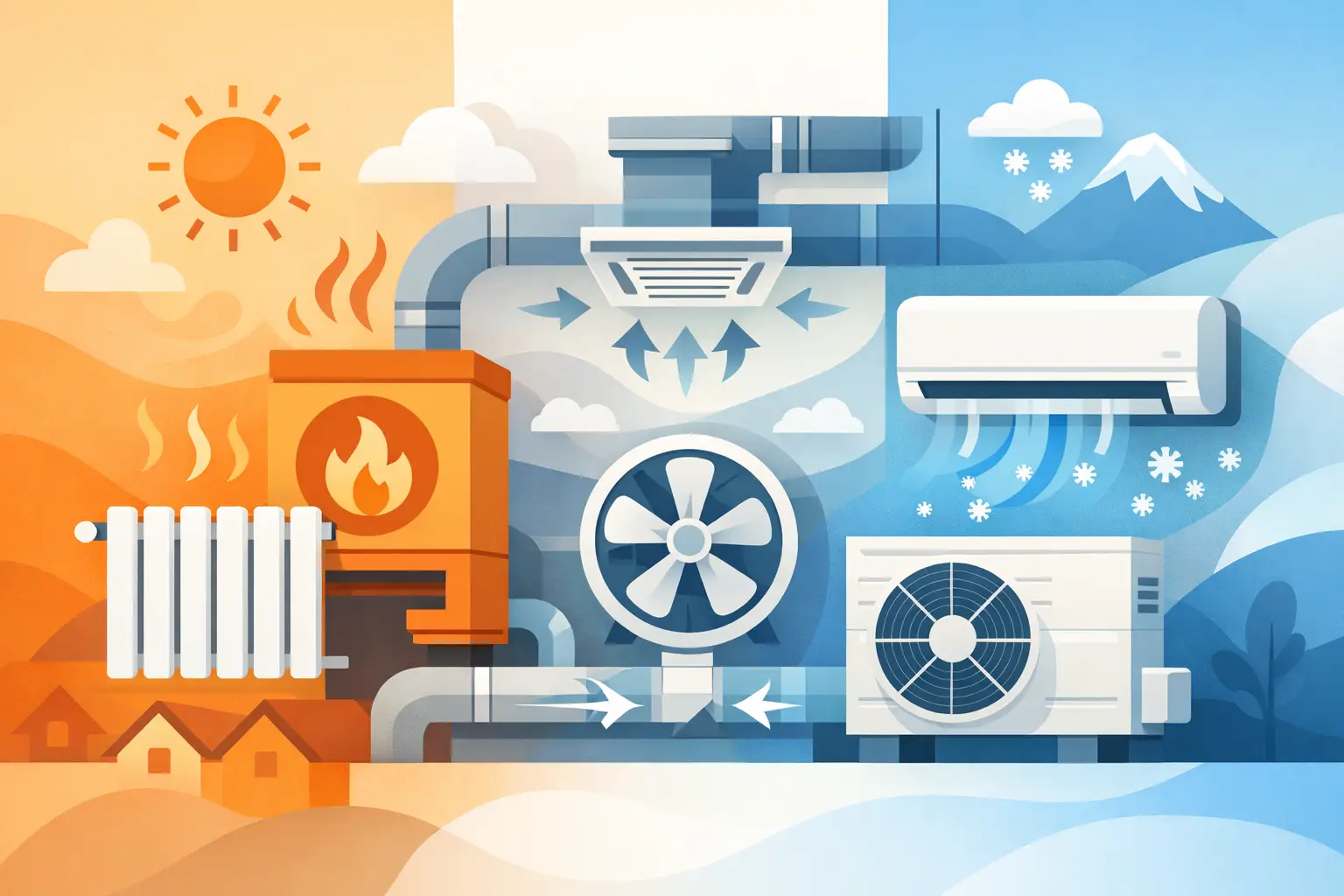
Heating, ventilation and air conditioning are three separate functions that work best when they are treated as one system.
Heating is the part that warms indoor spaces when temperatures drop. That could be done by a reverse cycle air conditioner, a gas heater, an electric system or another dedicated heating setup. The goal is straightforward – keep the building comfortable and safe to occupy.
Ventilation is about air movement and air replacement. It removes stale air, odours, humidity, smoke and airborne contaminants, then brings in cleaner air where required. In a house, ventilation might involve exhaust fans and natural airflow. In a commercial site, it can include mechanical ventilation designed around occupancy, heat loads and compliance requirements.
Air conditioning is the cooling and humidity control side. It removes heat from indoor air and helps maintain a more stable indoor climate. In Australia, most modern systems are reverse cycle, which means the same unit can handle both heating and cooling.
When people ask what is heating ventilation and air conditioning, they are usually really asking what keeps a building comfortable year-round. The answer is not one machine. It is the way heating, cooling and airflow work together.
Why HVAC matters more than people think
A lot of property owners focus on the box on the wall or the outdoor unit. Fair enough – that is the visible part. But comfort, efficiency and reliability depend on more than brand or size.
If the system is undersized, it will run too hard and still struggle on hot days. If it is oversized, it may short cycle, waste energy and fail to dehumidify properly. If ductwork leaks, filters clog or ventilation is poor, even a good unit can perform badly.
That is why proper HVAC work is not about quick fixes or guesswork. It is about design, installation and servicing that deal with the full setup. No shortcuts. No surprises.
The three parts of HVAC explained
Heating
In Australian homes and small businesses, heating often comes from reverse cycle air conditioning because it is efficient and practical. Some sites still use gas heating or electric resistance heating, depending on the building, existing services and budget.
The right heating solution depends on room size, insulation, ceiling height and how the space is used. A bedroom, open-plan living area and warehouse office do not all need the same approach. Good heating should feel even, respond properly to controls and operate without pushing running costs higher than they need to be.
Ventilation
Ventilation is the part many people overlook until there is a problem. Steam that does not clear from bathrooms, kitchen heat hanging around, stale air in an office, or condensation building up inside a room are all signs that airflow is not right.
Proper ventilation helps remove moisture and pollutants and supports healthier indoor conditions. In commercial settings, it can be critical for staff comfort, food safety, equipment performance and compliance. For example, a back-of-house kitchen or a cool room area has very different ventilation demands from a standard retail floor.
Air conditioning
Air conditioning removes heat from inside and releases it outside. Reverse cycle systems can also reverse that process to provide heating in winter. Split systems suit single rooms or smaller areas, while ducted air conditioning is often chosen for whole-home or larger commercial coverage.
The best setup depends on the building and how people use it. A family home may want quiet operation and zoning. A business may care more about reliable performance during trading hours and minimal disruption to operations. Different priorities, same principle – match the system to the job.
How an HVAC system actually works
At a basic level, HVAC systems condition air and move it where it needs to go. A split system uses an indoor unit to treat the air and an outdoor unit to transfer heat. A ducted system conditions air centrally and delivers it through ducts to different rooms.
Controls tell the system when to start, stop and adjust output. Filters help catch dust and particles. Fans move the air. In some setups, dampers and zoning controls direct airflow to selected areas only. Ventilation components may also remove stale air or introduce fresh air, depending on the site.
That sounds simple enough, but small faults can have a big impact. Low refrigerant, blocked filters, failing fans, dirty coils or poor electrical connections can reduce performance fast. That is why proper fault finding matters. Replacing a part without confirming the cause often just delays the next breakdown.
Residential and commercial HVAC are not the same job
A lot of the core principles are the same, but the demands are different.
In a home, the focus is usually comfort, running costs, noise and ease of use. People want a system that heats and cools properly, looks neat, and does not become a maintenance headache. Clean installation matters because no one wants damage to walls, messy pipe runs or a unit placed where it blasts directly onto the couch.
In a commercial setting, downtime can cost money quickly. Offices need consistent comfort. Retail spaces need stable conditions for staff and customers. Kitchens, cool rooms and refrigeration areas often need more specialised solutions because temperature control is tied directly to operations.
That is where experience across both HVAC and refrigeration becomes useful. Not every contractor handles both sides well, and not every problem can be solved with a standard air conditioning approach.
What a good HVAC installation should include
A proper installation starts before any tools come out. The system should be selected based on the size and layout of the space, insulation levels, usage patterns and any site constraints. Bigger is not always better, and the cheapest option is often not the cheapest to run.
Once the right equipment is chosen, installation quality matters just as much. Pipework, drainage, electrical work, duct layout, airflow balancing and controller placement all affect long-term performance. If one of those elements is done poorly, you can end up with leaks, noise, weak airflow or premature wear.
This is also where upfront pricing and clear scope matter. Customers should know what is being installed, what is included and whether any building-specific limitations apply. Good trade work is clear from the start.
Why servicing is part of the system, not an extra
HVAC systems do not stay efficient on their own. Dust builds up. Filters clog. Components wear. Drain lines block. Electrical parts loosen over time. Even if the unit still turns on, that does not mean it is operating properly.
Regular servicing helps catch faults early, maintain airflow, protect efficiency and extend equipment life. For homeowners, that can mean fewer surprise breakdowns in the middle of summer or winter. For businesses, scheduled maintenance is often the difference between controlled upkeep and expensive interruption.
It also helps preserve air quality. Dirty filters and coils can affect how the system performs and what circulates indoors. That matters in homes, and it matters even more in occupied commercial spaces.
Choosing the right HVAC setup
There is no single best system for every property. It depends on the building, how often the space is used, what level of control you want and what your budget looks like now and over time.
A split system may be the right call for a single room or a smaller home. Ducted air conditioning can make more sense where whole-property coverage and zoning are important. Commercial sites may need a mix of HVAC and refrigeration solutions working side by side.
The key is to look beyond the unit price. Consider installation quality, service access, efficiency, parts availability and whether the system suits the actual demands of the site. That is usually where long-term value is decided.
Heating, ventilation and air conditioning is not complicated for the sake of it. It is simply the system that makes indoor spaces workable, comfortable and consistent. When it is designed well and maintained properly, you barely notice it – and that is usually the point.
