
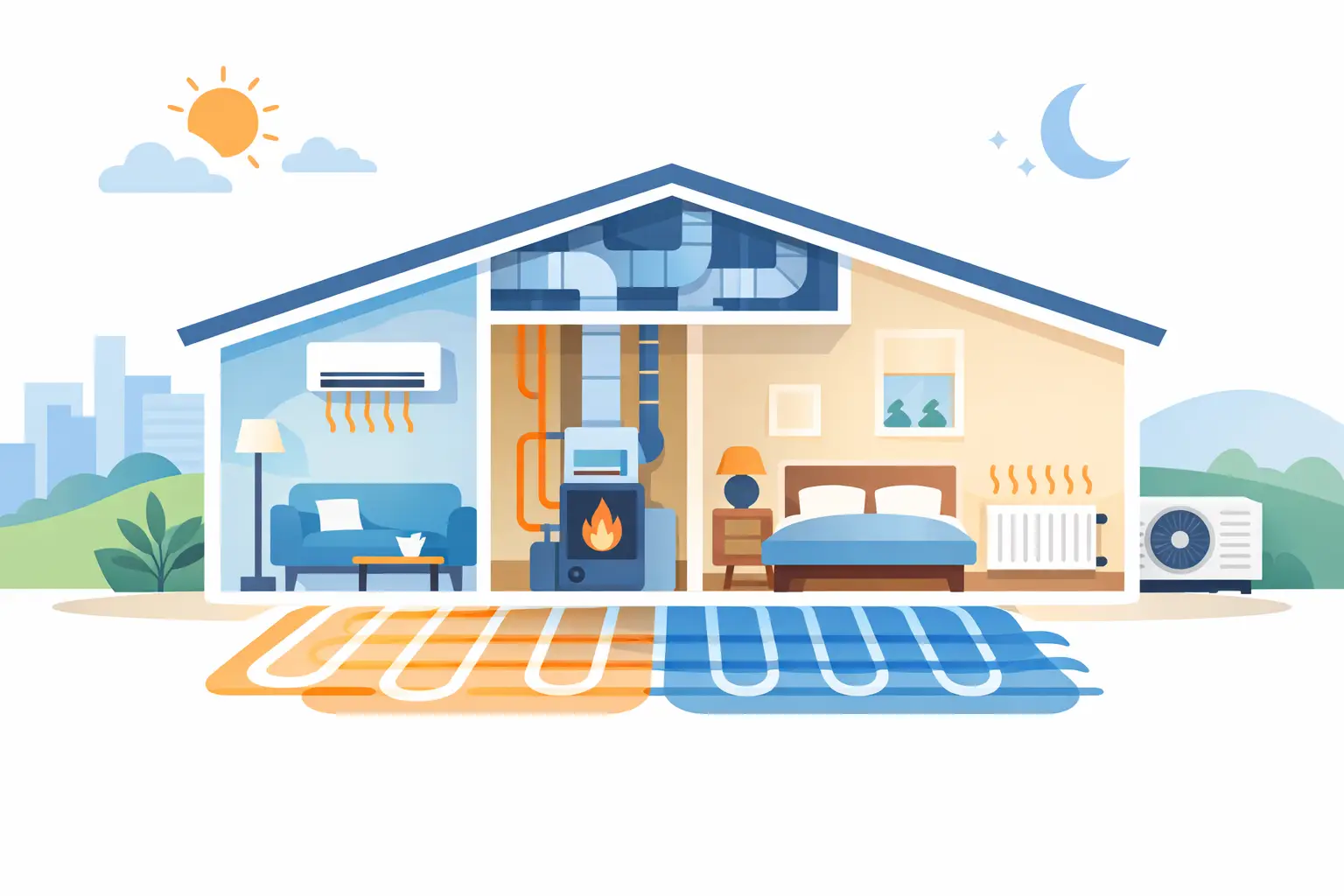
A heater that only works well in one room, costs a fortune to run or quits on the coldest morning is not doing its job. This home heating system guide is built for Adelaide homeowners who want clear answers before they install, replace or repair a system. No guesswork. No sales pitch built around the most expensive option.
The right heating setup depends on your home’s layout, insulation, energy supply, how many rooms you use and how long you need heat each day. A small, well-sealed unit in a newer home needs something very different from a draughty 1970s house with high ceilings and several bedrooms.
Start with how you use your home
Before choosing a heater, think about where the family actually spends time. If everyone gathers in one living area during the evening, a quality reverse-cycle split system may be the most practical answer. If you need even warmth across bedrooms, hallways and living spaces, ducted heating may make more sense.
Also consider when you feel the cold. Adelaide winters can bring crisp, dry days followed by cold nights and early mornings. A system that heats the lounge quickly after work may not be the best system for keeping bedrooms comfortable before sunrise.
Your home itself matters just as much as the heater. Poor ceiling insulation, unsealed gaps around doors, single glazing and open-plan areas all increase the heating load. Installing a bigger unit can help in some cases, but it is not a cure for major heat loss. A properly sized system in a reasonably efficient home will generally run better and cost less than an oversized system fighting draughts all winter.
Home heating system guide: the main options
There is no single best heating system for every property. Each option has a place when it is selected, sized and installed properly.
Reverse-cycle split systems
Reverse-cycle air conditioning is one of the most common choices for Adelaide homes. It provides heating in winter and cooling in summer from the same unit, making it a practical year-round investment. Modern systems can be very efficient, particularly when they are sized correctly and used consistently rather than switched on and off every few minutes.
A wall-mounted split system suits one main room, a compact home, an extension or an area where ductwork is not practical. Multi-head systems can heat several rooms from one outdoor unit, although they need careful design to ensure each room receives suitable capacity.
The trade-off is coverage. One split system in the lounge will not reliably heat closed bedrooms at the other end of the house. It can also struggle in a large open area if the unit is undersized, poorly positioned or blocked by furniture and room layout.
Ducted reverse-cycle heating and cooling
Ducted reverse-cycle systems distribute conditioned air through ceiling or underfloor ducts to multiple rooms. They are a strong option for whole-home comfort, particularly in larger homes or households that want bedrooms and living zones heated at the same time.
Zoning is where ducted systems earn their keep. Instead of heating every room, zones allow you to run the areas you are using. That can improve comfort and reduce unnecessary energy use, but the system still needs to be designed around the house. Too few outlets, poorly located return-air grilles or undersized ductwork can leave some rooms colder than others.
Installation is more involved than fitting a split system. Roof access, ceiling space, electrical requirements and the condition of existing ducts all affect the job. A proper site assessment is worth the time. It prevents the common mistake of choosing equipment first and working out the design later.
Gas ducted heating
Gas ducted heating remains a familiar choice in many established Adelaide homes, especially where a gas connection and existing ducts are already in place. It can provide fast, even warmth through the home and may be a sensible replacement option when the ductwork is sound.
Running costs depend on gas tariffs, household usage and system efficiency. With energy prices changing over time, it is sensible to look at the full picture rather than assume gas will always be cheaper. A technician should also inspect the duct condition, heater age, flueing and controls before recommending a like-for-like replacement.
Gas appliances need professional installation and servicing. Combustion safety is not an area for shortcuts. If you notice unusual smells, soot marks, repeated shutdowns or symptoms such as headaches while the heater is running, turn the system off and arrange an urgent inspection.
Electric panel heaters and portable heaters
Electric panel heaters, oil-filled heaters and fan heaters are simple to buy and useful for short-term, room-by-room warmth. They can be suitable for a spare bedroom, a home office or an occasional cold spot.
They are not usually the most economical answer for heating a whole house for long periods. Portable heaters also need sensible use: keep clear space around them, plug them directly into a suitable wall outlet and never leave them running unattended. They are a backup or targeted solution, not a replacement for a well-planned central or reverse-cycle system.
Size and placement matter more than the brochure
Heating capacity is often discussed in kilowatts, but choosing by floor area alone is risky. Ceiling height, window size, orientation, insulation, room connections and the number of occupants all change what the system needs to do.
An undersized heater runs flat out and may still leave the room cold. An oversized system can heat too quickly, cycle inefficiently and create uneven temperatures. With ducted systems, the issue extends beyond the main unit: every outlet, return grille, duct run and zone needs to support the overall design.
Placement also affects everyday comfort. A split system needs clear airflow and a position that throws heat through the usable part of the room. Installing it above a doorway or behind an obstruction may look convenient but can compromise performance. Outdoor units need stable mounting, adequate clearance and access for future servicing.
What running costs really depend on
There is no honest single figure for what a home heating system costs to run. Electricity and gas rates vary, and so does the way households use their systems. Two similar homes can have very different bills if one keeps doors open, runs the heater all day and has limited insulation.
For reverse-cycle systems, efficiency, thermostat settings and maintenance make a real difference. Setting the temperature excessively high does not heat the house faster. It simply asks the system to work harder for longer. A comfortable setpoint, closed doors to unused rooms and clean filters are usually more effective.
If you have rooftop solar, daytime heating may be more attractive depending on your system, tariff and household demand. That does not remove the need for a correctly sized system, particularly if most heating happens after sunset.
Installation quality protects the investment
A heating system is only as reliable as the work behind it. Correct electrical connections, drainage where required, refrigerant pipework, gas connections, duct sealing and commissioning all matter. Poor installation often shows up later as weak airflow, noise, water leaks, high bills, recurring faults or a shortened equipment life.
Ask for a clear scope before work starts. It should explain the equipment being supplied, where it will be installed, any electrical or ductwork work required, and what is included in the price. If the quote is vague, the final result can be vague too.
For Adelaide homeowners, LJ Refrigeration & Air-Conditioning takes the practical approach: assess the property, explain the workable options and install equipment to suit the job. Qualified technicians, clear pricing and workmanship that lasts are not extras. They are the baseline.
Keep your system working when you need it
Heating maintenance is cheaper and easier before winter demand exposes a problem. For split and ducted reverse-cycle systems, clean or wash filters as recommended by the manufacturer, keep outdoor units free from leaves and rubbish, and make sure airflow is not blocked.
Professional servicing checks the parts homeowners cannot properly assess, including electrical components, system operation, refrigerant performance, airflow and drainage. Gas heating servicing should include safety checks of the burner, heat exchanger, flue and carbon monoxide risks.
Book an inspection if your system takes longer to warm the house, makes new noises, smells unusual, trips power, delivers weak airflow or has noticeably increased running costs. These are often early warnings, not faults that improve with time.
A good heating system should fade into the background: steady warmth, sensible running costs and no drama when the temperature drops. Choose the setup that suits your home now, have it installed properly, and keep it maintained before winter asks more of it.
