
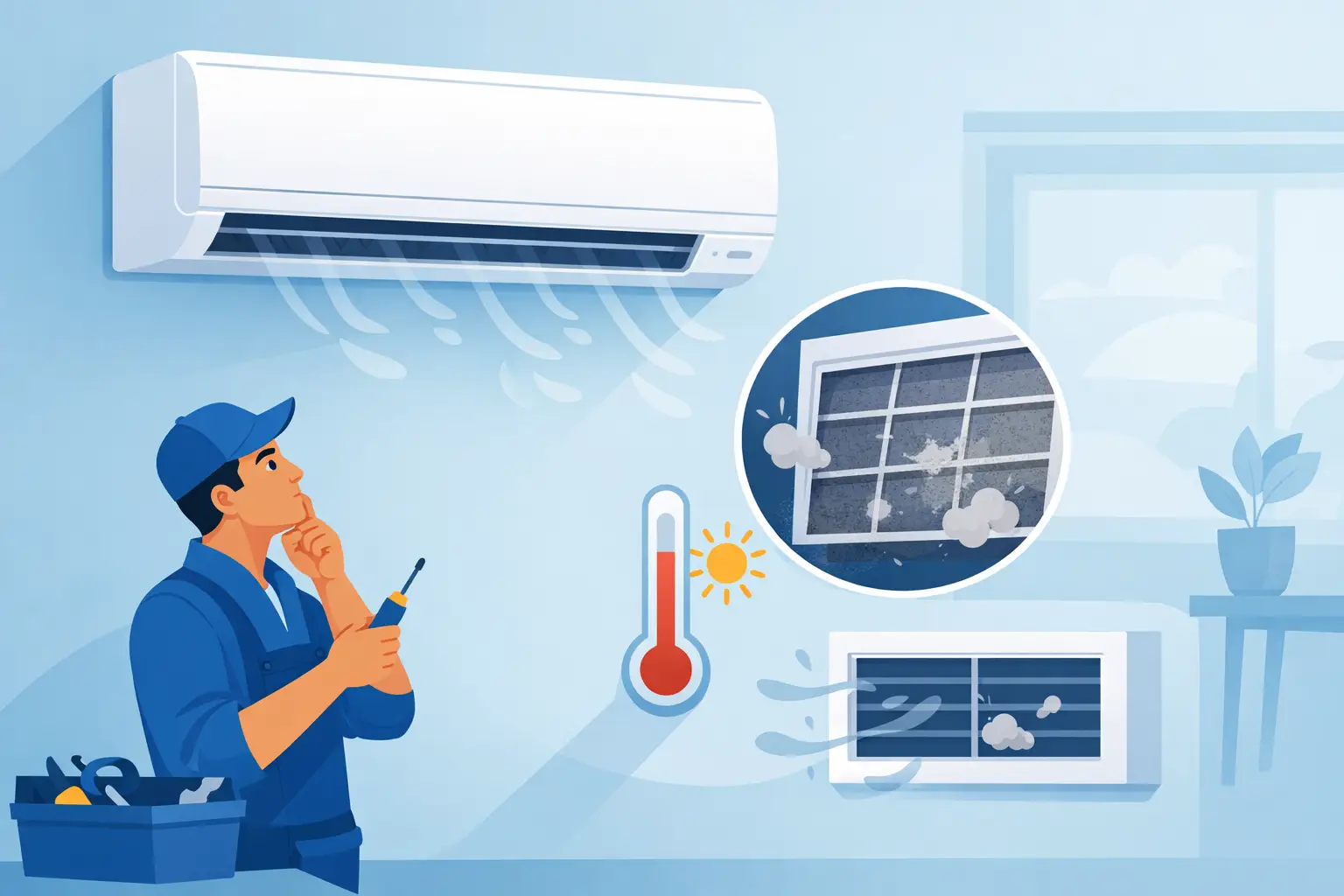
A room that never seems to cool, vents that barely move the curtain, or a system that runs all day without getting the job done usually points to one issue: restricted or poorly distributed air. Knowing how to fix weak airflow starts with a few safe checks, but it also means recognising when the fault is inside the system. Pushing a struggling unit harder rarely solves anything. It can raise power bills and turn a minor repair into a bigger one.
Start with the simple airflow checks
Before assuming the air conditioner has failed, check whether airflow is being blocked at the points you can safely access. A dirty filter is one of the most common causes, particularly after a hot Adelaide summer, when a system has been running hard for months.
Turn the unit off, remove the return-air filter or split-system filters, and inspect them in good light. If they are coated in dust, pet hair or grime, clean or replace them according to the manufacturer’s instructions. A reusable filter usually needs a gentle wash and full drying before it goes back in. A disposable filter needs replacement, not a rinse.
Then look at the supply vents and return-air grilles. Furniture, curtains, storage boxes and even decorative vent covers can restrict circulation. In ducted systems, every room vent should be open unless the system was specifically balanced for a zoning arrangement. Closing too many outlets does not force more cooling into one room. It can increase pressure in the ductwork and reduce overall performance.
For a wall-mounted split system, make sure the indoor louvres are open and not set to direct air straight into an obstruction. On ducted systems, check that the return-air grille is clear. This grille is where the system draws air back in, so it needs breathing room.
How to fix weak airflow when the filter is clean
If the filters and vents are clear but the airflow is still poor, the cause may be mechanical. This is where a proper diagnosis matters. The same symptom can come from several different faults, and replacing parts without testing is a waste of money.
Check the fan setting and operating mode
First, confirm the unit is set to cooling or heating as required, with the fan set to Auto or a higher speed. Some systems will run the fan slowly in quiet mode, dehumidification mode or when the thermostat is close to the selected temperature. That can feel like weak airflow even though the equipment is operating normally.
If airflow stays low on the highest fan setting, or is noticeably weaker than it used to be, it is likely not a settings issue. Listen for unusual humming, rattling or a fan that sounds like it is labouring. Those are useful clues for a technician.
Look for signs of a dirty indoor coil
Air passes through the indoor coil before it reaches the room. Over time, fine dust can build up on the coil behind the filters. Even a filter that looks reasonably clean does not rule this out, especially if regular servicing has been missed.
A blocked coil restricts air movement and can affect cooling capacity. In severe cases, the coil can ice up. You may see water dripping from the indoor unit, notice a musty smell, or find that airflow drops further after the system has been running for a while.
Do not try to scrape, pressure-clean or use harsh chemicals on the coil. The fins bend easily and the drain system can be damaged. An HVAC technician can clean the coil properly, inspect the drain and check why the buildup occurred.
Consider a blower or fan fault
The indoor fan is responsible for moving conditioned air through the split-system head or ductwork. A worn motor, failing capacitor, damaged fan wheel or electrical fault can leave the fan spinning too slowly. In a ducted system, the issue may be at the fan coil unit in the roof space, where it is not safe or practical for most homeowners to inspect.
This kind of fault can begin gradually. You may notice that bedrooms furthest from the unit are no longer comfortable, or that airflow improves briefly and then fades. A technician should test the motor, electrical components and fan performance rather than guessing at the cause.
Ducted air conditioning has its own trouble spots
Weak airflow from one vent is different from weak airflow throughout the house. If only one or two rooms are affected, the problem may be local to those runs of ducting. Flexible ducts can come loose, tear, become crushed or sag over time. Dampers may also be closed or incorrectly positioned after building work or previous repairs.
If every room has weak airflow, the issue is more likely to involve the filter, return-air path, indoor fan or system capacity. Duct leakage can also reduce airflow and waste conditioned air in the roof space. In older homes, poorly insulated or undersized ductwork can make a system feel underpowered even when the equipment itself is working.
Zoned systems need a little more care. Motorised dampers direct air to selected areas, and a failed damper or control issue can leave one zone with very little flow. Do not force vents open or try to override zoning components. A correct repair starts with checking the controller, dampers and airflow balance together.
Do not overlook the outdoor unit
The outdoor unit does not blow air into the house, but it still needs clear space to reject heat. Leaves, dust, grass clippings and stored items around the condenser can reduce efficiency. Keep plants and stored materials clear, and never hose electrical components or bend the coil fins.
If the outdoor unit is dirty or struggling, the air inside may still move reasonably well but feel less cold or less warm than it should. That is a performance issue rather than a pure airflow issue, but the two are often confused. A qualified technician can check refrigerant pressures, coil condition and operating temperatures to separate one problem from the other.
When weak airflow needs professional attention
Call for a repair if cleaning the filters and clearing vents does not restore normal airflow. You should also arrange service promptly if the system trips the switchboard, smells burnt, leaks water, makes grinding noises, freezes up, or has stopped delivering consistent heating or cooling.
For commercial premises, weak airflow is not something to leave until the next quiet period. Poor circulation can make offices uncomfortable, place extra strain on equipment and affect temperature-sensitive stock areas. In kitchens, retail spaces and facilities with refrigeration equipment, a small airflow problem can quickly become an operational problem.
A proper visit should involve more than a quick filter clean. The technician should inspect the airflow path, indoor and outdoor components, electrical operation, condensate drainage and duct condition where relevant. That is how the root cause is found. No shortcuts. No surprises.
Prevent weak airflow from coming back
Most airflow faults are easier to prevent than repair. Check accessible filters regularly during periods of heavy use, and keep return grilles and outdoor units clear. The right cleaning interval depends on the home or business. Pets, renovation dust, traffic, cooking activity and long daily running hours all load filters faster.
Scheduled servicing is particularly worthwhile for ducted systems and commercial air conditioning because the important components are often out of sight. A service can identify dirty coils, declining fan performance, drain issues and damaged ductwork before comfort drops off or the system fails on a hot day.
LJ Refrigeration & Air-Conditioning provides practical fault diagnosis for residential and commercial systems across Adelaide. The aim is straightforward: identify what is restricting the air, explain the repair clearly and fix it properly rather than applying a temporary patch.
If the airflow from your system has changed, take note of where it is weakest, when it happens and whether there are any unusual sounds or leaks. That information makes the diagnosis faster and helps get your home or workplace comfortable again without unnecessary guesswork.
Related LJ services: air conditioning repairs, air conditioning in Gawler, our service area.
Need a hand? Call LJ Refrigeration & Air-Conditioning on 1300 553 744. We’re based in Angle Vale and service Adelaide, Gawler, the northern suburbs and surrounds.

1 comment on “How to Fix Weak Airflow From Your Air Conditioner”