
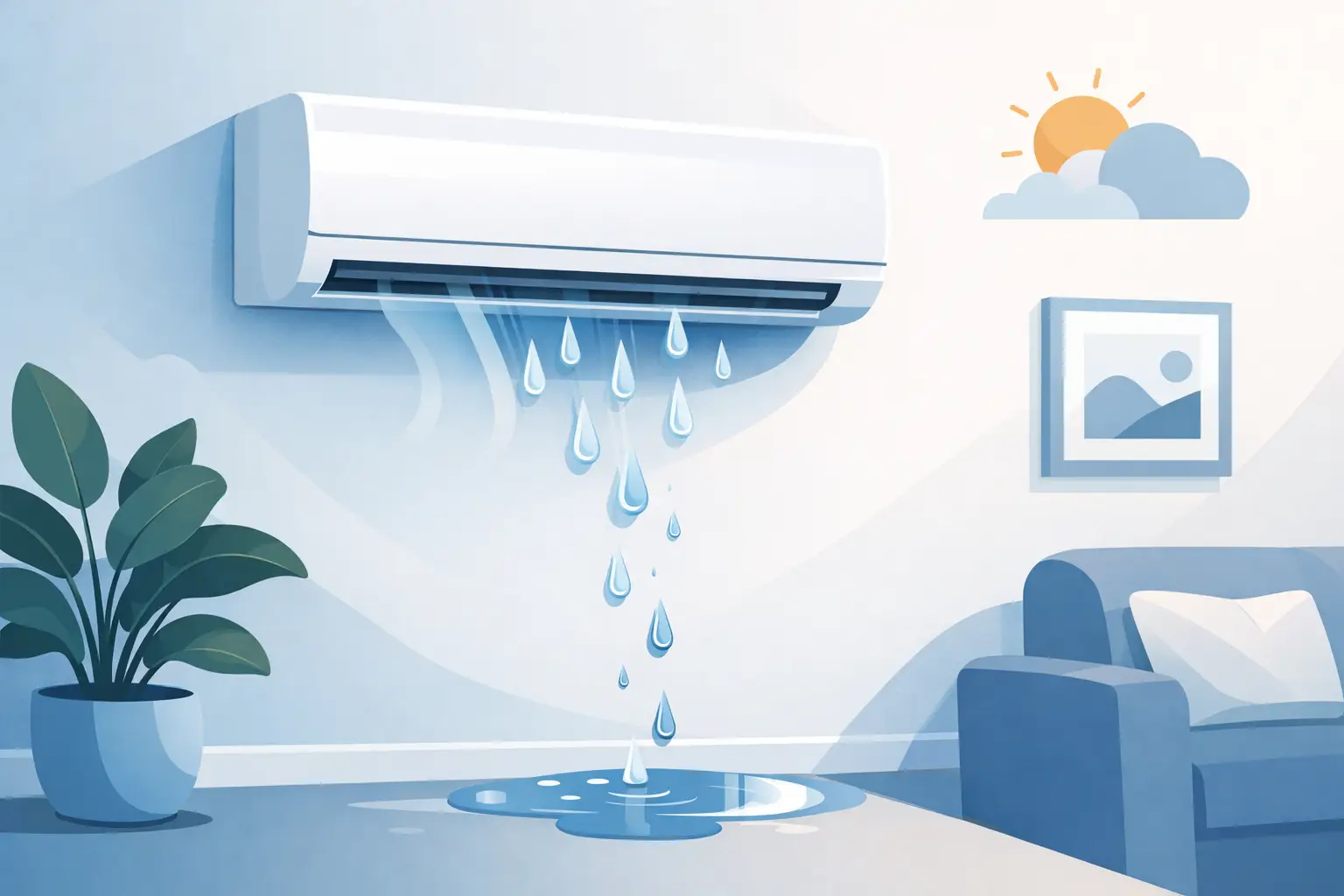
A puddle beneath an indoor unit is not something to ignore. If you are asking, “why is aircon leaking water?”, the short answer is that condensation is not draining where it should. Your system normally removes moisture from indoor air and sends it safely outside. When that path is blocked, damaged or incorrectly installed, water finds another way out – often through the wall-mounted unit, ceiling grille or ductwork.
A minor leak can quickly turn into damaged plaster, stained ceilings, swollen flooring or mould growth. For businesses, it can also mean disruption around stock, equipment or customer areas. The right repair depends on the cause. No shortcuts. No guessing.
Why is aircon leaking water from the indoor unit?
When an air conditioner is cooling, its indoor coil becomes cold enough to draw humidity from the air. That moisture collects as condensate in a drain tray, then runs through a condensate pipe to a suitable discharge point. Water leaking indoors usually means one part of that simple process has failed.
The most common issue is a blocked condensate drain. Dust, airborne grime, algae and insects can build up inside the pipe over time. Once the line blocks, water backs up into the drain tray until it overflows. Adelaide’s warm weather means air conditioners often work hard for long stretches, which gives small drainage problems plenty of opportunity to become visible leaks.
A clogged air filter can contribute as well. Restricted airflow makes the indoor coil excessively cold, allowing it to ice up. When that ice later melts, the drain system can be overwhelmed and water may spill from the unit. A dirty filter is not always the only fault, but it is a good reminder that regular servicing protects more than just cooling performance.
The likely causes of an aircon water leak
A blocked or disconnected drain line
A blocked drain line is common in split systems. You may notice dripping from the front of the indoor head, water marks below it, or gurgling sounds when the system is operating. In some cases, the pipe has not blocked at all – it has come loose, cracked or been damaged. The result is the same: condensate does not reach the outside drain point.
Drain lines need correct fall so gravity can carry water away. If the pipe has sagged, been pinched behind a wall, or was installed without enough slope, water can sit in the line and back up. This is why installation quality matters. A system can cool well at first yet develop drainage trouble later if the pipework was not properly supported and routed.
A dirty filter or frozen evaporator coil
If the indoor coil freezes, it can release far more water than the tray and drain are designed to handle once it thaws. Dirty filters are a frequent trigger because they reduce airflow across the coil. Blocked return-air grilles, a failing indoor fan or incorrect settings can create similar airflow issues.
Low refrigerant can also lead to coil icing, but it is not a normal maintenance item that simply needs “topping up”. Refrigerant operates in a sealed system. If the level is low, there may be a leak that needs to be located and repaired by a licensed technician before the system is recharged.
Turn the unit off if you can see ice, then allow it to thaw completely. Do not keep running it in the hope the problem will clear itself. Continued operation can cause more water damage and place unnecessary strain on the equipment.
A damaged or overflowing drain tray
The drain tray sits beneath the indoor coil and catches condensation before it enters the drain line. Over years of use, a tray can crack, corrode or shift out of position. Dirt can also build up in the tray itself and restrict the outlet.
This fault is less obvious because the drain pipe may appear clear from outside. Proper diagnosis often requires opening the unit, checking the tray, flushing the drain and confirming that water is flowing freely from end to end.
A faulty condensate pump
Some systems cannot rely on gravity drainage and use a condensate pump to move water to a higher outlet point. This is common in certain commercial fit-outs, ceiling cassettes and locations where pipe fall is limited. If the pump fails, its float switch sticks, or the discharge line blocks, water can overflow quickly.
A pump fault needs prompt attention. It may stop cooling equipment or leak into a ceiling cavity before anyone notices. Commercial operators should treat water around HVAC equipment as a service call, not a wait-and-see issue.
Poor installation or insulation problems
Not every leak starts inside the unit. Condensation can form on uninsulated or poorly insulated refrigerant pipework, particularly in roof spaces and ceiling cavities. That moisture can drip onto plasterboard and look like a leaking air conditioner.
Incorrectly levelled indoor units, unsuitable drain routing and poor pipe insulation are installation-related issues that need to be corrected at the source. A temporary patch may stop the visible drip, but it will not protect the property over the long term.
What you can safely check before booking a repair
Start by switching the system off if water is actively dripping near electrical components, wall outlets or light fittings. Place a towel or shallow container underneath if it is safe to do so, and move furniture or valuables out of the affected area.
You can then check whether the filter is visibly dirty. Most wall-mounted split systems have washable filters behind the front cover. Remove them carefully, clean them according to the manufacturer’s instructions, let them dry completely and reinstall them. Do not poke wire, compressed air or makeshift tools into the drain line. It is easy to dislodge a connection or push a blockage further into inaccessible pipework.
Have a look outside at the condensate drain outlet while the system is running normally. A small, steady amount of water during cooling can be completely normal. No water outside combined with water leaking indoors points to a likely drainage problem, although it is not a diagnosis on its own.
If there is ice on the indoor unit, weak airflow, musty odours, repeated leaks or water from a ceiling, book a qualified technician. Those signs can indicate more than a simple dirty filter.
When an aircon leak needs urgent attention
Act quickly when the leak is coming through a ceiling, near electrics, or from a ducted system where the source is hidden. Ceiling staining can mean water has been pooling above the plasterboard for some time. The visible mark is often smaller than the affected area behind it.
For a shop, office, kitchen or facility, a leaking air conditioner can create slip hazards and damage stock, finishes or sensitive equipment. If refrigeration or cool room equipment is involved, do not delay. Water leaks and poor cooling performance can be connected, and downtime costs more than a timely repair.
A qualified HVAC technician should inspect the drain system, indoor coil, filters, pump where fitted, pipe insulation and system operation. At LJ Refrigeration & Air-Conditioning, the aim is to identify the root cause and repair it properly, with clear advice on what has failed and what work is required.
Preventing water leaks in the future
Regular servicing is the practical way to prevent most condensate leaks. A proper service goes beyond a quick filter rinse. It includes checking drainage, cleaning components where required, inspecting pipework and confirming the unit is operating as it should.
How often your system needs attention depends on use. A lightly used home split system may need an annual check, while busy offices, kitchens, retail sites and high-use commercial systems often need scheduled maintenance more frequently. Systems exposed to dust, grease or heavy foot traffic also need closer attention.
If water has appeared once, do not just wipe it up and forget it. Take a photo of the leak, note when it happens and arrange a proper inspection. A clear drain line, clean airflow path and correctly installed pipework keep condensation where it belongs – outside, not on your walls or floor.

3 comments on “Why Is Aircon Leaking Water in Your Home?”