
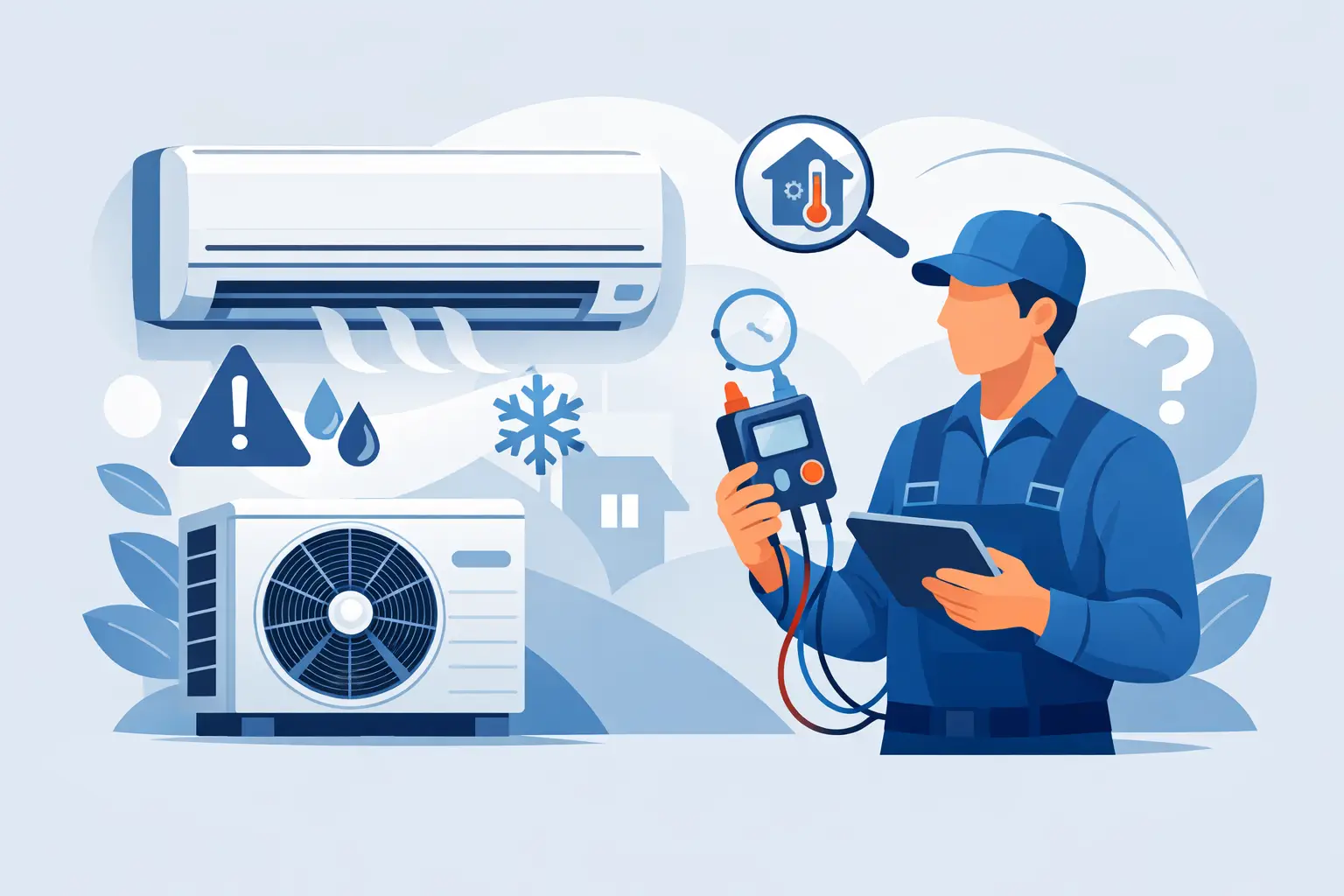
When an air conditioner starts blowing warm air on a hot afternoon, most people want one thing – a straight answer. This aircon fault diagnosis guide is built for that. Not to turn you into a technician, but to help you work out what is likely going wrong, what you can safely check yourself, and when it is time to book a proper repair.
A lot of faults look the same from the outside. Poor cooling, odd noises, water leaks and systems that keep switching off can all come from very different causes. That is why quick guesses often waste time and money. Good diagnosis is about narrowing the fault down before anyone starts replacing parts.
What an aircon fault diagnosis guide should actually help you do
A useful guide should separate simple operating issues from genuine mechanical or electrical faults. Plenty of call-outs come down to a controller setting, a blocked filter, a tripped breaker or a dirty outdoor coil. Others point to failed capacitors, sensor issues, fan motor faults, refrigerant problems or drainage blockages.
The key is knowing the difference. If the issue is basic, you can save yourself a service call. If it is not, you want a licensed technician who fixes the root cause rather than patching over symptoms.
Start with the obvious before assuming the worst
Before you think compressor failure or gas leak, check the system settings. Make sure the unit is set to cooling, not fan or heating. Confirm the temperature is set low enough to call for cooling, and check the remote has working batteries. It sounds simple because it is, but these are some of the most common causes of “faults” that are not faults at all.
Next, look at power. If the indoor unit is dead, check whether the isolator is on and whether a circuit has tripped. If the system has power but is not starting properly, note what happens. Does the indoor fan run? Does the outdoor unit start? Does it shut down after a few minutes? Those details matter.
Then inspect the filter. A heavily clogged return filter restricts airflow, reduces cooling performance and can lead to icing. On a split system, dirty filters are one of the first things worth checking. On ducted systems, return air and zone-related issues can be part of the problem as well.
Aircon fault diagnosis guide for poor cooling
Poor cooling is one of the most common complaints, but the cause depends on the pattern. If the unit runs continuously and never gets the room comfortable, restricted airflow is a likely starting point. Dirty filters, blocked coils, undersized equipment or open doors and windows can all make the system work harder than it should.
If cooling used to be fine and has dropped off noticeably, the issue may be more technical. Low refrigerant, a failing compressor, a faulty sensor or an outdoor fan problem can all cut performance. Refrigerant is a good example of why diagnosis matters. Systems do not “use up” refrigerant under normal operation. If levels are low, there is generally a leak that needs to be found and repaired, not just topped up.
Commercial sites often have another layer to this. Heat load changes, door traffic, cooking equipment, server racks or refrigeration plant nearby can all affect air conditioning performance. What looks like an aircon fault may partly be a capacity or design issue.
If the system is leaking water inside
Water dripping from the indoor unit usually points to a drainage problem, not a refrigerant issue. A blocked condensate drain is a common cause. Dirt, sludge and even insects can stop water from draining properly, which leads to overflow inside the room.
A frozen coil can also cause leaking once the ice melts. In that case, the water is a symptom rather than the main fault. The real cause may be poor airflow, dirty filters, a fan issue or refrigerant imbalance.
If you notice water stains, switch the unit off before the damage spreads. Continued operation can affect ceilings, walls and flooring. In a business setting, even a small leak can become a bigger issue once it reaches stock, equipment or front-of-house areas.
Strange noises are clues, not just annoyances
Different noises point in different directions. A rattling sound may be something loose in the casing or mounting. Buzzing can suggest an electrical issue, contactor problem or failing capacitor. Squealing may come from a worn motor bearing or fan assembly. Banging is more serious and should not be ignored.
The timing matters too. If the noise starts only on startup, that tells a different story from a noise that runs constantly or appears during shutdown. Outdoor units also pick up debris, damaged fan blades and panel vibration over time.
What you should not do is keep running a noisy system for days hoping it sorts itself out. Mechanical faults tend to get more expensive the longer they are left.
When the aircon keeps turning itself off
Short cycling, where the system starts and stops too often, usually means something is interfering with normal operation. It can be caused by thermostat or sensor faults, airflow restrictions, electrical issues, overheating, or in some cases incorrect unit sizing.
An overheated outdoor unit is a common example. If the coil is clogged with dust and grime, the system can struggle to reject heat and may shut down to protect itself. A faulty indoor sensor can also tell the system it has reached temperature when it has not.
This is where trade experience counts. Short cycling is one of those faults with several possible causes, and changing parts blindly is rarely the cheapest path.
Fault codes help, but they are not the full diagnosis
Many modern systems display a fault code on the indoor unit or controller. That is useful, but it is only a starting point. A code may point to a communication fault, sensor problem, fan issue or protection event, but it does not always tell you why that code appeared.
For example, a high-pressure fault might suggest airflow problems at the outdoor unit, overcharge, fan failure or a blockage elsewhere in the system. The code narrows the field. Proper testing confirms the cause.
If you have a fault code, write it down exactly as shown. That can save time when you speak to a technician.
What you can safely check yourself
There are a few things homeowners and business operators can look at without taking risks. Clean or replace accessible filters if the manufacturer allows it. Check the controller settings and batteries. Make sure supply and return grilles are not blocked by furniture, stock or curtains. Inspect the outdoor unit for obvious debris build-up and make sure it has room to breathe.
You can also note symptoms carefully. Is the fault constant or intermittent? Did it start after a storm, power outage or maintenance visit? Is one area uncomfortable or the whole property? Good information helps speed up the repair.
What you should leave alone are electrical components, refrigerant circuits, motors, boards and sealed parts of the system. Air conditioning diagnosis often involves live testing, pressure readings and compliance requirements. That is licensed work.
When to stop troubleshooting and call a technician
If the unit is tripping power, leaking heavily, making sharp mechanical noises, showing persistent fault codes or not cooling after the basic checks, stop there. The same goes for systems with burnt smells, ice build-up or performance that drops away every few weeks.
Repeated resets are not a fix. Neither is topping up refrigerant without finding the leak. Shortcuts usually turn a smaller repair into a bigger one.
For commercial operators, it makes sense to act early. A struggling system in an office is inconvenient. In a kitchen, retail site or cool room environment, delays can affect staff, customers, stock and trading hours.
Why proper diagnosis saves money
A solid aircon fault diagnosis guide should make one point clear: the cheapest-looking repair is not always the cheapest outcome. Swapping parts based on guesswork can rack up labour and still leave the original fault in place. Good diagnosis keeps the job focused.
That matters whether you own a split system at home or manage multiple units across a commercial site. The right technician will test, confirm, explain the fault clearly and quote on the actual repair needed. No shortcuts. No surprises.
In Adelaide, where cooling systems work hard through long hot periods, small issues tend to show up fast once temperatures climb. Staying on top of servicing helps, but when faults happen, clear diagnosis is what gets the system back to reliable operation.
If your aircon is showing signs something is off, trust the symptoms, not guesses. A few basic checks can rule out the simple stuff. After that, getting the fault properly diagnosed is usually the fastest way back to a system that works as it should.
Related LJ services: air conditioning repairs, air conditioning in Gawler, our service area.
Need a hand? Call LJ Refrigeration & Air-Conditioning on 1300 553 744. We’re based in Angle Vale and service Adelaide, Gawler, the northern suburbs and surrounds.

8 comments on “Aircon Fault Diagnosis Guide for Common Issues”