
A hot Adelaide afternoon quickly shows the difference between a cooling system that suits the building and one that merely gets by. When weighing up evaporative cooling vs refrigerated air conditioning, the right answer depends on more than the purchase price. Your home or business layout, water use, humidity, insulation, daily operating hours and comfort expectations all matter.
Both systems can be effective. Neither is automatically the better choice for every property. The job is to match the equipment to how you use the space, then install and maintain it properly. No shortcuts. No surprises.
How evaporative cooling works
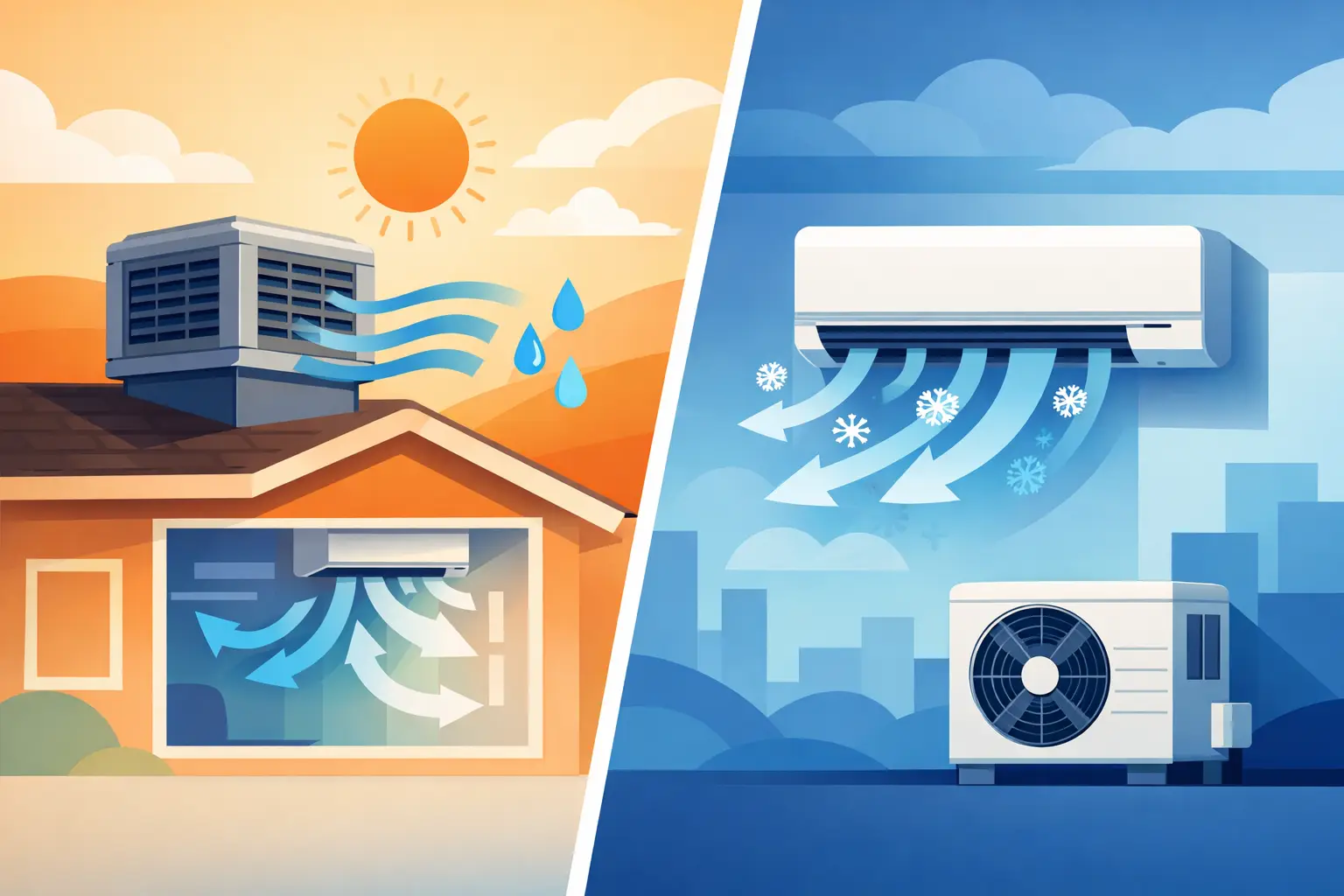
Evaporative cooling draws warm outside air through water-soaked filter pads. As the water evaporates, the air temperature drops before it is pushed through ducting and into the building. It is a simple method that works particularly well in dry conditions.
Because Adelaide has many hot, low-humidity days, evaporative systems can provide comfortable whole-home cooling at a reasonable running cost. They also continually bring fresh air into the building. To get the best result, windows or doors need to be partly open so stale air can escape. A house sealed tight against the heat is not how an evaporative unit is designed to operate.
The feel is different from refrigerated air conditioning. Evaporative cooling produces a gentle, fresh-air effect rather than a sharply chilled room. On a dry 38°C day, that can be very pleasant. On a humid day, it has less capacity to cool because there is already more moisture in the air.
How refrigerated air conditioning works
Refrigerated air conditioning uses a refrigeration cycle to remove heat from indoor air. In a ducted system, cooled air is delivered through ceiling outlets; with a split system, it is supplied directly from a wall-mounted indoor unit. The system recirculates the indoor air and does not rely on open windows.
Its main strength is control. You can set a target temperature, close up the home or workplace, and expect more consistent performance through dry heat, humid weather and sudden temperature changes. Most reverse-cycle refrigerated systems also provide heating, which can make them a practical year-round option.
Refrigerated air conditioning also removes some humidity as it cools. That makes a real difference for people who dislike sticky indoor conditions, and for spaces where consistent temperature matters. Offices with computers, retail areas, consulting rooms and bedrooms often benefit from that control.
Evaporative cooling vs refrigerated: the key differences
The most visible difference is comfort in changing weather. Evaporative cooling is highly effective when the outside air is dry. Refrigerated air conditioning is more predictable across all conditions, including humid or wet days when evaporative cooling can struggle.
The second difference is operating style. An evaporative system needs outside airflow and open windows. Refrigerated air works best with doors and windows closed. If your family prefers to keep the house open through summer evenings, evaporative cooling may suit the way you live. If you want a closed, temperature-controlled home, refrigerated air is usually the better fit.
There is also a water and power trade-off. Evaporative units use water while operating, plus electricity for the fan and pump. Refrigerated systems do not use water for cooling, but their electricity demand can be higher, especially for a large ducted system working hard in extreme heat. Modern inverter systems can be efficient, but sizing, insulation and thermostat settings still determine what you pay to run it.
Noise, filtration and zoning should be considered too. Both system types make some sound, although a properly specified and installed unit should not dominate the room. Refrigerated systems generally offer stronger filtration options and finer zoning control. That can be useful where allergies, dust, individual room temperatures or different operating hours are concerns.
When evaporative cooling makes sense
Evaporative cooling is often a sound choice for Adelaide households with an existing evaporative system in good condition, reasonable roof access and a preference for fresh-air cooling. It can be cost-effective to run over long summer days, particularly in an open-plan home.
It also suits people who do not need every bedroom held at a precise temperature overnight. The airflow can make sleeping more comfortable, but it will not give the same closed-room control as refrigerated air conditioning.
Maintenance is not optional. Filter pads, water distribution components, pumps, drains and the unit itself need regular checking. At the end of the season, the system should be drained and prepared properly. Poorly maintained evaporative units can develop odours, reduced airflow, water leaks or scale build-up.
Evaporative cooling may be less suitable where the home has persistent dust issues, residents are sensitive to outdoor pollen, or windows need to stay shut for traffic noise, security or shift-work sleeping. It is also worth thinking carefully about water consumption during a long, hot South Australian summer.
When refrigerated air is worth the investment
Refrigerated air conditioning is generally the better option when reliable comfort is the priority. It is well suited to newer, well-insulated homes, tightly sealed properties and households that want cooling and heating from one system.
For bedrooms, refrigerated air can be particularly useful. You can close the room, set a comfortable temperature and use zoning to avoid cooling empty areas. A properly designed ducted system can separate sleeping zones from living zones, reducing unnecessary energy use.
Commercial sites often need refrigerated air for the same reason: control. A shop, office, clinic or workplace cannot rely on open windows to remove air, particularly where security, customer comfort, equipment loads or operating noise are factors. Kitchens and food businesses need an assessment of heat loads, ventilation and refrigeration requirements rather than a one-size-fits-all air conditioning recommendation.
The upfront cost can be higher, especially where new ductwork, electrical upgrades or zoning are required. But the lowest installation quote is not always the cheapest outcome. Incorrectly sized equipment, poor duct design or rushed commissioning can leave you with uneven temperatures, high power bills and repeat call-outs.
Existing ducts do not always decide the answer
A common assumption is that an old evaporative ducted system can simply be changed over to refrigerated air using the same ducts. Sometimes parts of the installation may be usable, but it should never be assumed.
Evaporative and refrigerated systems move air differently and can require different duct sizes, outlet locations, return-air pathways and insulation standards. Refrigerated ducted systems need a return-air arrangement to bring indoor air back to the unit. An experienced technician should inspect the roof space, duct condition, electrical supply and room layout before recommending a conversion.
The same applies in reverse. Replacing an ageing refrigerated system with evaporative cooling changes how the building must be used and ventilated. The best choice is the one that works properly after installation, not the one that appears easiest on paper.
Questions to ask before choosing a system
Before approving a quote, ask how the system has been sized for your property, whether zoning is included, what electrical work is required and what ongoing servicing involves. For evaporative cooling, ask about water use, pad replacement and seasonal shutdown. For refrigerated air, ask about energy efficiency, filter cleaning, condensate drainage and the warranty conditions.
For commercial premises, ask how staff numbers, equipment heat, opening hours and customer areas have been allowed for. An air conditioner that performs adequately in an empty showroom may fall behind once doors are opening, lights are on and people are moving through the space.
A clear quote should explain the equipment, installation scope and any work that sits outside the standard install. That is how you avoid surprises after the job has started.
Keep either system working properly
Every cooling system benefits from regular servicing. Dirty filters and blocked pads reduce airflow. Leaking ductwork wastes conditioned air in the roof space. Refrigerant faults, worn fan motors, failing capacitors and drainage issues rarely fix themselves.
For homeowners, a pre-summer service is sensible. For businesses that depend on comfortable customer areas or reliable staff conditions, planned maintenance reduces the risk of a breakdown during the busiest part of the season. LJ Refrigeration & Air-Conditioning can assess existing equipment, diagnose faults and provide straightforward advice on repair, replacement or a new installation.
Choose evaporative cooling if fresh-air cooling, dry-weather performance and lower electrical demand suit your property. Choose refrigerated air when you need dependable temperature control, closed-window comfort and year-round heating. The right system is the one that fits the building, the people in it and the way you actually use the space.
