
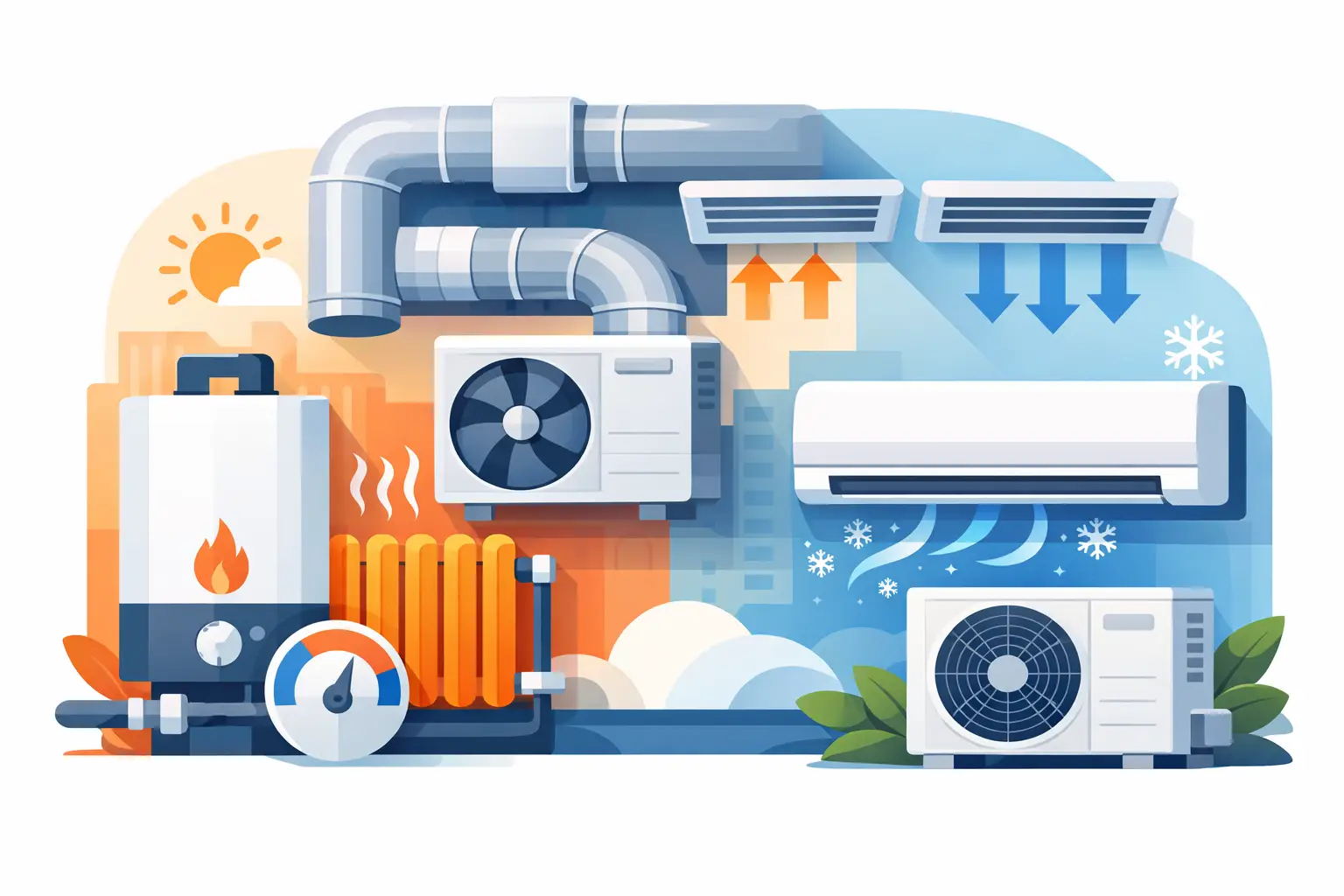
When a property feels stuffy in summer, cold in winter, or impossible to keep at a steady temperature, the issue usually comes back to the same thing – heating ventilation and cooling systems that are undersized, ageing, poorly installed, or overdue for service. Most people do not care about the technical side until comfort drops off or the power bill jumps. Fair enough. What matters is whether the system does its job properly, runs efficiently, and keeps doing that without constant trouble.
For homeowners, that means a house that cools down without one room freezing while another stays warm. For business operators, it means staff and customers stay comfortable, stock is protected, and breakdowns do not interrupt trading. The right setup is not always the biggest or most expensive one. It is the one that suits the building, the way the space is used, and the level of reliability required.
What heating ventilation and cooling systems actually cover
The term sounds broad because it is. Heating ventilation and cooling systems include the equipment that controls indoor temperature, airflow and air quality. In a home, that might be a split system in the living area, ducted air conditioning through the roof space, or a dedicated heating system for colder months. In a commercial setting, it can extend to larger ducted systems, fresh air ventilation, exhaust arrangements, and refrigeration equipment working alongside climate control.
Ventilation is the part many people overlook. Cooling and heating get most of the attention, but airflow matters just as much. If air is not circulating properly, rooms can feel humid, stale or uneven even when the unit is technically running. That is why good system design is about more than just choosing a brand and turning it on.
Why system choice matters more than most people think
A lot of problems start before the first screw goes in. If the unit is too small, it will run hard and still struggle. If it is too large, it can short cycle, wear faster and control humidity poorly. If ductwork is badly laid out, the unit may be fine but the rooms still will not feel right.
This is where a proper quote and site assessment matter. Ceiling height, insulation, window direction, room layout, occupancy and operating hours all affect system selection. A family home with one open-plan area has different needs from a retail tenancy with glass frontage. A restaurant kitchen has different demands again, especially when heat loads and ventilation are part of the picture.
Cheap pricing can hide expensive problems later. A quick install without proper sizing or commissioning can leave you with noise, weak airflow, hot and cold spots, water leaks or repeated call-outs. The upfront saving disappears pretty quickly when the system never performs as it should.
Residential heating ventilation and cooling systems
For homes, the main decision usually comes down to split systems or ducted air conditioning, with separate heating added where needed. Split systems suit single rooms, smaller homes, and households that want straightforward control over specific areas. They are generally cost-effective to install and efficient when used in the spaces that matter most.
Ducted systems make more sense when whole-home comfort is the goal. They offer a cleaner look, can handle multiple rooms at once, and often provide better control across the house when properly zoned. They also require good design and installation. A ducted system is only as good as the layout, airflow balance and commissioning behind it.
For homeowners, the best option depends on how the house is lived in. If everyone spends most of their time in one or two areas, a well-sized split system may be the sensible choice. If comfort is needed throughout the home, especially during Adelaide’s hotter periods, ducted can be the better long-term answer.
Commercial systems have less room for error
Commercial heating ventilation and cooling systems are not just about comfort. They affect operations. If an office system fails, staff productivity drops. If ventilation is poor in a hospitality venue, the environment becomes unpleasant fast. If a cool room or refrigeration setup is involved, the stakes are even higher because stock loss becomes a real risk.
Businesses usually need a contractor who can look at the full picture rather than just one unit in isolation. Load demands, operating hours, access for servicing, compliance requirements and future maintenance all need to be considered early. A proper install should make ongoing servicing easier, not harder.
This is where long-term thinking pays off. A lower-cost install that is awkward to maintain, hard to access, or not matched to trading conditions can become a constant headache. Most operators would rather pay for a job done properly once than keep paying for avoidable faults.
Common signs your system needs attention
Not every issue means full replacement. Plenty of heating ventilation and cooling systems can be repaired or brought back to proper performance with the right fault diagnosis and servicing. The key is acting before a small problem turns into a bigger one.
If the system is blowing weak air, struggling to hold temperature, making unusual noise, leaking water, tripping power, or causing a noticeable rise in energy costs, something is off. The same goes for bad odours, patchy airflow, and units that switch on and off too often. Those signs usually point to blocked filters, failing components, refrigerant issues, electrical faults, control problems, or wear built up over time.
What matters is not guessing. A proper technician should test, inspect and explain what has failed, what can be repaired, and whether replacement makes more financial sense. Sometimes a repair is the right call. Sometimes it is throwing money at an ageing system near the end of its life. Honest advice matters here.
Installation quality changes everything
The best equipment in the world will not make up for poor workmanship. That is true in homes and even more so in commercial sites. Installation quality affects performance, reliability, noise levels, efficiency and service life. It also affects how easy the system is to maintain later.
Good installation means correct sizing, tidy pipe and cable runs, proper drainage, secure mounting, tested electrical work, balanced airflow and commissioning done properly before handover. It also means the job site is respected. Customers notice when trades turn up on time, communicate clearly, and leave the place clean.
That is one reason many clients prefer dealing with a direct service company rather than a chain of unknown subcontractors. Accountability is simpler. If there is a problem, you know who is responsible for fixing it.
Maintenance is not an upsell
Routine servicing is one of the most practical ways to protect heating ventilation and cooling systems. Filters clog. Coils collect dust. Drains block. Electrical connections loosen. Fans and motors wear. None of that is dramatic at first, but it all affects performance.
For homeowners, regular maintenance helps keep the system efficient and reduces the chance of breakdowns during peak summer or winter demand. For commercial operators, scheduled servicing is even more important because downtime often costs more than the repair itself.
A decent maintenance plan is not about adding work for the sake of it. It is about catching wear early, keeping systems clean, checking operating pressures and electrical components, and reducing surprise failures. No shortcuts. No surprises. Just proper upkeep so the system has the best chance of lasting.
Repair or replace?
This is where context matters. If a unit is relatively modern, well-installed and has a clear, repairable fault, repair is often the sensible option. If the system is older, inefficient, using outdated components, or breaking down repeatedly, replacement may be the better spend.
The wrong choice is usually made when people focus only on the immediate invoice. A cheaper repair on a failing system can become more expensive over the next 12 months. On the other hand, replacing a system too early is unnecessary if the core equipment is still sound.
A straightforward contractor should be able to give you both sides – what the repair involves, what risks remain, and what replacement would improve. That is the kind of advice people actually need.
Choosing a contractor for heating ventilation and cooling systems
You do not need a sales pitch. You need someone who turns up, assesses the job properly, explains the options in plain language and carries out the work to a standard that lasts. That means qualified technicians, clear quoting, realistic timeframes and service support after the install or repair is done.
For Adelaide customers, local knowledge also helps. Climate conditions, housing styles and commercial building layouts all influence system performance. A contractor working in the area regularly is more likely to understand what works well and what causes trouble over time.
LJ Refrigeration & Air-Conditioning works in that practical lane – installation, repairs and scheduled maintenance done by qualified technicians, with no subcontractor runaround. That matters when the goal is simple: get the system right, keep it reliable, and avoid repeat issues.
The best heating and cooling setup is not the flashiest one. It is the one that suits the property, is installed properly, and is backed by service you can rely on when it counts.
