
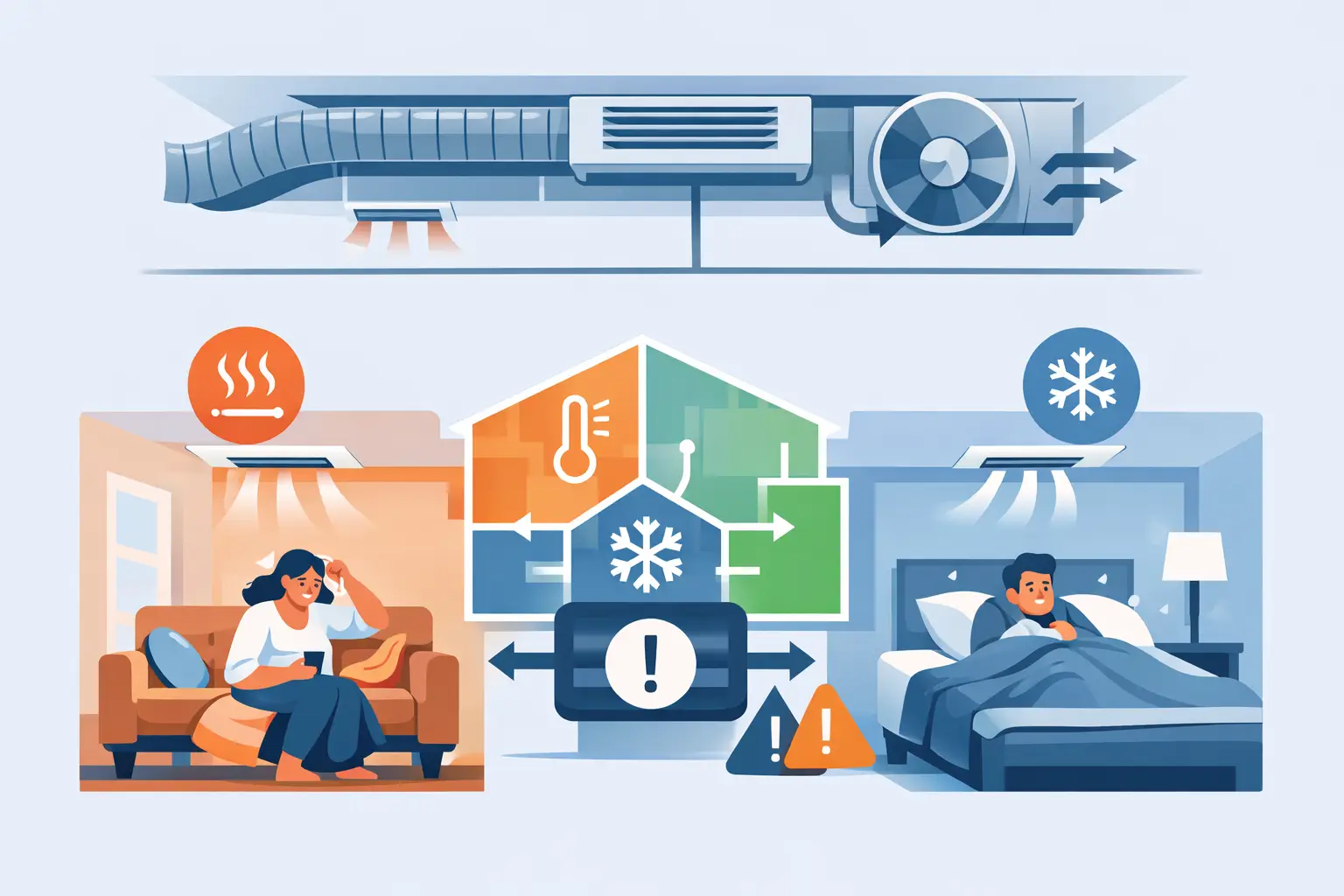
A ducted system should make the house easier to live in, not turn one bedroom into a fridge while the back of the home stays warm. That is usually how ducted air conditioning zoning problems first show up – uneven temperatures, airflow that feels wrong, or zones that do not respond the way they should.
Zoning is meant to give you control. You cool or heat the areas you are using and leave the rest alone. When it is set up properly, it improves comfort and can reduce running costs. When it is not, the system often works harder than it needs to, and the results are patchy at best.
What zoning is supposed to do
A ducted air conditioning system uses dampers in the ductwork to direct conditioned air to different parts of the property. Those sections are your zones. In a typical home, that might mean separating living areas from bedrooms. In a commercial space, it might mean keeping offices, reception and back rooms on different settings.
The idea is simple enough. You only run the areas you need, and each area gets the airflow it was designed for. The problem is that zoning depends on more than a controller on the wall. It relies on correct design, proper damper operation, balanced airflow and a system that matches the property.
If one part of that chain is off, the whole setup can start behaving badly.
Common ducted air conditioning zoning problems
Some faults are obvious. Others creep in slowly, especially if the system has been limping along for a while.
One of the most common issues is uneven heating or cooling between zones. You set all zones to run, but one area reaches temperature quickly while another never seems to catch up. That can point to poor balancing, undersized ducts, leaking ductwork or dampers that are not opening properly.
Another common problem is weak airflow when only one small zone is running. Ducted systems are designed around a certain amount of air moving through them. If too many zones are closed and there is nowhere for the air to go, pressure can build up in the ductwork. That can create noise, strain the fan and make the system less efficient. In some cases, bypass arrangements are used to manage this, but if they are not designed or set correctly, they can create a different set of issues.
Then there is the zone that simply does not respond. You turn it on, but nothing changes. That may be a faulty damper motor, a wiring issue, a control fault or damage in the duct run itself. From the customer side, it just feels like the system is ignoring you.
Short cycling can also be tied to zoning problems. If the system is oversized for the active zone load, it may reach setpoint too quickly and switch on and off more often than it should. That is not great for comfort, and it is not ideal for long-term system health either.
Why these problems happen
In our trade, the root cause is often earlier than the fault itself. What shows up as a zoning issue may actually start with the original design.
A poor layout is a regular culprit. If zones are divided without much thought to sun load, insulation, room usage or property layout, they will not perform evenly. A west-facing living area has very different demands from a shaded bedroom, even if both are marked as single zones on the controller.
Damper faults are another big one. Dampers are the mechanical parts that open and close to direct air. If a motor fails, a blade jams, or the control signal drops out, that zone will not receive the airflow it should. Sometimes the damper is partly open when it should be fully open, which makes the fault harder to spot.
Air leakage is also more common than many people realise. Flexible ducting can come loose, tear or sag over time. If conditioned air is escaping into the roof space, the affected zone will underperform and the system will keep working to make up the difference.
Control setup matters too. Some zoning systems rely on sensors, timers and logic settings that need to be configured properly. If those settings are off, the system may make poor decisions about when to open zones, when to stage output, or how to manage temperature across the property.
And then there is plain wear and tear. Motors, boards and actuators do not last forever. Even a well-installed system needs servicing if you want it to keep doing the job properly.
Signs your zoning setup needs attention
A lot of people put up with zoning faults longer than they should because the system is still technically running. That is where small issues turn into bigger repair bills.
If certain rooms are consistently too hot or too cold, it is worth checking. If airflow changes dramatically depending on which zones are active, that is another sign. So is excessive noise in the ducts or ceiling when zones open and close.
You should also pay attention to rising power bills without a clear reason. A zoning problem can make the system run longer and harder to reach the same result. If the controller seems unreliable, zones drop in and out, or temperatures never feel stable, there is usually a fault or setup issue behind it.
For commercial sites, the signs can be more disruptive. Staff complain about comfort, customers notice uneven temperatures, or one section of the premises becomes difficult to manage during peak weather. In those settings, zoning problems are not just annoying. They can affect day-to-day operations.
Can zoning problems be fixed, or is it a replacement job?
It depends on what is actually causing the issue.
If the problem is a failed damper motor, damaged duct, control fault or poor calibration, repair is often the right move. Those issues can usually be diagnosed and corrected without replacing the whole system.
If the zoning problems come from poor system design, the fix can be more involved. That may mean rebalancing airflow, resizing or reconfiguring zones, upgrading controls, or altering sections of ductwork. In some cases, especially with older systems that were never right to begin with, replacement becomes the more sensible long-term option.
That is why proper fault finding matters. Guesswork wastes time and money. A technician needs to check airflow, inspect damper operation, review the controls and look at how the system is actually performing under load. No shortcuts. No surprises.
Zoning Challenges in Large Homes and Commercial Spaces
The bigger the property, the less forgiving the system is of poor zoning design. Large homes with multiple living areas, high ceilings or long duct runs need more careful balancing than a compact layout. If the zoning has been split too aggressively, or if the system is trying to serve very small and very large zones with the same setup, comfort can become inconsistent quickly.
Commercial spaces add another layer. Occupancy changes, equipment heat loads and opening hours can all affect how zones should operate. A setup that looks fine on paper may struggle in real conditions if those factors were not accounted for.
This is where local experience helps. In Adelaide, summer loads can hit hard, and a system that is only just coping will show its weaknesses fast. Good zoning is not just about convenience. It is about whether the system can hold comfort when the weather is doing its worst.
What to do if you suspect zoning issues
Start with the basics. Check that the controller settings make sense and that the issue is consistent rather than a one-off operating error. If the same room keeps missing temperature, or the same zone repeatedly loses airflow, book a proper inspection.
A good technician should not jump straight to replacing major components. They should test the zone response, inspect the ductwork, confirm damper operation and work through the likely causes in a methodical way. That is the difference between a quick patch and a fix that lasts.
For property owners, the best move is early action. Zoning problems rarely improve on their own. Left alone, they can push wear onto other parts of the system and drive up running costs without delivering decent comfort.
If your ducted system is not behaving the way it should, trust what you are noticing. Hot spots, dead zones and unreliable control are not normal quirks. They are signs the system needs attention from someone who knows how to diagnose the fault properly and put it right.
