
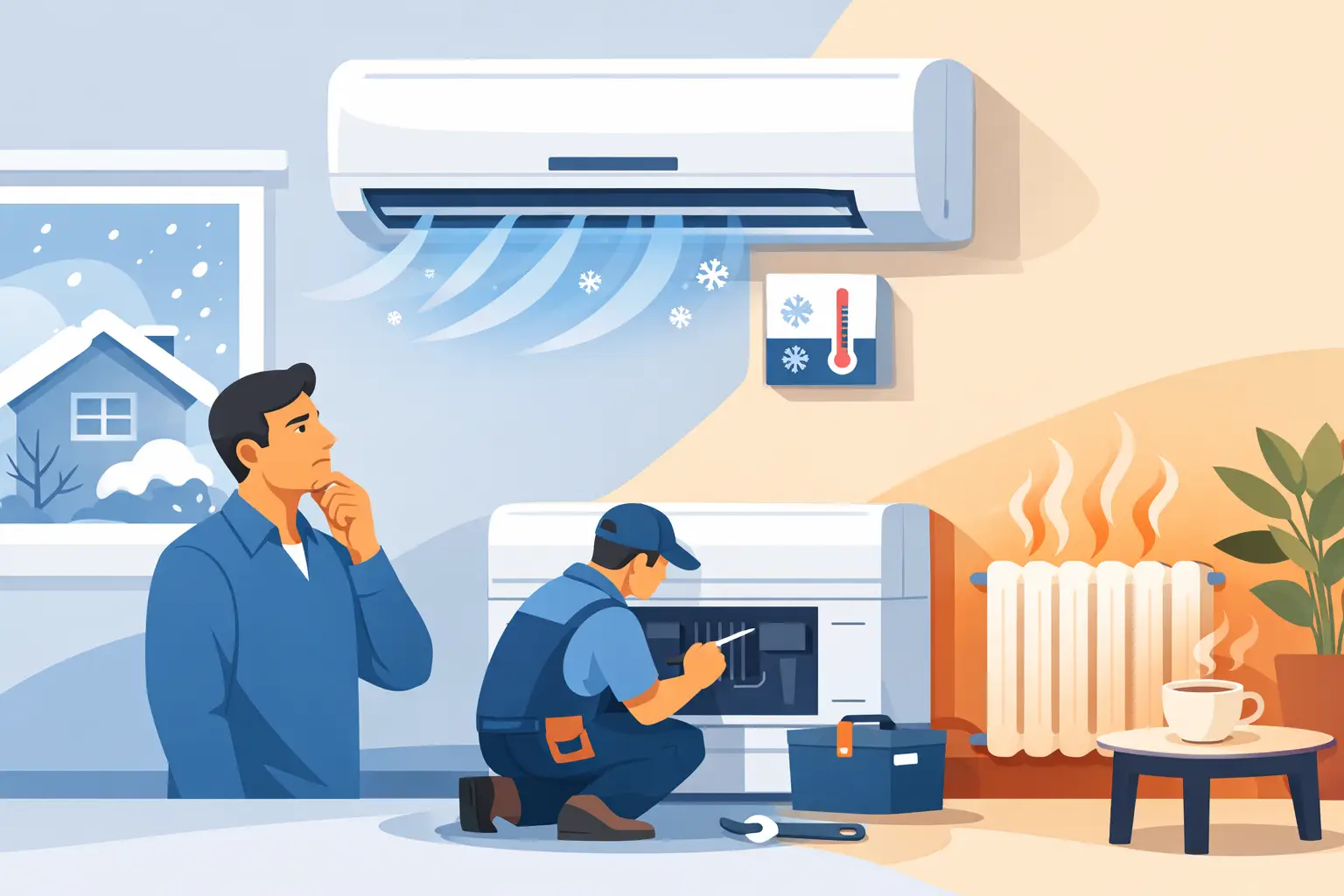
You notice it first thing in the morning. The split system turns on, the fan runs, but the room stays cold or only gets slightly warm. If your split system not heating properly is becoming a regular problem, there is usually a reason for it – and it is not always a major breakdown. Sometimes it is a setting issue. Sometimes it is a maintenance problem. And sometimes it is the early sign of a fault that needs proper repair before it gets worse.
The key is not guessing for too long. Heating issues tend to waste power, put extra strain on the unit, and leave you with an unreliable system right when you need it most.
Why a split system is not heating properly
A split system in heating mode does not work the same way as a simple electric heater. It moves heat rather than just generating it, which means several components have to work together properly. If one part is underperforming, the whole system can feel ineffective.
One of the most common causes is incorrect operation. It sounds basic, but plenty of heating call-outs start with the unit being set to cooling mode, fan-only mode, or a temperature that is too low to trigger proper heating. If the remote has been changed by different people in the house or workplace, this is worth checking first.
Dirty filters are another frequent issue. When airflow is restricted, the indoor unit cannot move enough air across the coil to heat the room efficiently. The system may still run, but performance drops. You might notice weak airflow, longer running times, or rooms that never quite reach the set temperature.
Outdoor conditions can also affect performance. In colder weather, some split systems go into a defrost cycle. During this time, heating output pauses temporarily while the outdoor unit clears frost. That is normal. The problem is when the unit seems to spend too much time defrosting, short cycles constantly, or never returns to proper heating. That can point to sensor faults, refrigerant issues, or other system problems.
Then there are the faults that need a technician. Low refrigerant, a failing fan motor, sensor problems, electrical faults, or a reversing valve issue can all stop a split system from heating as it should. These are not jobs for trial and error. They need proper diagnosis.
What to check before booking a repair
Before assuming the worst, there are a few sensible checks you can make yourself. Start with the controller. Make sure the system is in HEAT mode, not AUTO if that mode has been unreliable before, and set the temperature a few degrees higher than the current room temperature. If the set point is too close to room temperature, the unit may not produce much noticeable warmth.
Next, check the filters. If they are clogged with dust, clean them according to the manufacturer instructions and try the system again. A dirty filter is a simple issue, but it can make a noticeable difference.
Look at the outdoor unit as well. If it is blocked by leaves, dirt, or stored items, airflow can be restricted. The unit needs clear space around it to operate properly. If you can see obvious debris around the coil or grille, clear the area carefully.
It is also worth giving the system time. In heating mode, split systems often warm up more gradually than people expect. They may delay the indoor fan for a short period while the coil reaches temperature. That is normal. But if you have waited long enough and the air is still cool or barely warm, the issue is likely more than just startup behaviour.
Signs the problem is more than basic maintenance
Some faults show clear warning signs. If the split system is not heating properly and you also notice odd noises, error codes, water leaks, burning smells, or frequent stopping and starting, it is time to stop experimenting and have it checked properly.
A unit that runs constantly without heating well can be dealing with low refrigerant, poor airflow, or a control issue. A unit that trips the power may have an electrical fault. A system that blows room-temperature air in heat mode could be dealing with sensor trouble, valve failure, or compressor issues.
Age matters too. Older systems can lose efficiency over time, especially if servicing has been irregular. That does not automatically mean replacement, but it does mean a proper inspection is worth it. A good technician should tell you whether the issue is a repairable fault, a maintenance backlog, or a sign the system is nearing the end of its useful life.
Why split system heating problems should not be ignored
A lot of people put up with poor heating for weeks or months, especially when the unit still seems to do something. That usually costs more in the long run.
When a system struggles, it often runs harder and longer to try to meet the set temperature. That means higher power use and more wear on components. What starts as a restricted filter, sensor problem, or refrigerant issue can turn into compressor stress or repeated breakdowns if it is left alone.
For commercial operators, the risk is not just comfort. Poor heating can affect staff conditions, customer experience, and daily operations. In offices, shops, and hospitality spaces, unreliable climate control becomes a business problem quickly. No one wants to be chasing the same issue over and over because the original fault was never properly diagnosed.
Why proper fault finding matters
This is where trade experience counts. Split systems can show similar symptoms for very different reasons. Weak heating might be caused by something simple like blocked filters, but it can also come from refrigerant charge issues, board faults, thermistor problems, or poor installation practices.
Replacing parts without confirming the cause wastes time and money. So does patching the symptom instead of fixing the fault. Proper fault finding means testing the system, checking operating conditions, confirming electrical performance, and identifying why the unit is underperforming in the first place.
That matters even more if the system has a history of repeat problems. If a unit has already been “fixed” once or twice and still does not heat properly, there is a good chance the root cause has not been addressed.
Repairing vs. Replacing Your Split System Heating Unit
It depends on the age of the unit, the condition of the major components, and the repair cost against the expected life left in the system. There is no point dressing that up.
If the split system is relatively modern and the fault is isolated, repair is often the sensible option. If the unit is older, inefficient, short on parts availability, or showing multiple issues, replacement can make more financial sense.
Installation quality also plays a part. A decent system that was poorly installed may never have performed properly from day one. In that case, ongoing repair costs can keep stacking up unless the underlying installation issues are corrected.
For homeowners, the right answer is usually the one that restores reliable heating without wasting money on short-term fixes. For commercial sites, downtime, reliability, and whole-of-life cost often matter more than the cheapest immediate option.
When to call a technician for a split system not heating properly
If basic checks have not solved the issue, or the unit is showing fault symptoms beyond simple cleaning and settings, get a qualified technician involved. Heating systems are not the place for guesswork, especially where refrigerant, electrical components, and control boards are concerned.
A proper service visit should do more than reset the unit and hope for the best. It should identify the fault, explain what is causing it, and give you a clear recommendation on repair, servicing, or replacement if needed. No shortcuts. No surprises.
For property owners in Adelaide, that local experience matters too. Cold mornings, ageing systems, and a mix of residential and commercial equipment all bring different service demands. A contractor who works on these systems every day is more likely to spot the real issue quickly and sort it properly.
At LJ Refrigeration & Air-Conditioning, that is the standard – qualified technicians, clear advice, and repairs aimed at fixing the cause rather than buying time.
Keeping the problem from coming back
Once the system is working again, regular servicing gives you the best chance of keeping it that way. That includes cleaning, checking airflow, inspecting electrical components, confirming refrigerant performance, and picking up wear before it turns into a breakdown.
For households, that usually means better comfort and fewer surprises when winter hits. For commercial sites, it means less disruption and a more predictable maintenance plan.
If your split system has stopped heating the way it should, do the simple checks first, but do not let an ongoing problem drag out. A heating system should do its job properly, not just make enough noise to sound like it is working.
